ahalteke.net
Network & Organization of ahalteke horses
a member of

|
Turkmen Horses Turkmen horses
Video “Ahalteke”(In English)
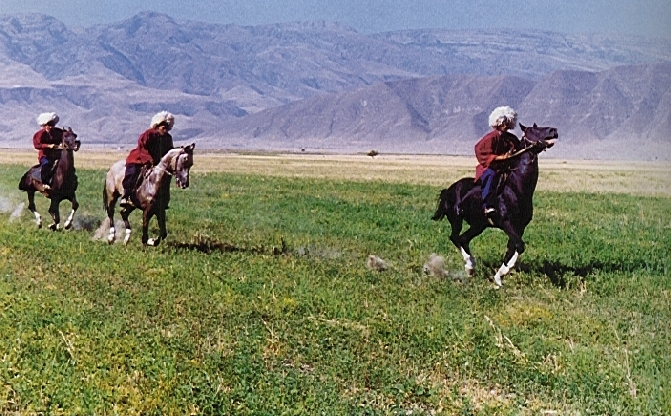
The world today is home to more than 250 breeds of horses cultivated by man over many centuries. The Akhalteke breed stands apart as the patrarch of horse-breeding. It took more than three millenia to produce this breed. The exact date of the Ahalteke breed's first appearance is not known, but earliest mentions go back to the 4th-3rd century B.C. Bucephalus, the favourite horse of Alexander the Great, was Akhalteke.
Breeding secrets were
passed down from father to son. The horse was their first friend and closest
ally.
Akhal Teke
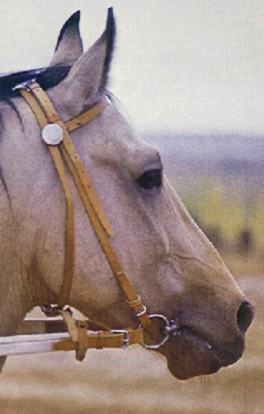
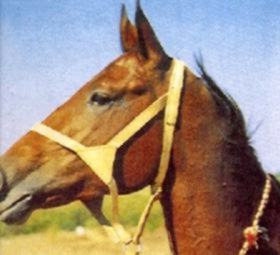
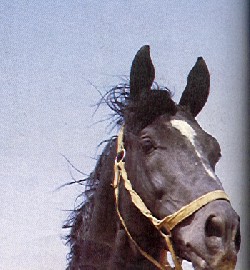
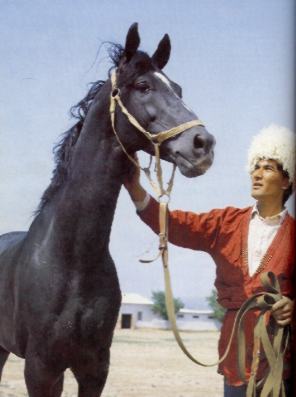
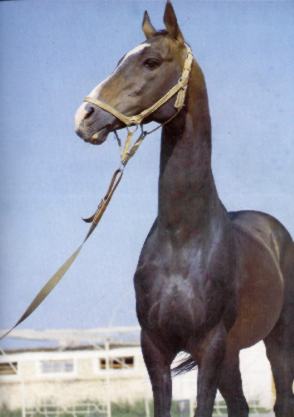
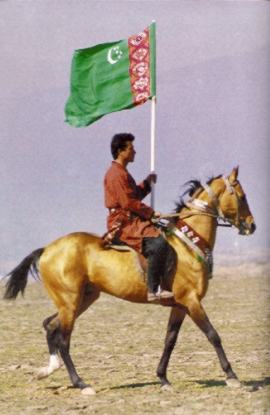
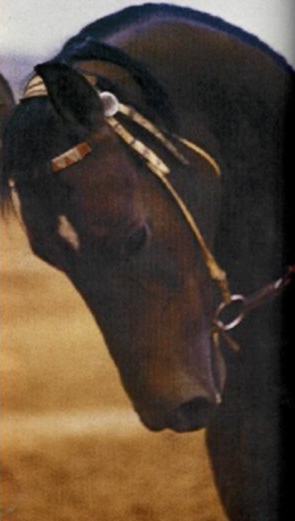
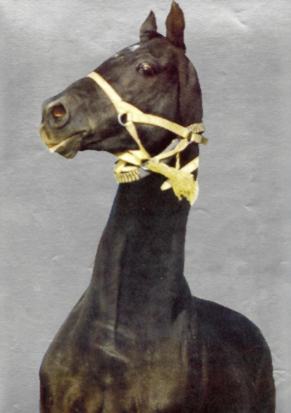
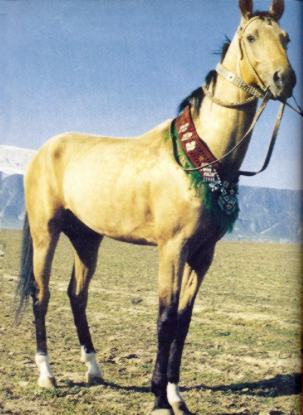
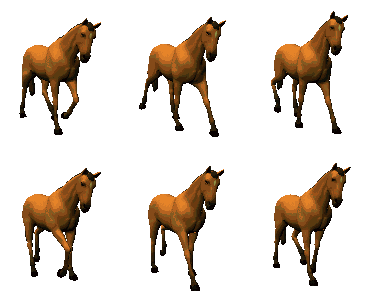
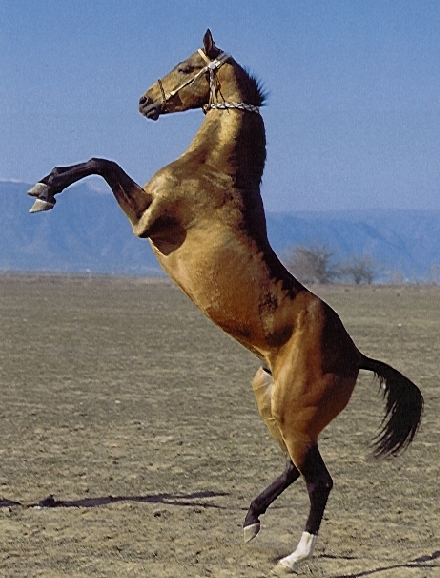
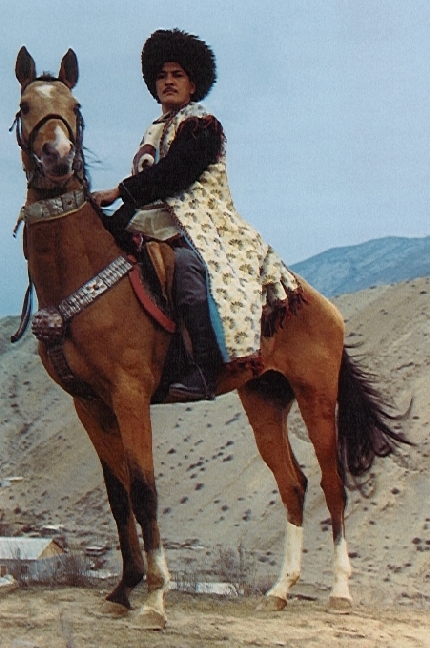
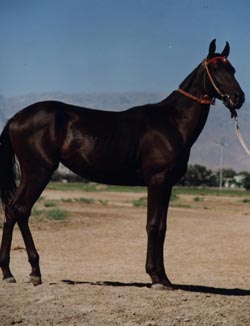
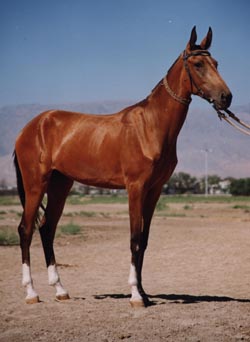
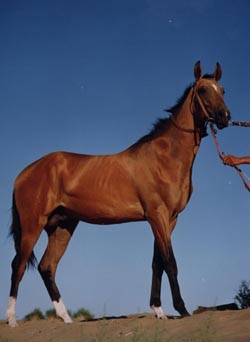
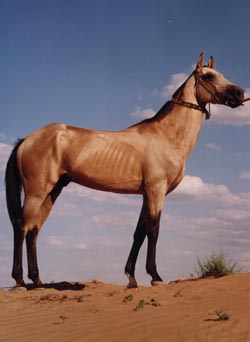
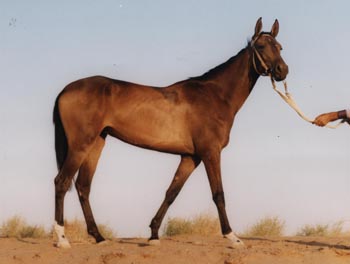
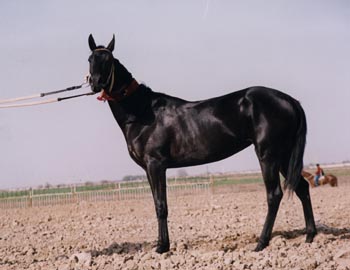
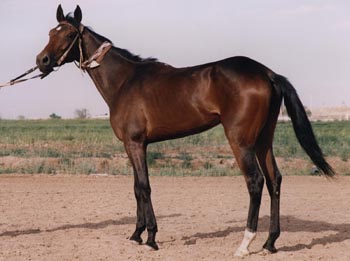
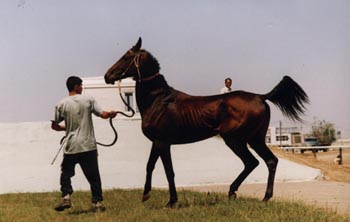
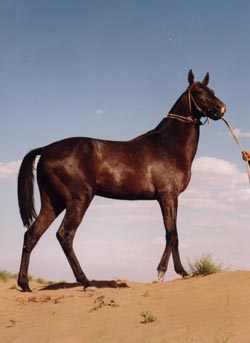
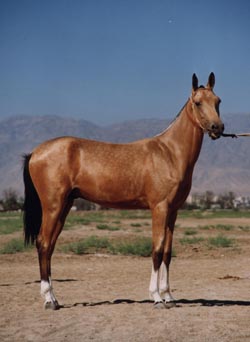
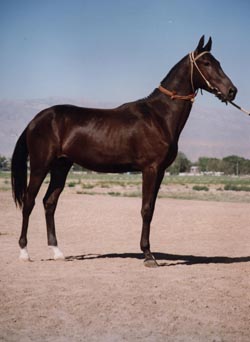
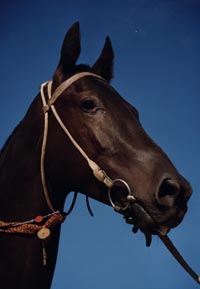
Physical Description The Akhal-Teke's conformation can be favorably compared to the Persian Arab, another breed of ancient origin. Its head is similar to the Arab's, being long and light with expressive eyes. It has relatively long ears and a long neck. It has a short silky mane, or none at all, and a short tail. This breed has a narrow chest, long back, and flat ribs. The legs are long and slender, clearly revealing the tendons. It averages 15-15.1 hands in height. It is often dun in color, although it can be bay and gray, with a pale golden coat preferred. The Akhal-Teke is among the most elegant of the world's horses.
Ancient Origins The Akhal-Teke descended from the ancient Turkmenian horse which was one of the four original horse "types" that cross the Bering Strait from America in prehistoric times.. It was originally bred by tribes of Turkoman. The Akhal-Teke now is bred in the other provinces of the southern former U.S.S.R.
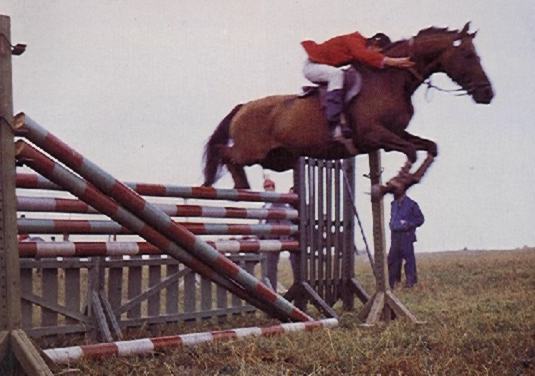
The Akhal-Teke named "Absent" won the Prix de Dressage at the Rome Olympics in 1960. Reference: Kentucky Horse Park, 4089 Iron Works Pike, Hendricks, Bonnie L., International Encyclopedia of Horse Breeds, Univ of Oklahoma Press, 1995
Photographs: Kentucky Horse Park,
The akhalteke is an
ancient breed descended from one of the four horse types that crossed the
Bering Strait from the Americas in prehistoric times.
In appearance the akhalteke horse is similar to its descendent, the Persian Arab, though in size it is more comparable to another of its descendants, the English thoroughbred. The akhalteke has a small thin head, long ears and large eyes. It has a short silky mane or no mane at all, and a short tail. The Turkmen practice of covering their horses with two to three layers of felt blankets to protect against cold in the winter and flies in the summer encouraged a remarkably fine textured coat. Akhaltekes are known for their golden coloring but they can also be white, black, dappled, dun, bay, gray or chestnut colored. Fed a low bulk, high protein diet consisting of alfalfa and barely mixed with mutton fat, the akhalteke maintains its traditionally lean proportions of long sinewy legs, a narrow chest, a long back and flat ribs. The average height of an akhalteke is 15 to 15.1 hands. Its small hooves are unusually hard and are therefore rarely shod. The great speed, elasticity and grace of the akhalteke makes it at once a coveted racer, show jumper and dressage mount. Though spirited in temperament, akhaltekes are by all accounts gentle and loyal to their owners, yet aloof with strangers.
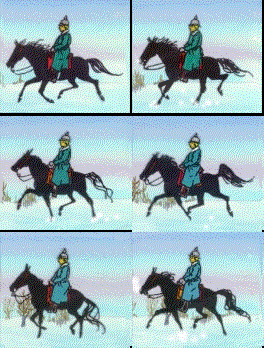
Turkmen tribesmen valued their horses above all else. As a nomadic group situated in a rossroads of cultures they were often required to face enemy conflict and came to rely heavily on the strength, speed and endurance of their horses. The akhalteke’s ability to over great distances of harsh terrain under extreme climatic conditions, and to travel at night, made them indispensable to the Turkmen warriors. Aside from their valiant exertions as warriors’ mounts, akhaltekes were also invaluable in assisting Turkmen nomads with their daily work.
Prior to the Russian occupation of 1917, nearly every Turkmen family owned at least one or two horses. With Bolshevism however, came an end to private ownership and the horses were placed in state-owned stud farms. Rather than surrender their beloved horses to such a fate many tribesmen fled with them to Persia and Afghanistan. When it was then decreed that the horses in the stud farms were to be slaughtered for food, breeders released them into the desert, their natural habitat, thereby preventing what may have resulted in the annihilation of the akhalteke breed within the borders of Turkmenistan. In 1935, fifteen akhaltekes were ridden 3000 kilometers, from Ashgabat to Moscow, in eighty-four days, to demonstrate to Joseph Stalin their formidable strength in the hopes that he would grant his permission for their continued breeding. The campaign was a success. Upon achieving independence in 1991, the government of Turkmenistan defined horse breeding as a nationalistic concern and an art form. The akhalteke has been declared a national treasure and its image graces the state seal of Turkmenistan. Today private ownership of akhaltekes in Turkmenistan is steadily increasing and there are now akhalteke farms in Germany and the United States. Famous Akhaltekes: Absent Winner of the Prix de Dressage at the 1960 Olympics in Rome. In 1968 Absent was named the “World’s Best Sporting Horse.” Dancing Brave Winner of the 1986 Arc de Triomphe Race. Dancing Brave holds the record for the highest price ever paid for a horse; US$50 million. Melekush In 1956 Nikita Krushchev presented Melekush to Queen Elizabeth II of England. He was described by the Royal Equerry as Britain’s “best horse.” Buccephalus The famed favorite horse of Alexander the Great.
Geçmişini bin ýyllyklardan alan Ahal-teke atlaryna "kudratly alem atlary", "Behişt atlary", " Cennet atlary" atlary verilmiş. Türkmenler kendi atlary olan ahal-teke atlarynyn tohumlaryny temiz saklamayy ve korumayy bu güne kadar sürdürmüşler.Alimlerin şu zamanki ilmi araştyrmalarynda dünyada hesaba alynmyş 250 at tohumlaryndan en büyük geçmişe sahibi Ahal –Teke tohumudur. Bu atlary öbür tohumlary almakda geniş kullanylanydyr. Yani bir çok atlaryn atasydyr. Bedev atlar Türkmenin sungatydyr. (Tarihi belgeselden)
The
akhalteke is an ancient breed descended from one of the four horse types that
crossed the Bering Strait from the Americas in prehistoric times. Approximately
10,000 years ago, as desertification took hold of Central Asia, Turkmen
tribesmen valued their horses above all else. As a nomadic
Upon
achieving independence in 1991, the government of Turkmenistan
For more information mail to: mailto:allaguli@turkmens.net
The most historical racing horses are ahalteke horses You want to have
one?
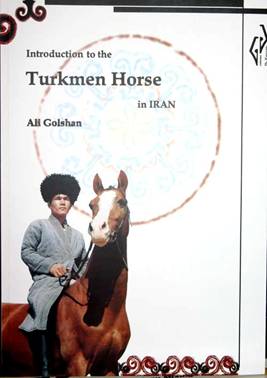
For more information mail to: mailto:allaguli@turkmens.net Introduction to the Turkmen Horse in Iran Ali Golshan has
contributed greatly to our knowledge of the Turkoman horse with his book, Introduction to the Turkmen Horse in Iran .
Although the breed is more widely known as the Akhal Teke from Turkmenistan,
its Persian counterpart has played an equal role in the development of all
light breeds of horses in the world. Until the Russian conquest of Turkmenistan
in the early 20th century Turkoman tribes roamed freely from the Alborz
mountain range, over the Atrek river and through the Kopet Dagh mountains to
the great sand desert. The major tribes of Goklan, Yamoud and Teke proudly
bred their own strains, basically keeping them seperate. Today the
Akhal Teke is primarily an amalgam of the different strains. Their Persian
counterparts continued to be bred in the tribal manner and are still
identifiable as individual strains although invariably mixing amongst the
strains has occurred. This horse
is gradually regaining recognition in the world as DNA analysis has shown its
blood runs in all our modern breeds of light horse. The genetic contribution
is immense; its history romantic; its form and action flowing and beautiful
and the people who raise them still live as they did 2000 years ago. Mr.
Golshan's book follows long forgotten trails, describes traditional methods
of breeding, training and racing and leaves the reader with a sense of having
lived history. It is beautifully illustrated with color and black and white
photos from the early past to the present. It has been published in a limited
edition of 2000 copies so that anyone wishing to include this invaluable
contribution to our knowledge of the horse should not hesitate to take
advantage of this opportunity. Louise
Firouz Ghara Tepe
Sheikh November,
2005
Introduction to the Turkmen Horse in Iran
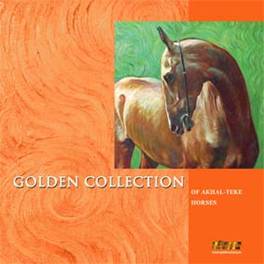
In “Golden collection…” is described more than 80% of brood stock of
the Akhal-Teke breed, focused in You can order our production
over the phones: +7(495)9452478, 9452212 or write on our email. Price: 99 Euro (with delivery). Format: 285*285 sm Volume: 196 pages Edition: 5000 copies Publisher: “Gold Mustang”magazine Dr. Ghiadi: I had come to
leave, but I got stuck Dr. Ghiadi, the President of the
Equestrian Commission of the Province of North Khorasan, explained the state
of horse riding in that province to our reporter: “Across North Khorasan, there is a treasure of vegetation
variety and living habitats. Here, there are regions such as the
town of Maneh and Somlaqan in which there exist a lot of thoroughbred horses.
In the regions of Gholaman, Dehestan-Raz, Bojnord and some parts of
Asfrain-Shirvan and recently in the region of Faurouje and Judgeroom there
have been some tendencies to expand and
organize the horse industry.” “This region is full of wonders. If
you travel for half an hour, you will pass through jungles, snow and
deserts.”he said. “These latent natural conditions have a lot of potentials
to fulfill our national interests but unfortunately much negligence has taken
place in the past years.” said Dr. Ghiadi.“Now, the horses are being dragged
from the free countryside to the cities; this is, of course, a good
phenomenon in essence, but the danger I feel is that the incomplete and
substandard boxes are going to eradicate these horses. The deficient foals
cannot be distinguished in boxes. Of course, now the scientific systems in
place in Tehran are not
bad, but in general the possibility exists that the deficient foals enter the
system of breed improvement and create problems.”“I entered the world of
horses and riding very easily. It was easy to enter but to stay and continue
was very difficult.” said Dr. Ghiadi. “This is the world of hard working and
different types of people; I like this atmosphere. When I first came to
Jarglan as a doctor, I was thinking: I have come and I will leave, but I got
stuck.”
Documents
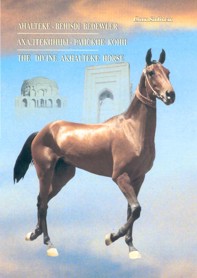
Chary Shirliev Perfectly illustrated book - a picture album about Turkmen horses sweaty of blood . For the first time, to attention of readers it is given together 350 breeds of horses of all world. Here You can get acquainted with well known horses of the world, outstanding records to receive the information on ancestors of all Akhalteke lines, to begin involuntary participants of well-known horse run Ashgabat-Moscow 1935 and 1988. A plenty of illustrations, many of which are published for the first time make work especially valuable and unique. The book is addressed to experts in breeding horses, and also for a wide range of readers. Turkmenistan/Ashgabat mkr.Mir 2/1, 23 blok "B" Comming Not Soon!
Links |
||||||||||||||||||||||||||||||||||||||
|
|


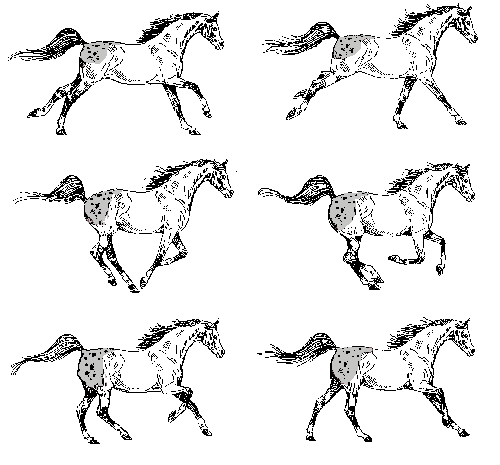
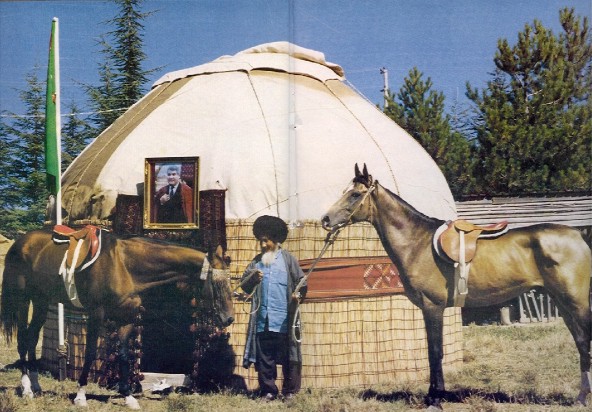
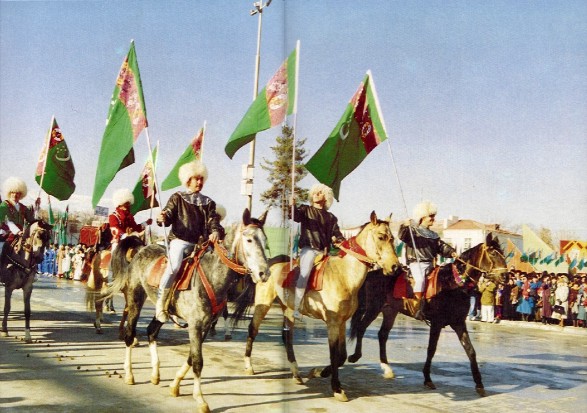
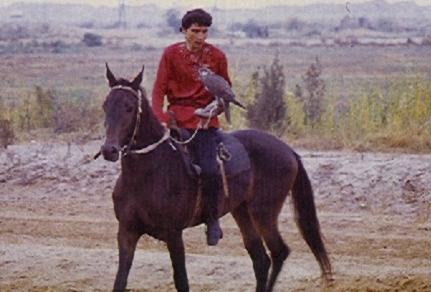
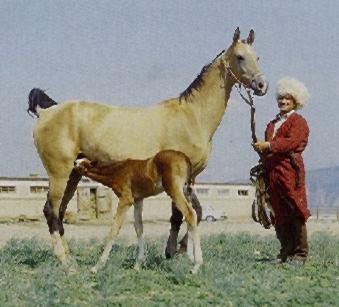
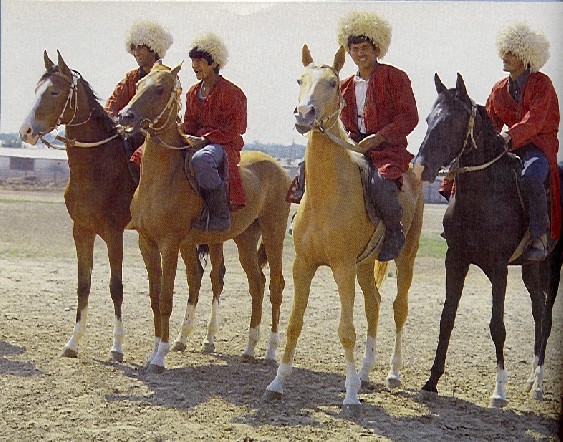
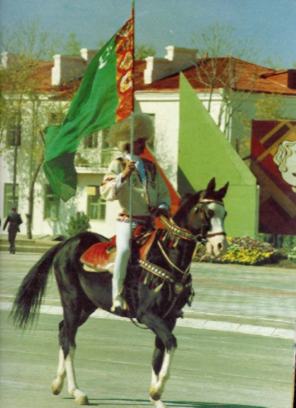
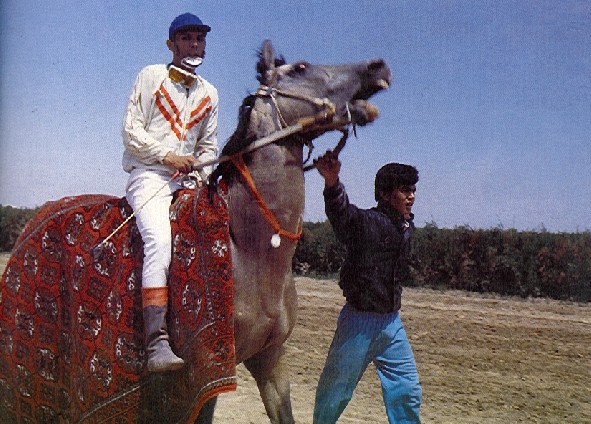
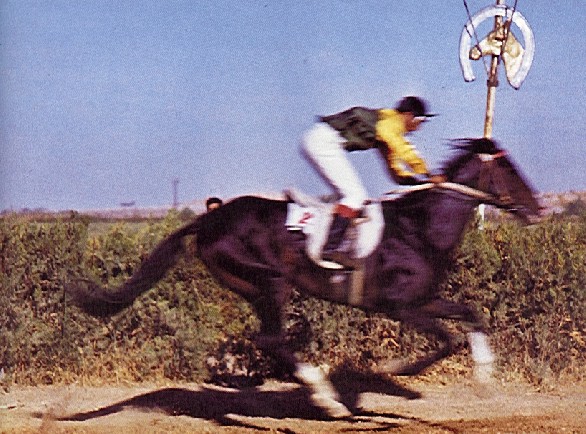
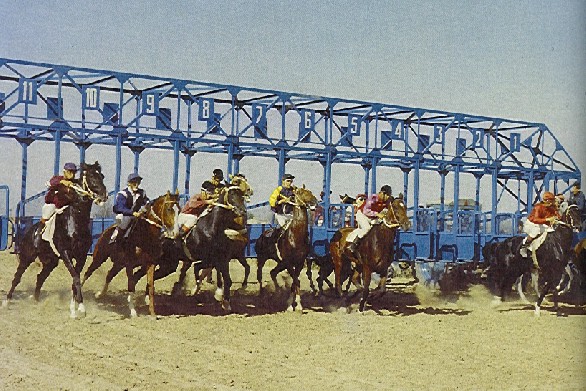
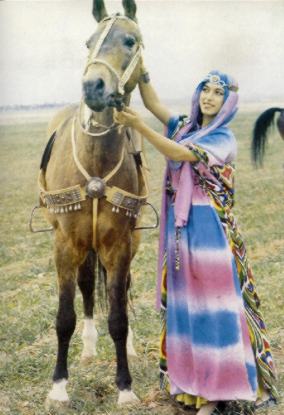
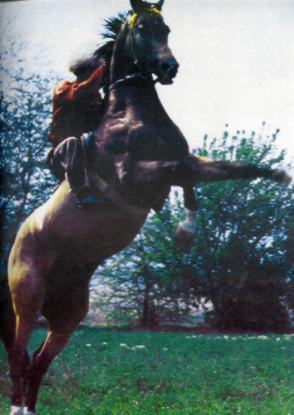
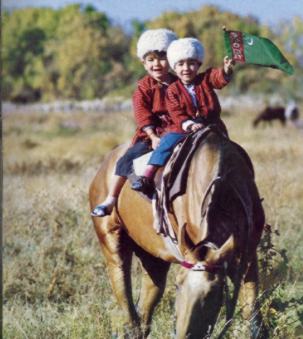
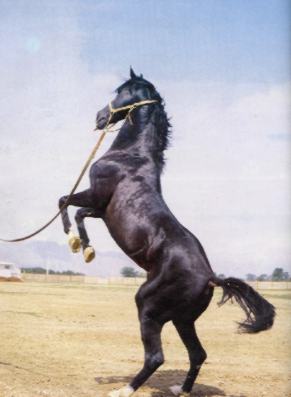
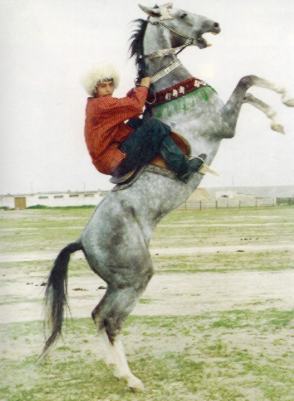
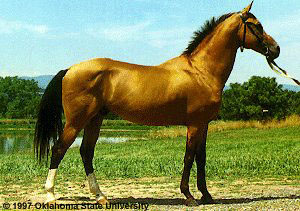 The
Akhal-Teke is a horse from Turkmen, in the southern region of the modern
country of Turkmenistan. These horses have been renowned as cavalry mounts
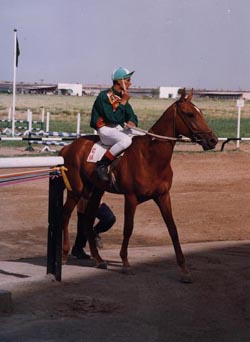
and racehorses for some 3,000 years. The Akhal-Teke has superb natural gaits,
and is the outstanding sporting horse from this area. The Akhal-Teke is
native to an arid, barren environment. During its history, it has established
a reputation of great stamina and courage. A key to the Akhal-Teke’s stamina
is its diet which is low in bulk but high in protein, and frequently includes
butter and eggs mixed with barley. Today the Akhal-Teke is used in show
jumping and dressage in addition to daily use under saddle.
The
Akhal-Teke is a horse from Turkmen, in the southern region of the modern
country of Turkmenistan. These horses have been renowned as cavalry mounts
and racehorses for some 3,000 years. The Akhal-Teke has superb natural gaits,
and is the outstanding sporting horse from this area. The Akhal-Teke is
native to an arid, barren environment. During its history, it has established
a reputation of great stamina and courage. A key to the Akhal-Teke’s stamina
is its diet which is low in bulk but high in protein, and frequently includes
butter and eggs mixed with barley. Today the Akhal-Teke is used in show
jumping and dressage in addition to daily use under saddle.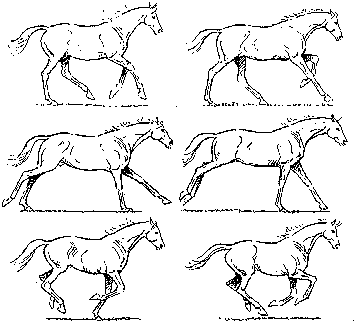

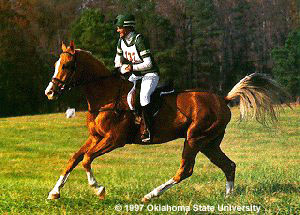 Records
Set by Akhal-Teke Horses
Records
Set by Akhal-Teke Horses





|
Founded & Designed by: Dr. Farzad MARJANI, Civil Engineer, Ph.D. |
EMAIL : turkmens@turkmens.com |