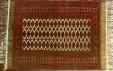
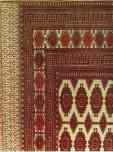
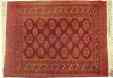
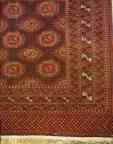
|
rugs.turkmens.net
carpets.turkmens.net
A movie about
Turkmen carpet
Türkmen Haly Niyazi (türkmenje)
Rugs and Carpets
Classifications and Definitions by:
"ASHGABAT RUG PLANT"
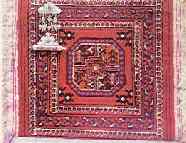
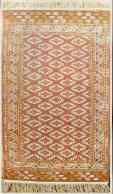
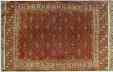
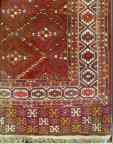
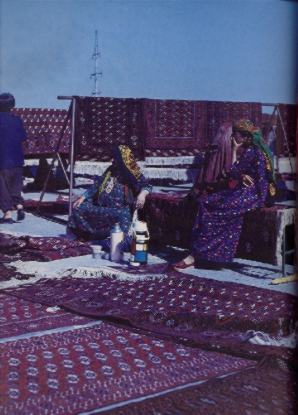
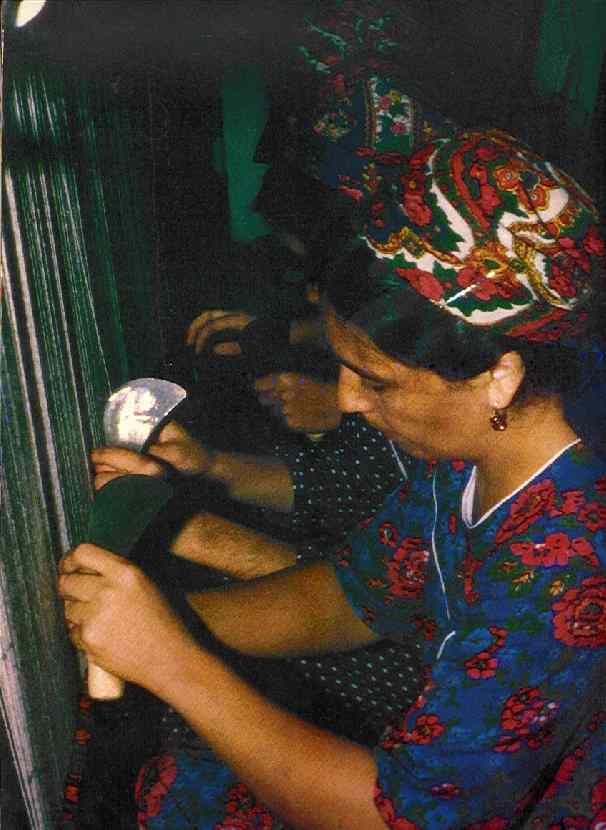
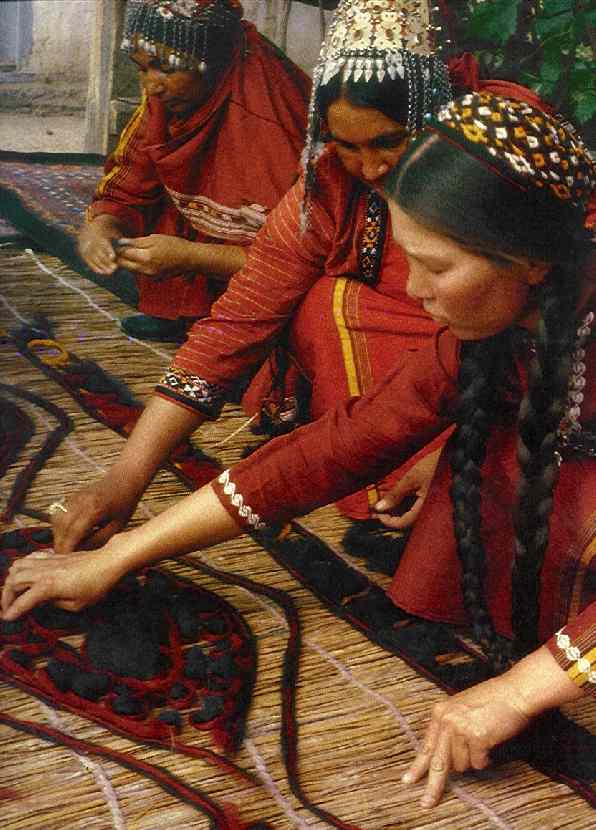
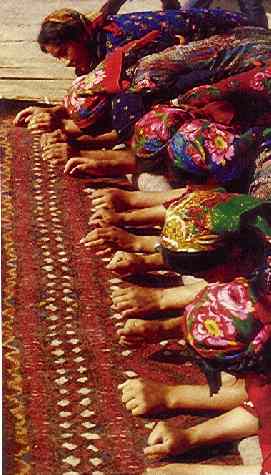
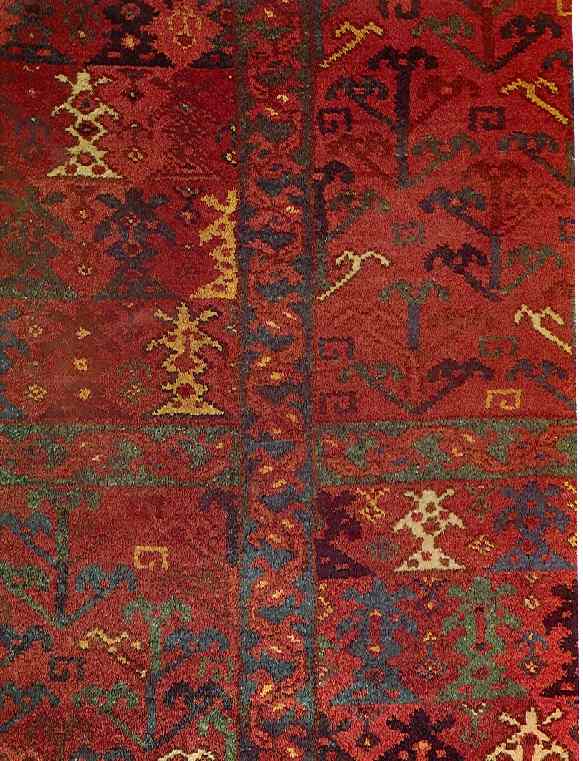
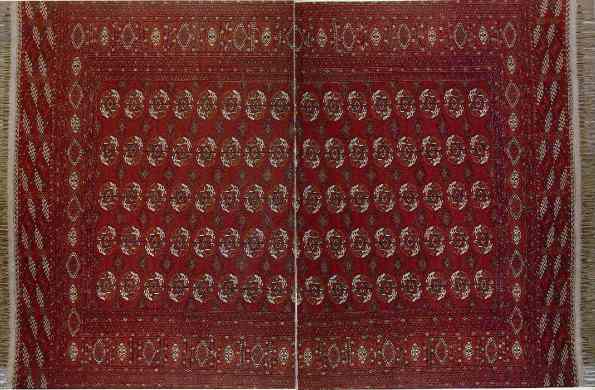
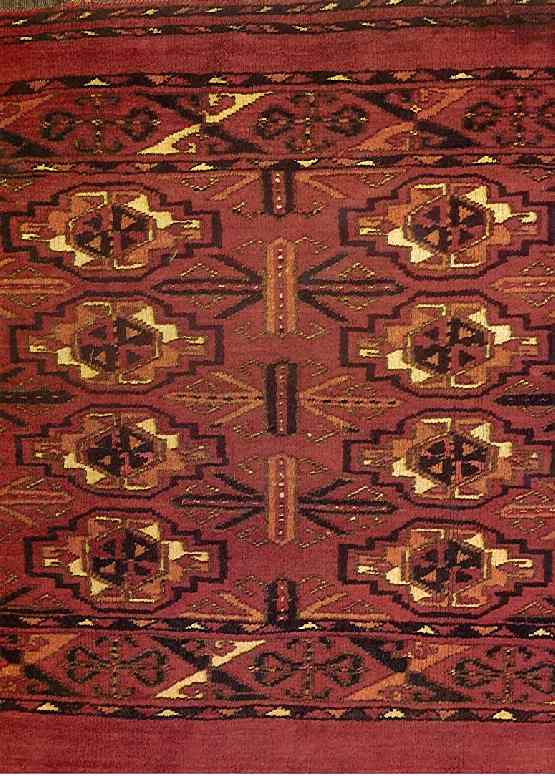
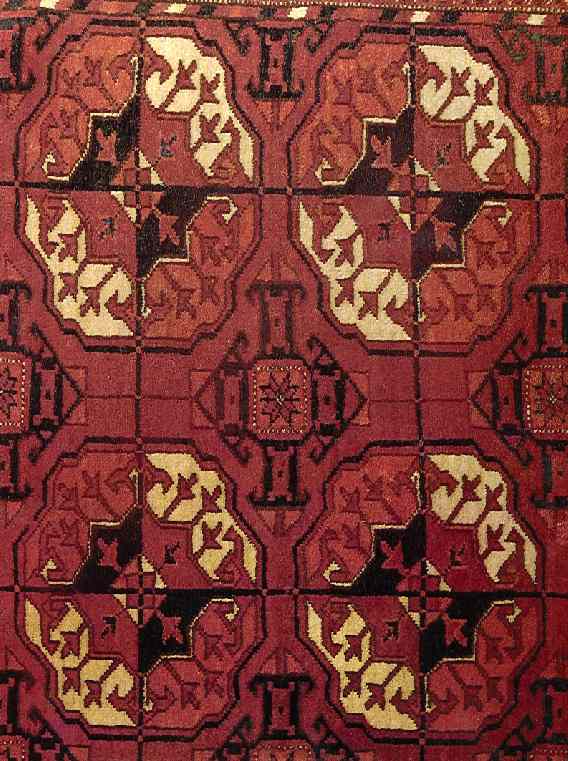
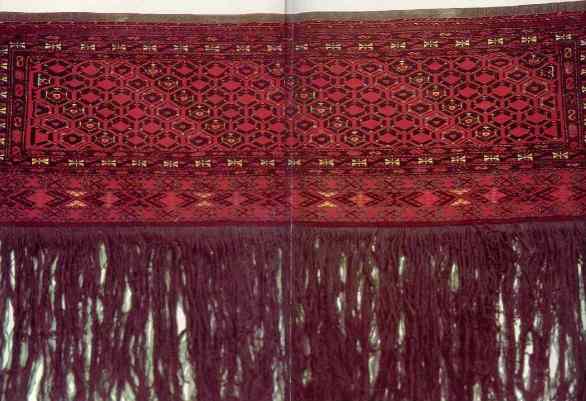
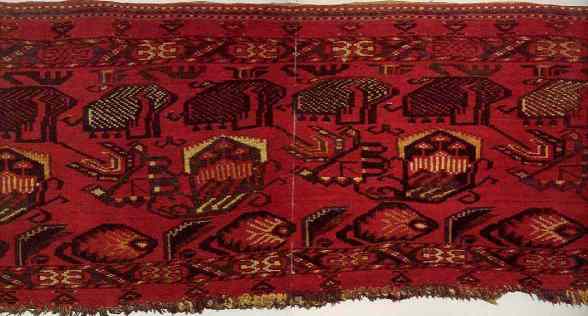
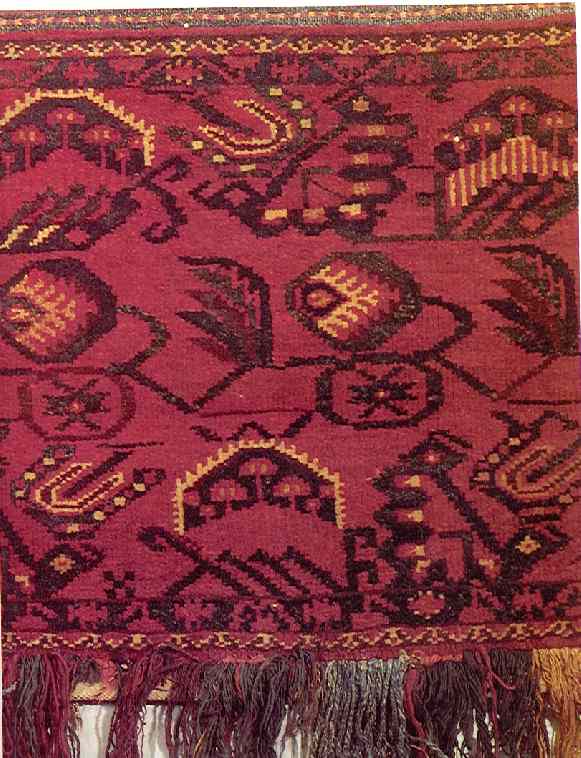
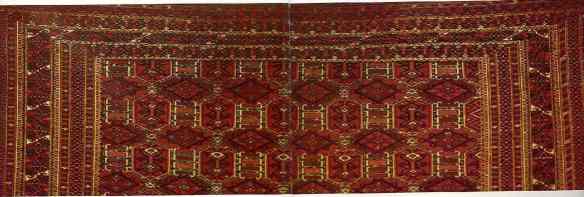
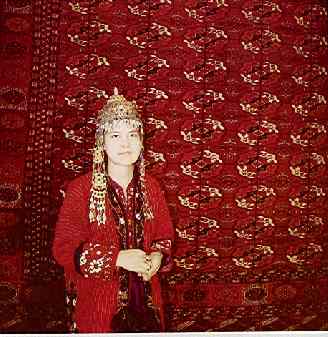
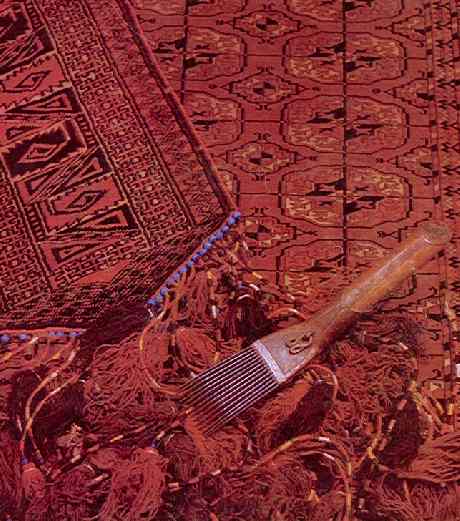
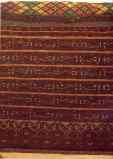
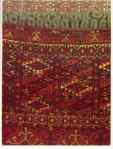
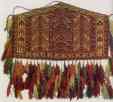
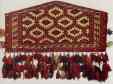
Carpet-weaving is one of the most
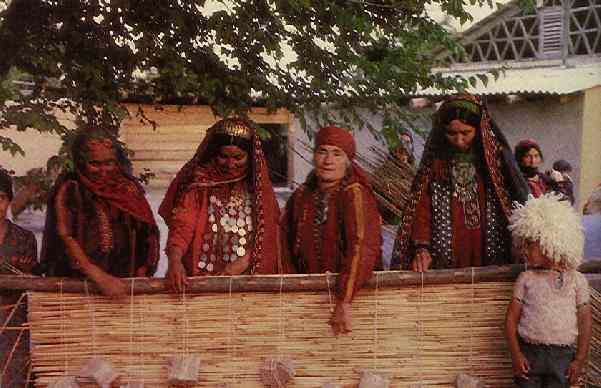
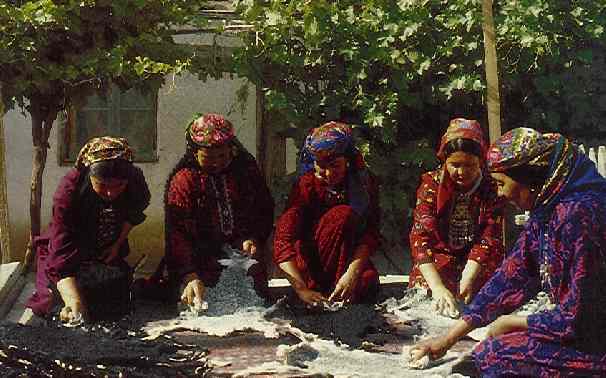
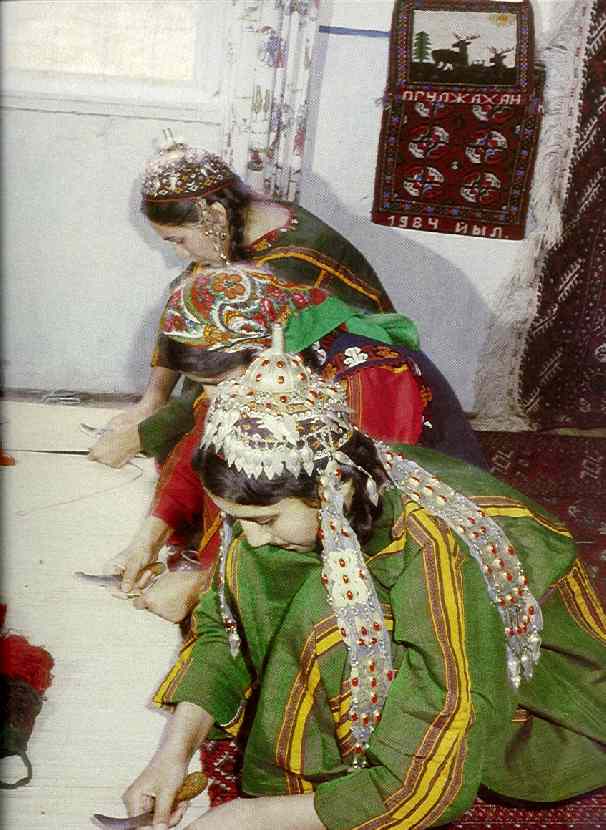
ancient forms of Turkmen applied art. Each woman was taught this
iraditional art from the early age.
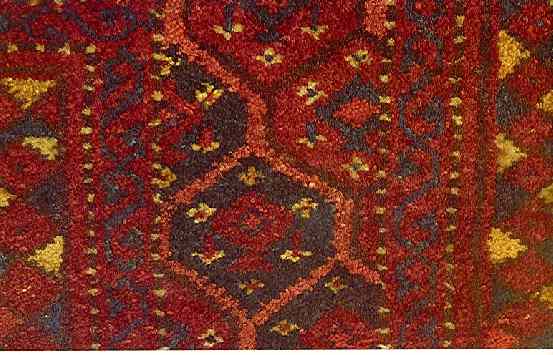
The magical beauty and longevity of
Turkmen rugs come from the traditions of carpet-weaving, that reached high
perfectness and artistic expressiveness of gel during the many centuries of
its existense.
It's hard to say when the Turkmen people
began to weave their first rugs, too hard. We may just suppose that they
weave them from the very ancient time.
  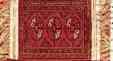
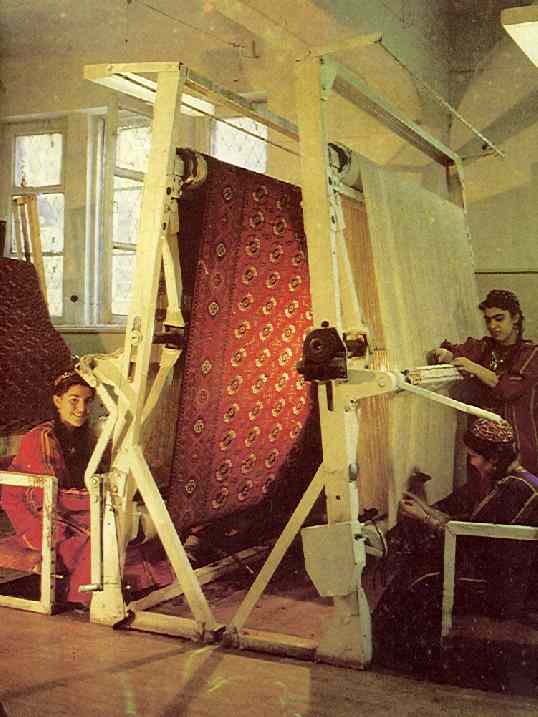
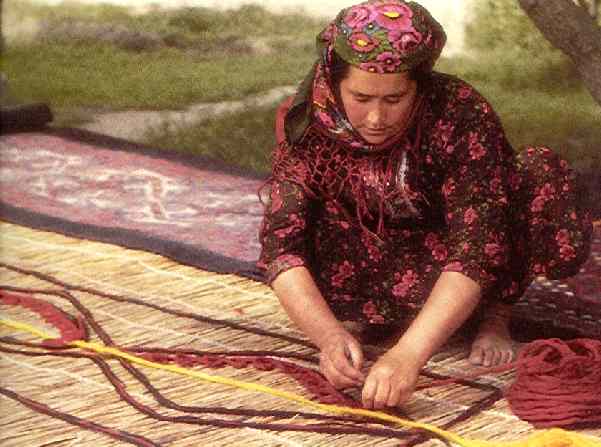
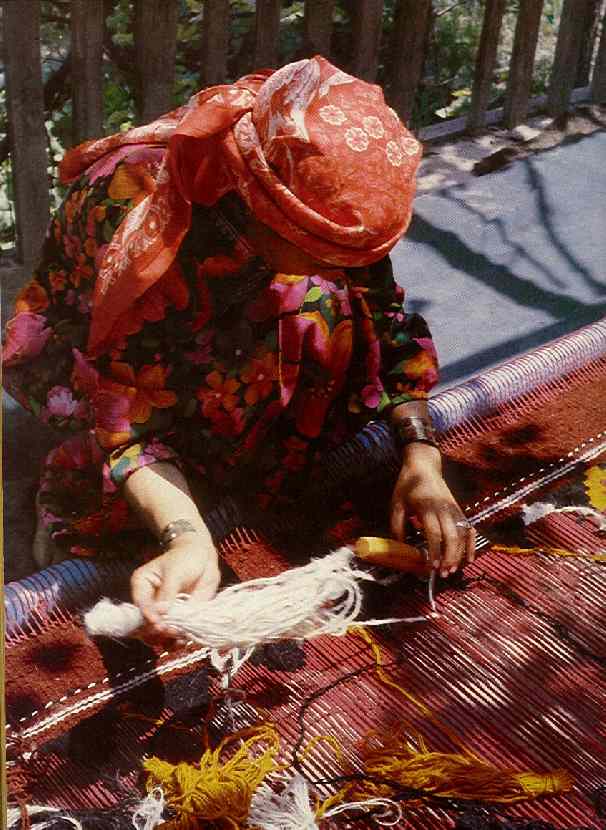
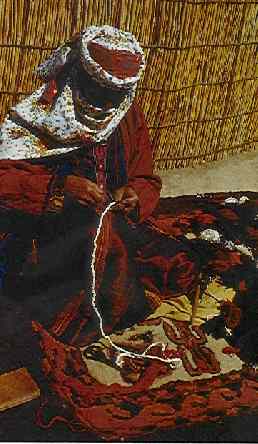
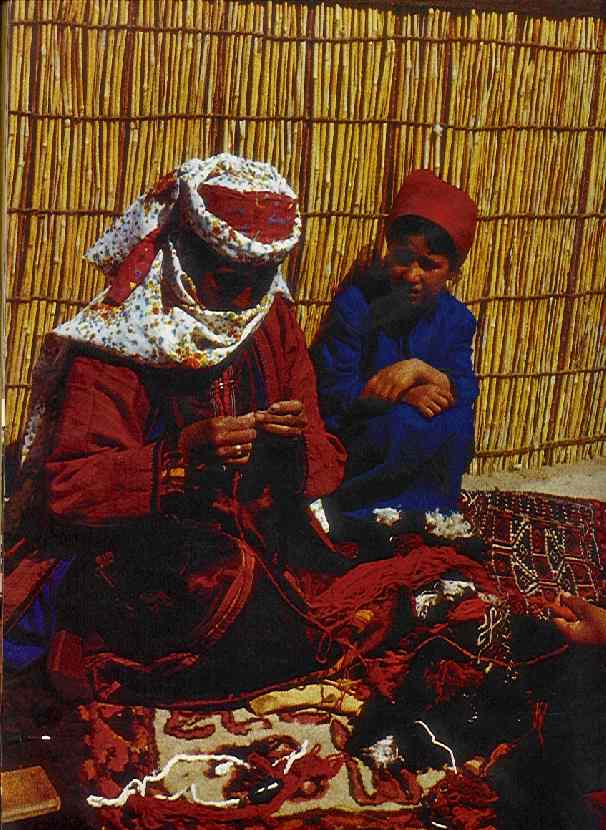
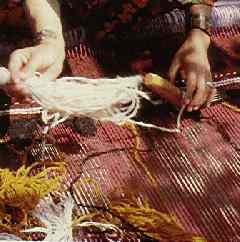
Pile carpet-weaving
is. a complicated and long process. Just skilis in accordance with rare
artistic talent based on the ancient traditions make possible tlýe creating
of infinitely compticated and varied carpet patterns using the most
primitive means of production.
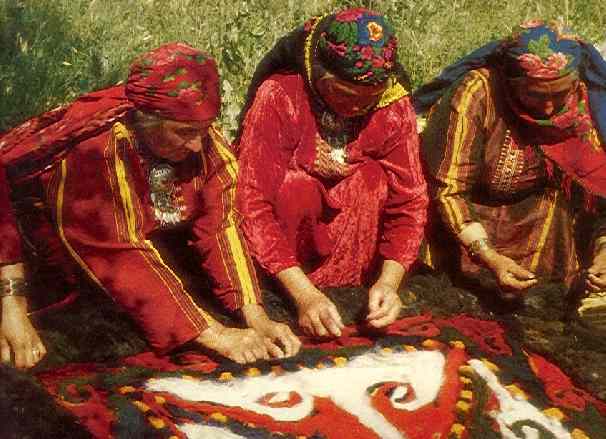
Carpet-weaver creates the whole
composition and ornamentation of the rug only by means of her 'imagination
and memory, combining patterns in a new interpretation. That's why the
creative activity prevail in production of rugs.
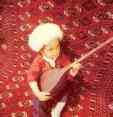
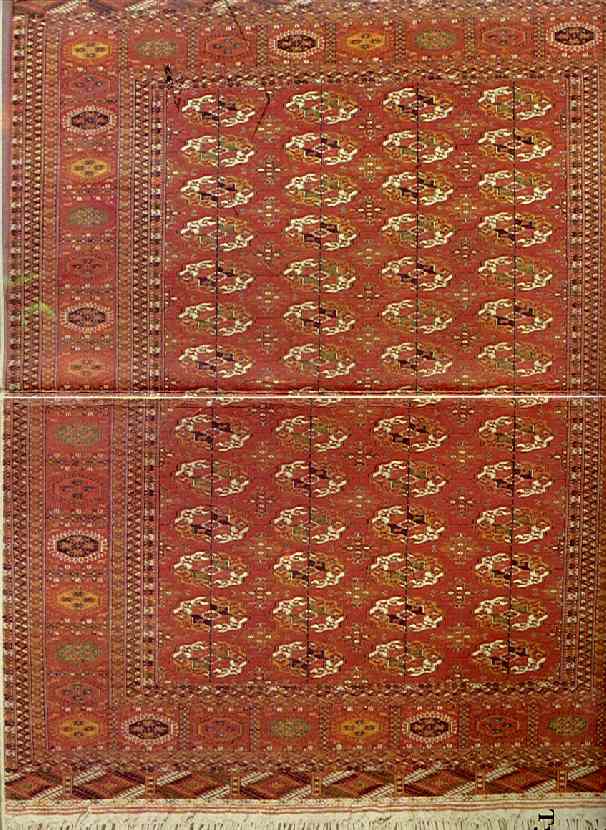
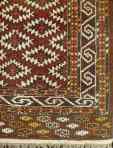
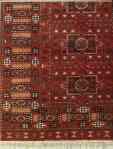
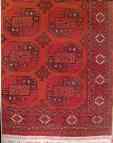
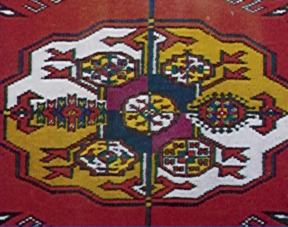
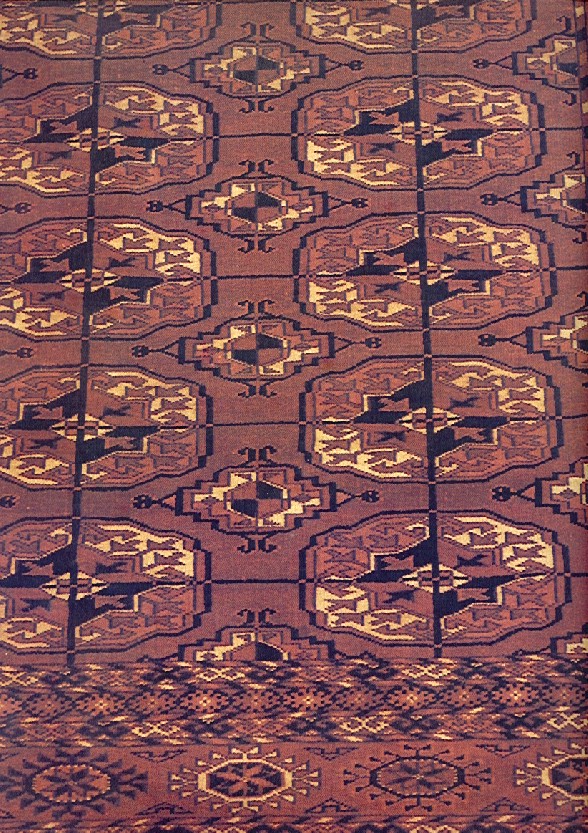
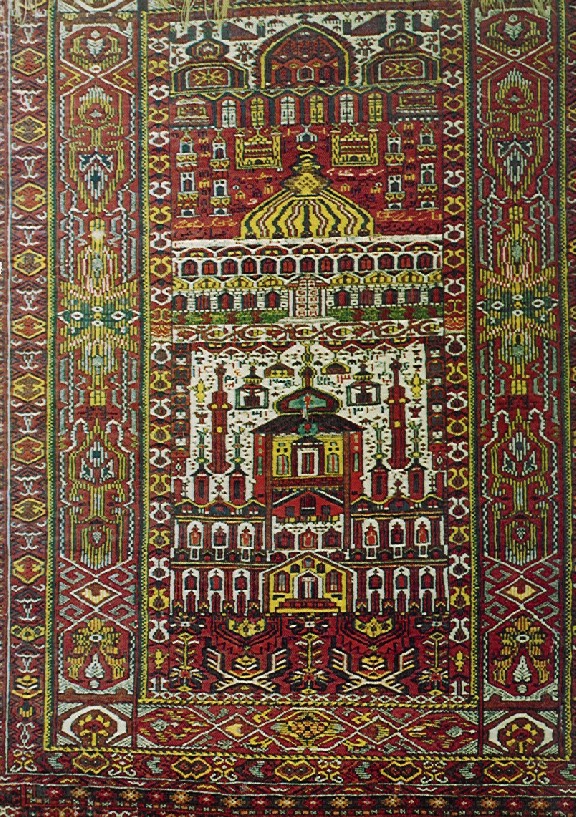
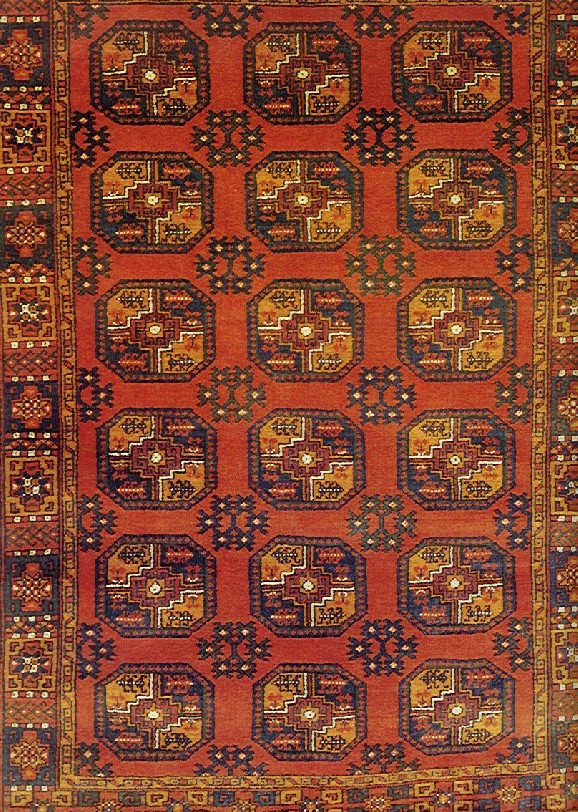
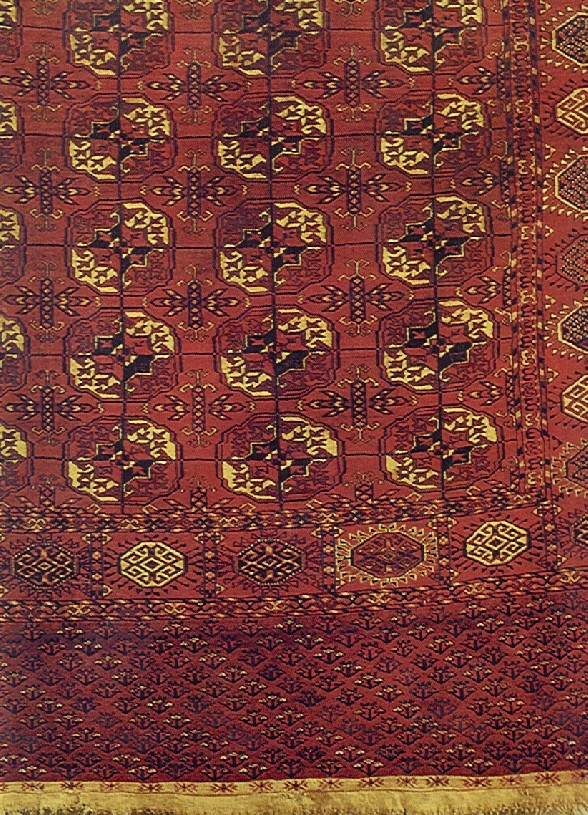
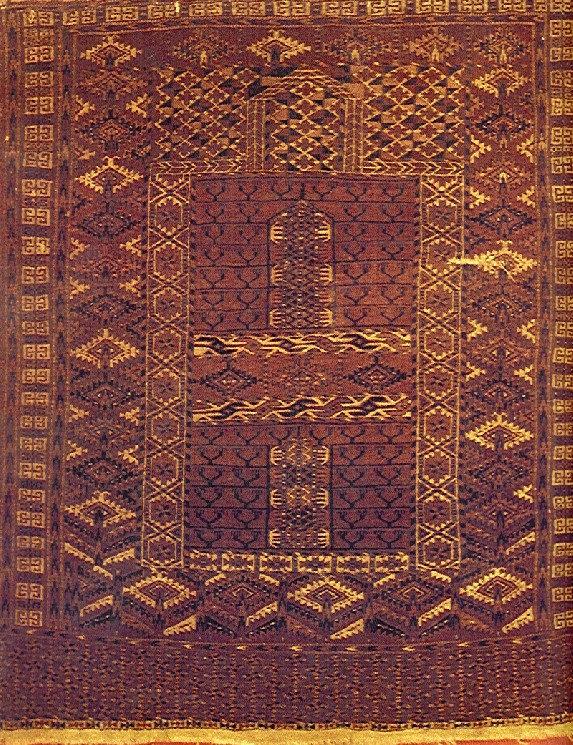
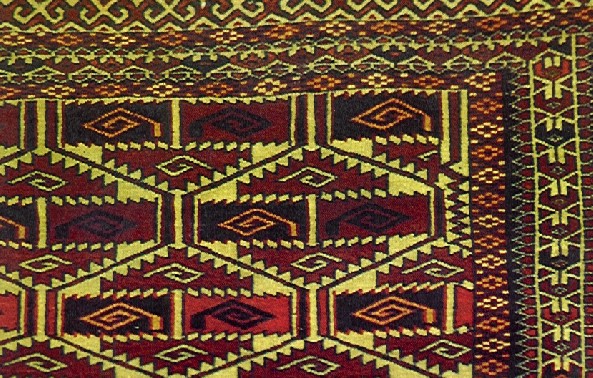
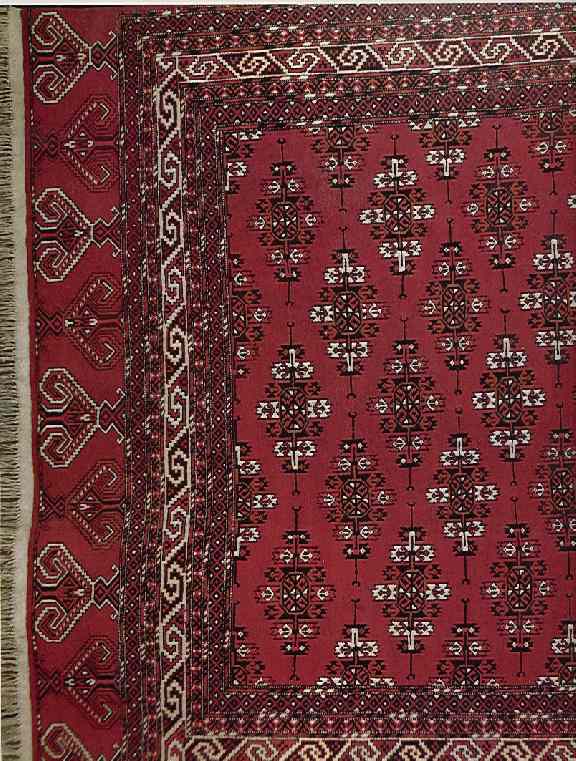
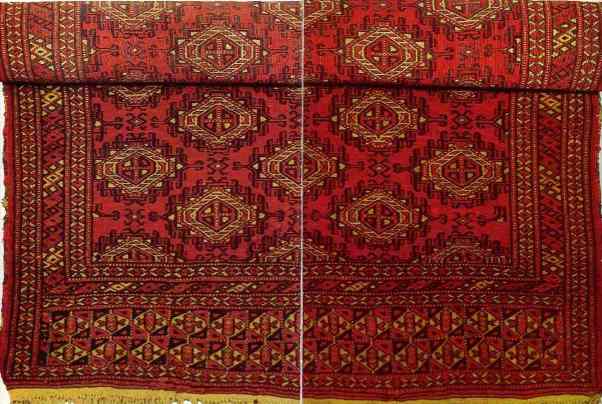
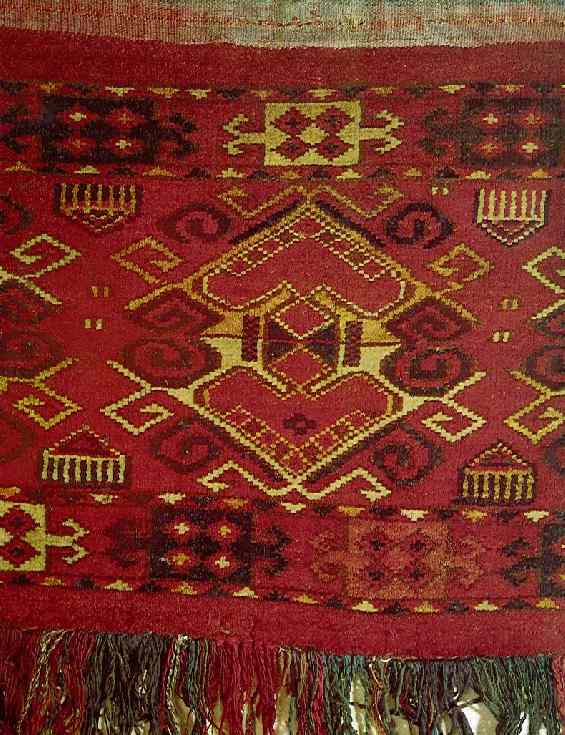
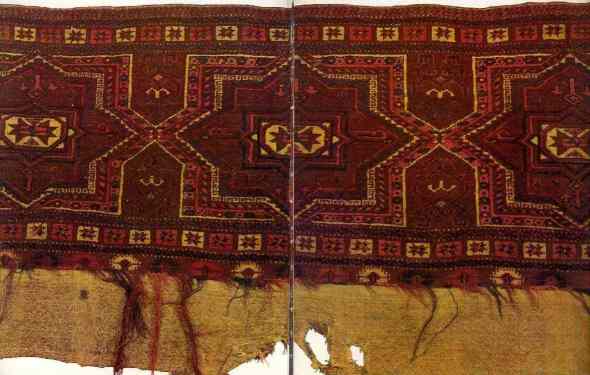
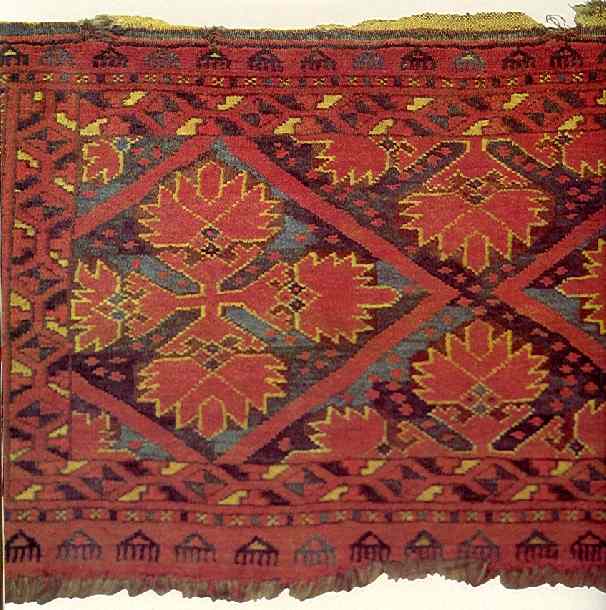
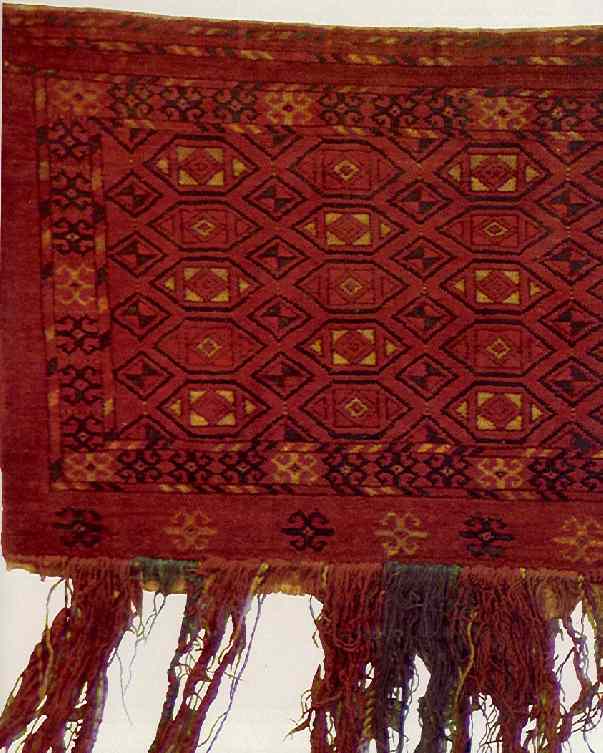
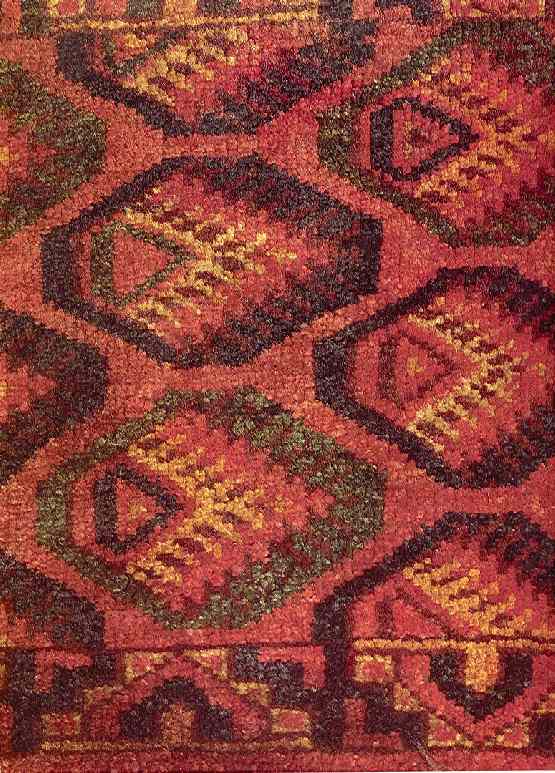
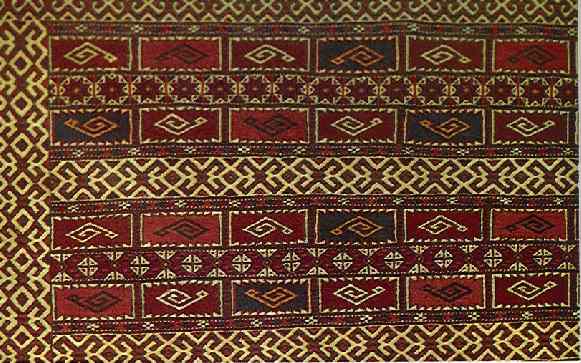
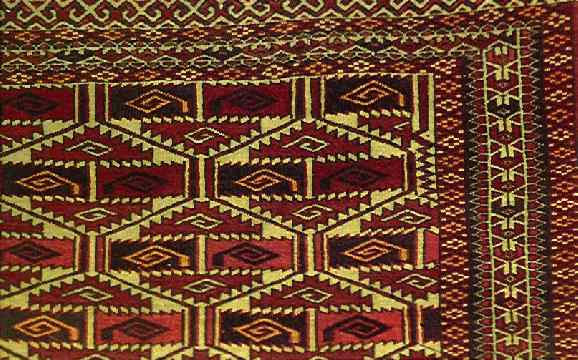
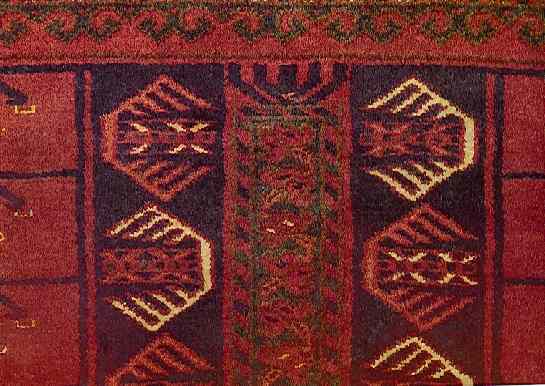
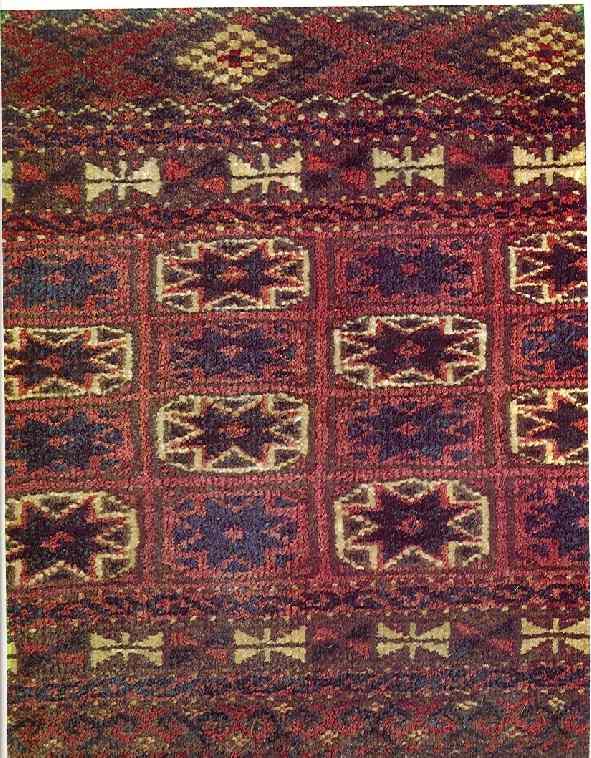
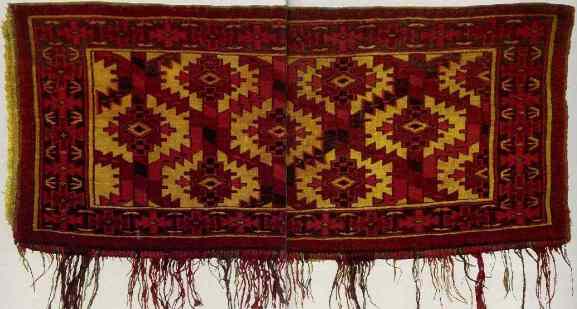
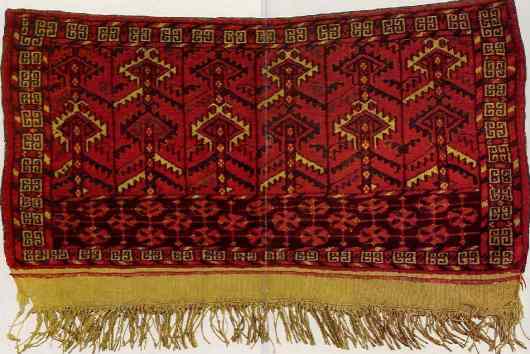
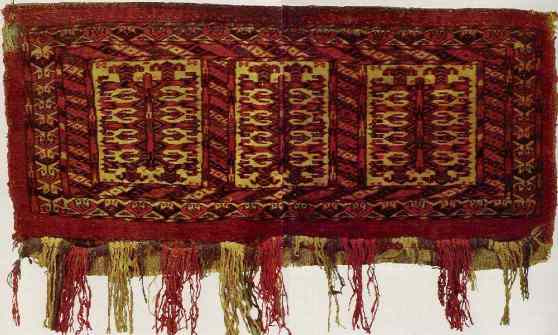
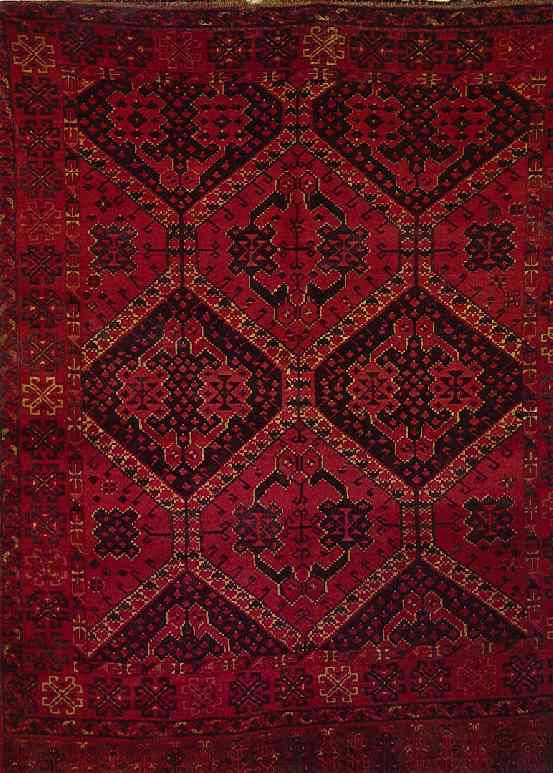
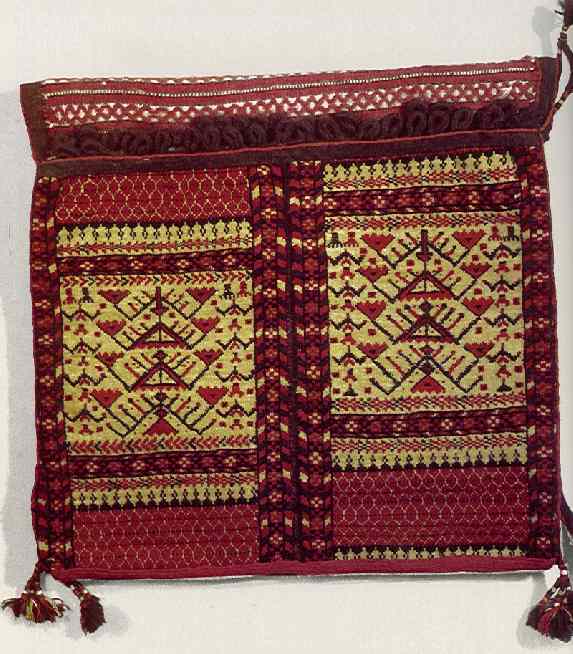
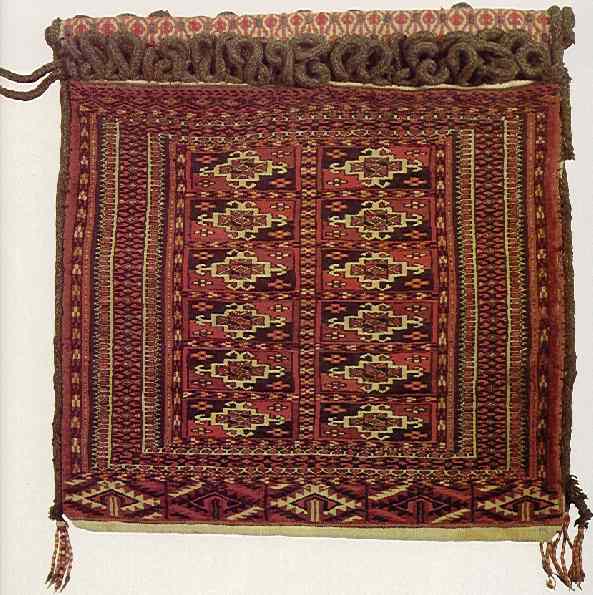
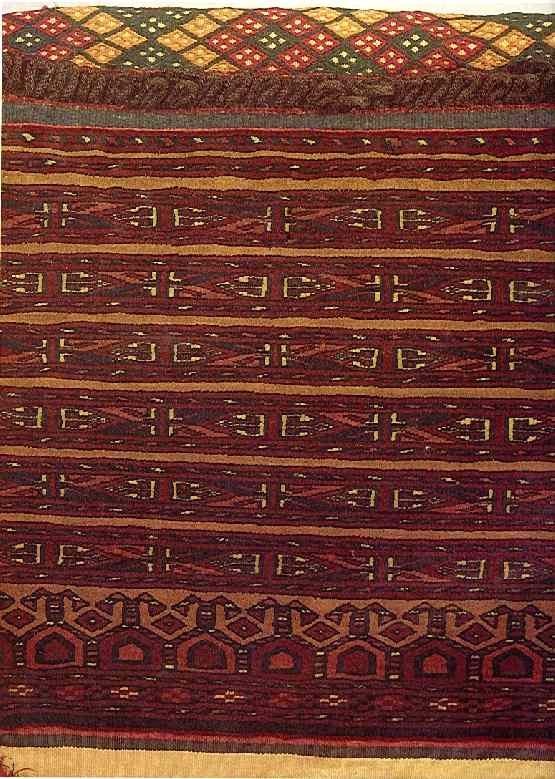
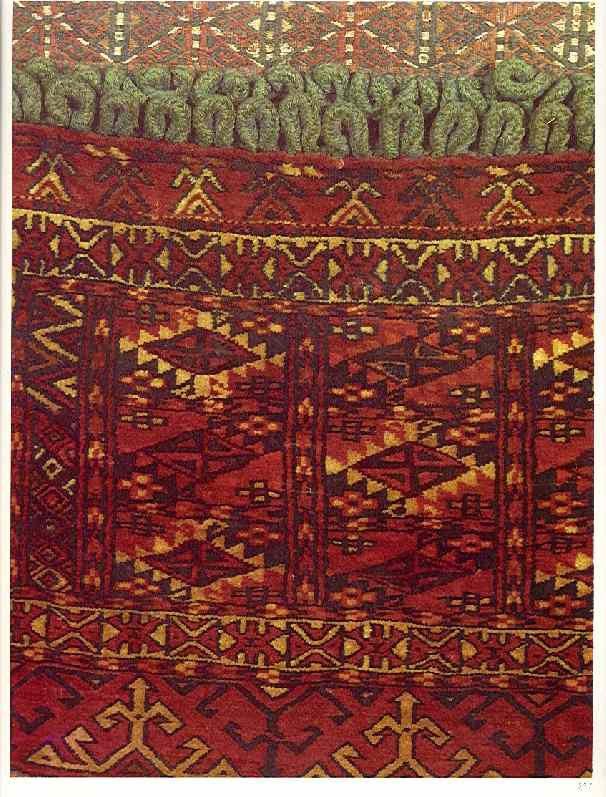
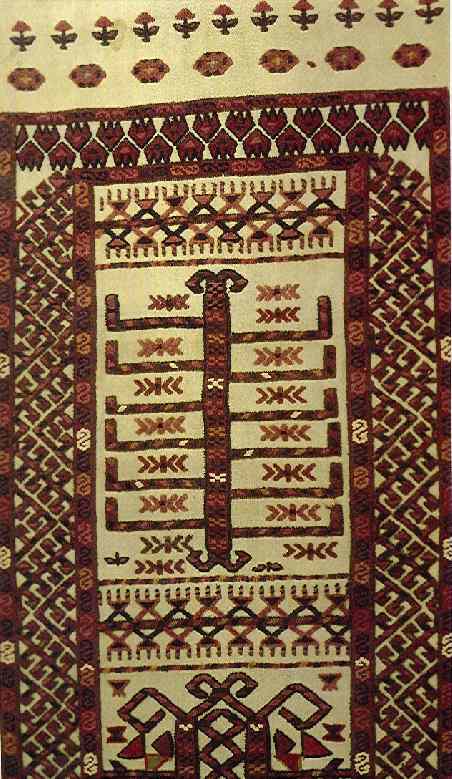
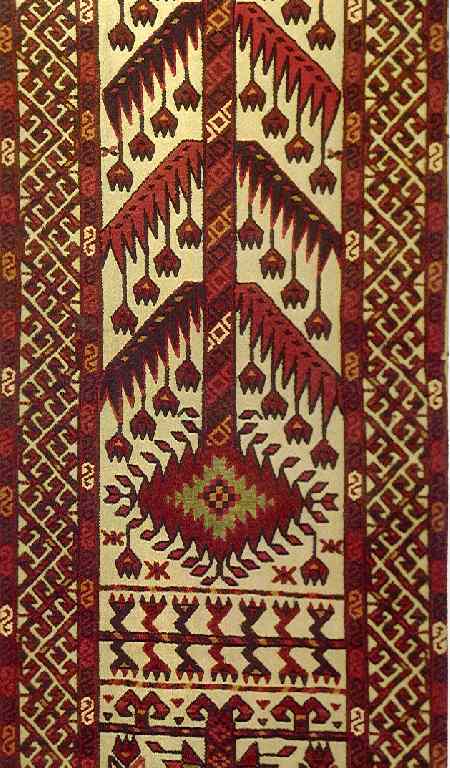
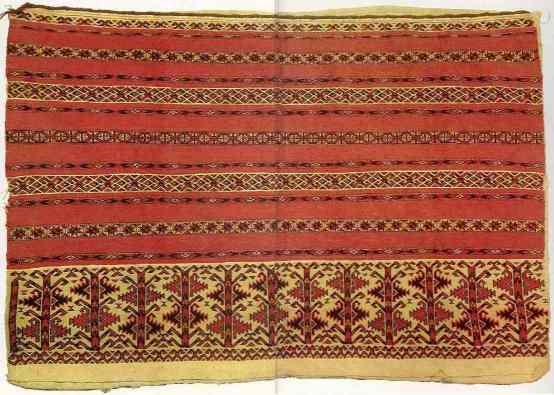
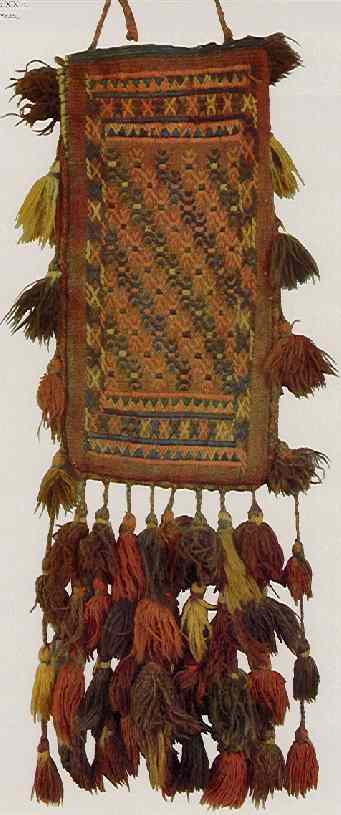
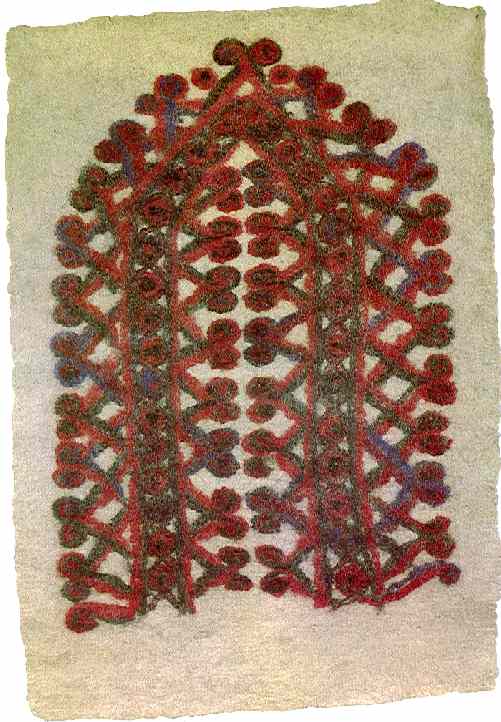
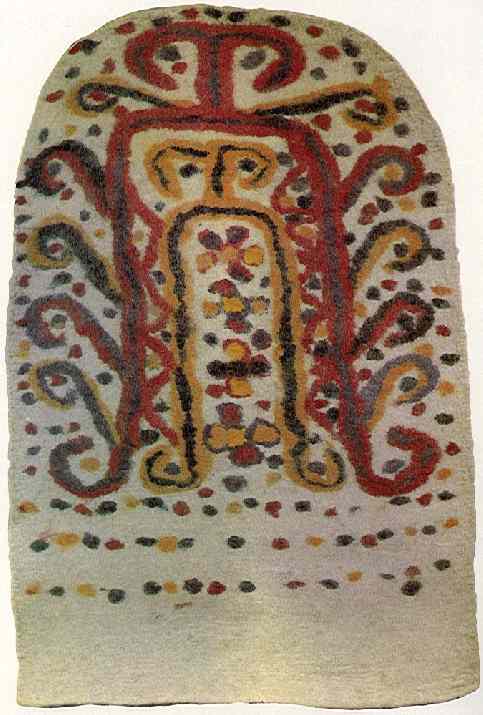
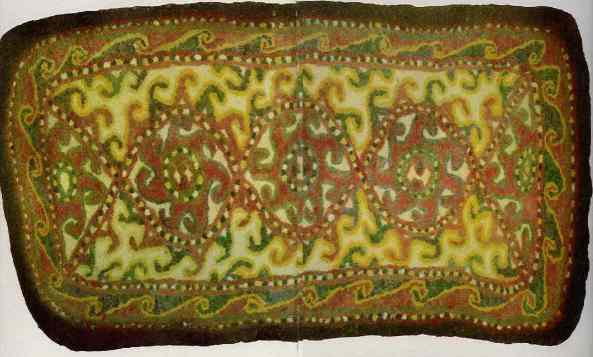
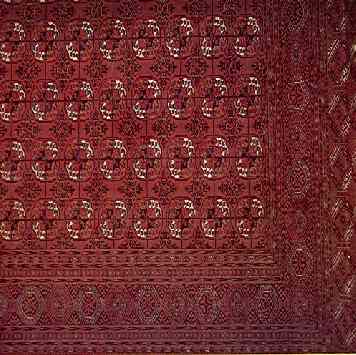
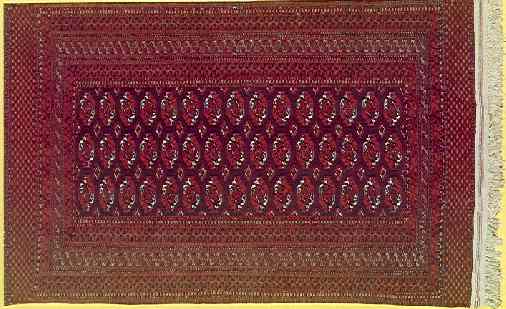
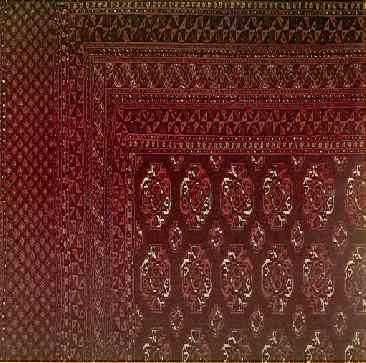
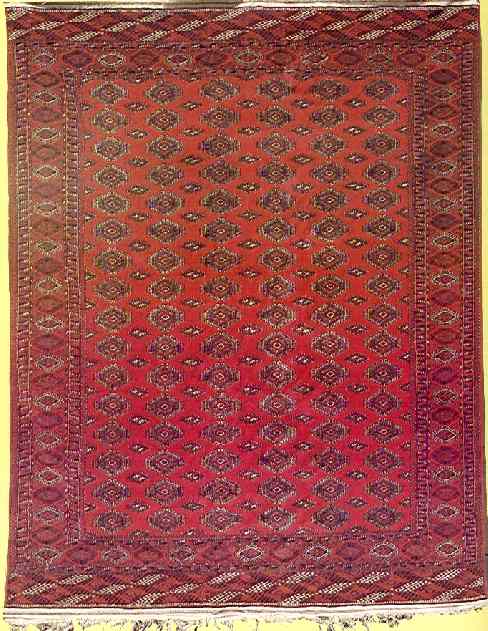
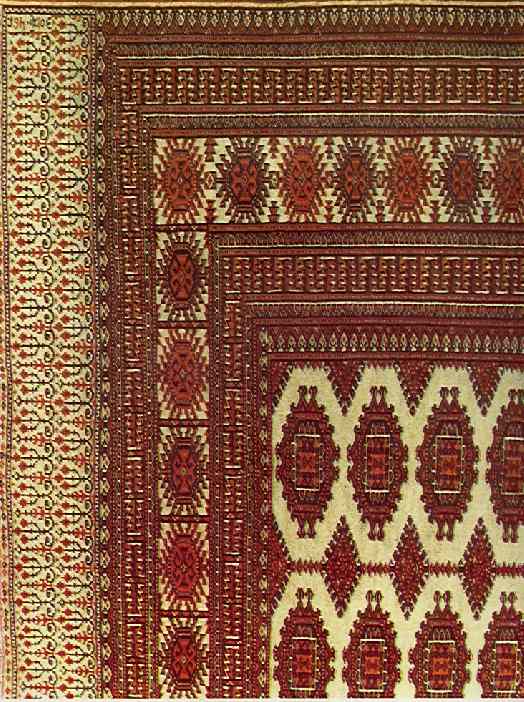
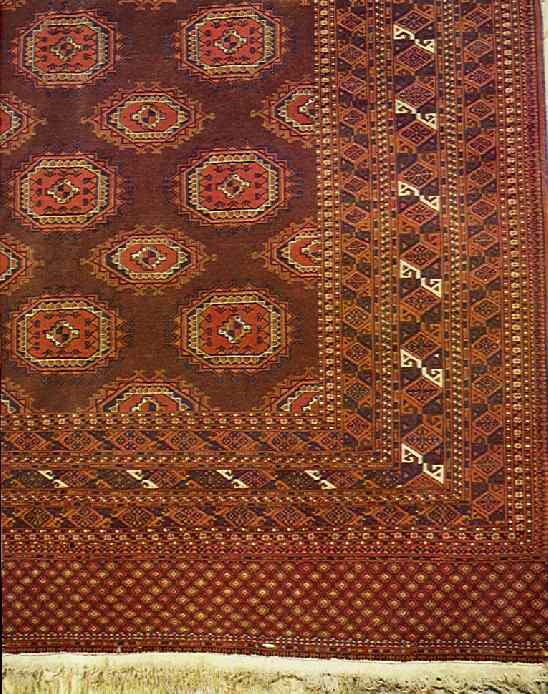
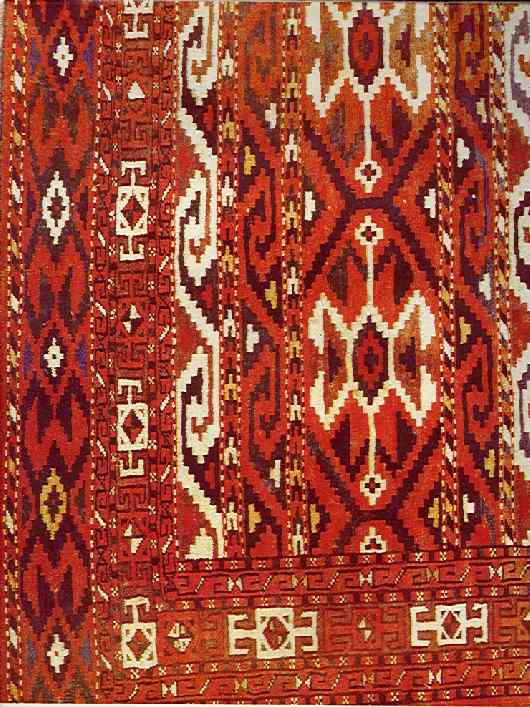
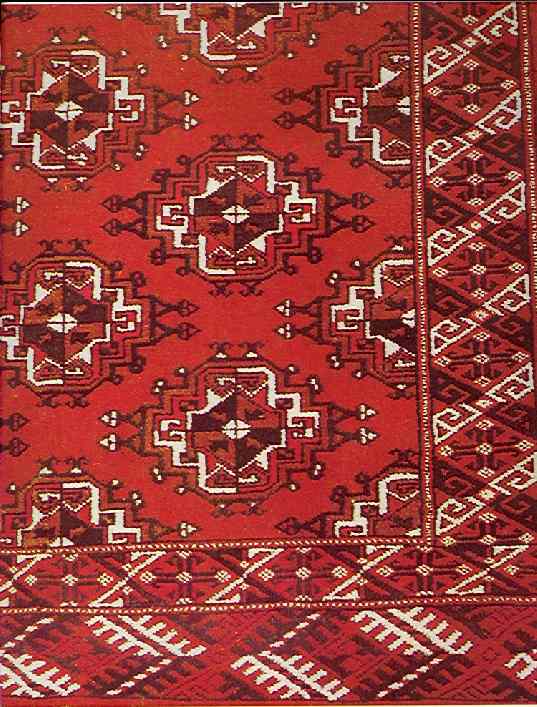
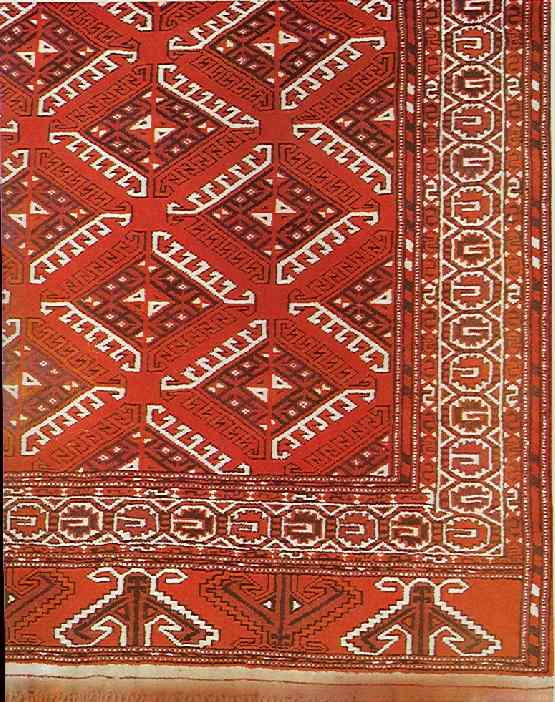
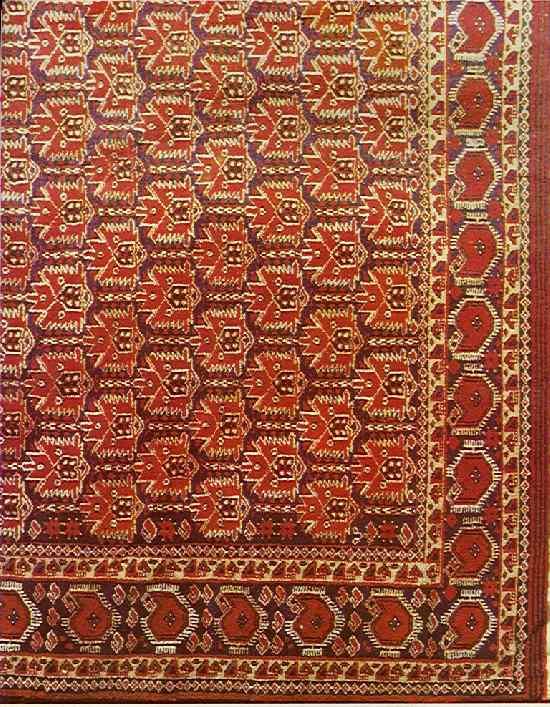
The chief role in Turkmen rugs is played
by ornamentation with its general components - main and supplementary
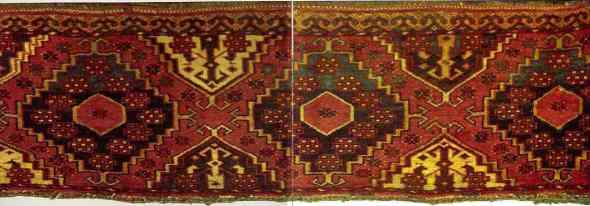
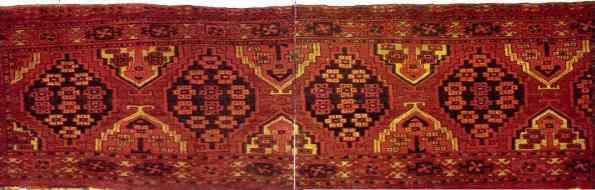
"gels". The origin of ornamental carpet designs has realistic
basis. Just reality was reflected in the carpet design: surrounding nature,
tife and habits of Turkmen peopie. The weavers reflect their feelings and
dreams, joy and grief, their hopes and wishes. If you look more attentive
you'll see the history of origin of Turkmen people, tribe, region and
nature of the weaver. Besides, the gels express heroism, courage arýd
devotion to the Motherland.
The gels of ancient
tribes are kept in modern Turkmen rugs. Thanks to the Salor and Choudour
rugs we have now the tribe gels of old Turkmen tribes that played the
leading role in Turkmenia oF XI-XIV centuries. The Salor tribes are still
consider to be initiators of Turkmen carpet-weaving. And in the end of the
XIX century, when the Salors practically stop the carpet-weaving, Saryk and
Tekke rugs with the very popular "Salor-gel" design appear on
trade markets. The nature gave to Turkmens all necessary to make their
carpets fine and durable.
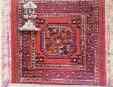
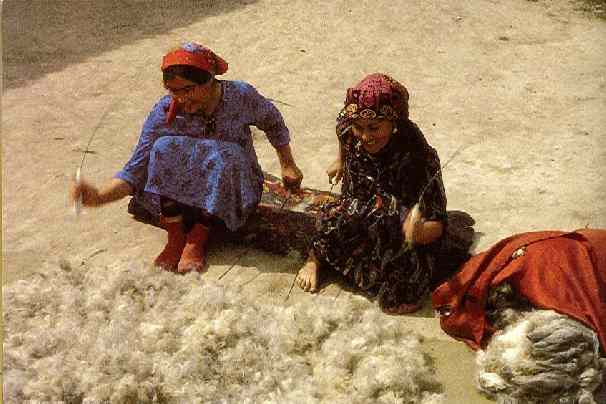
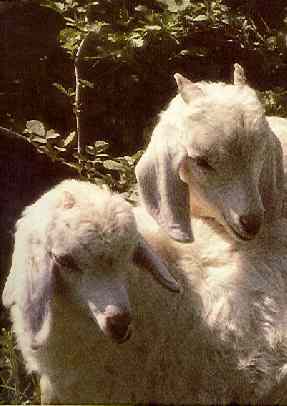
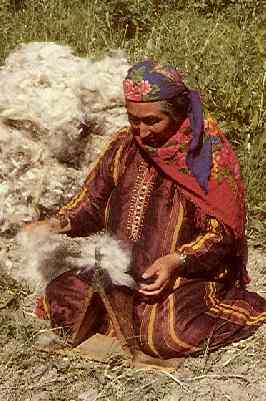
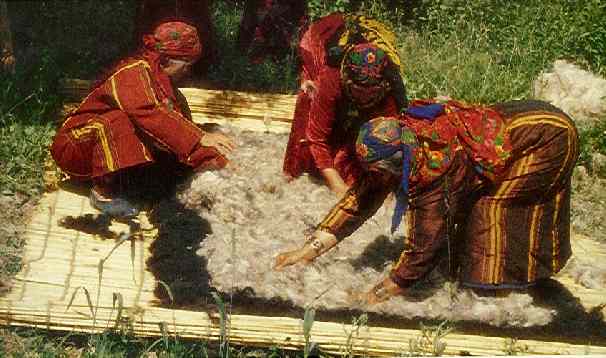
The yarn for the
production of rugs is gotten from the wool of Sarajin sheep. Having
absorbed the heat and cold, dyes and perfumes oF the environment, this wool
is in accordance with the world standards.
The yarn was dyed by the vegetable
dye-stuff, strictly in accordance with traditions. The natural dye-stuffs
were used till the quarter of XIX century. And since the end of XIX century
the synthetic aniline dyes became wide-spread.
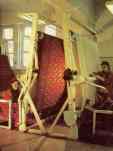
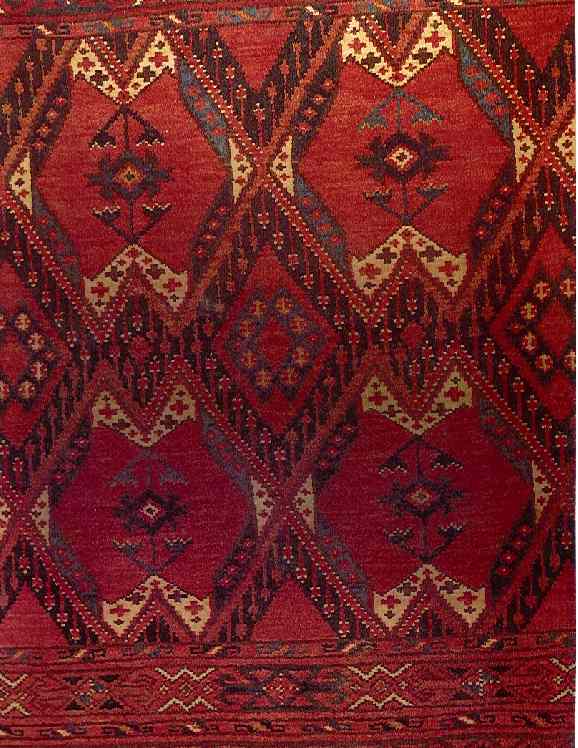
The cotoring of
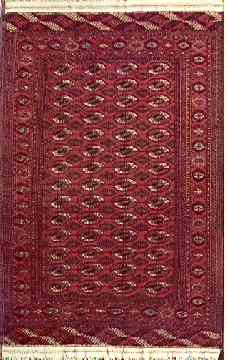
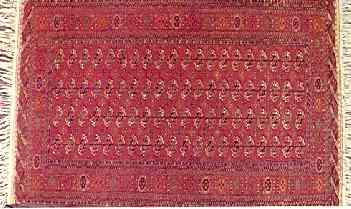
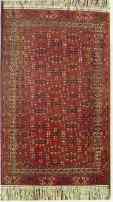
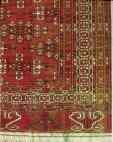
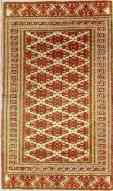
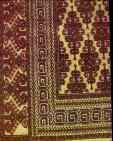
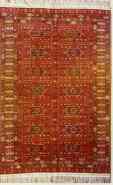
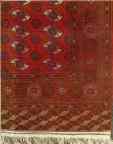
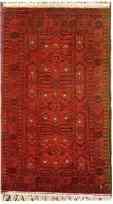
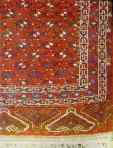
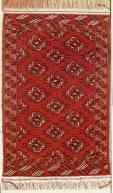
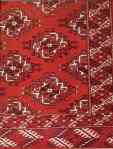
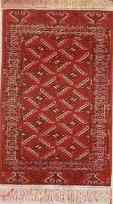
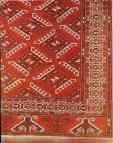
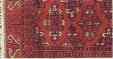
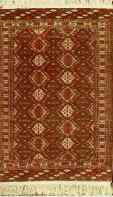
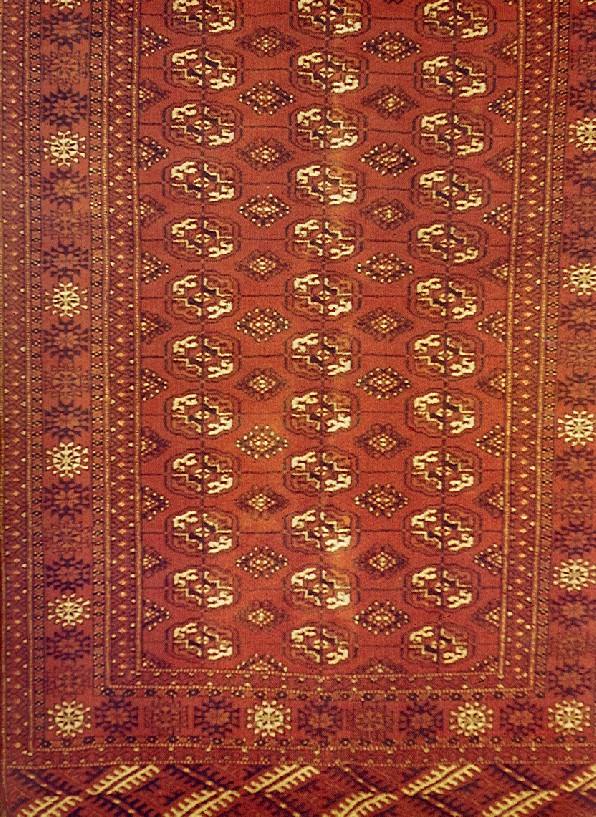
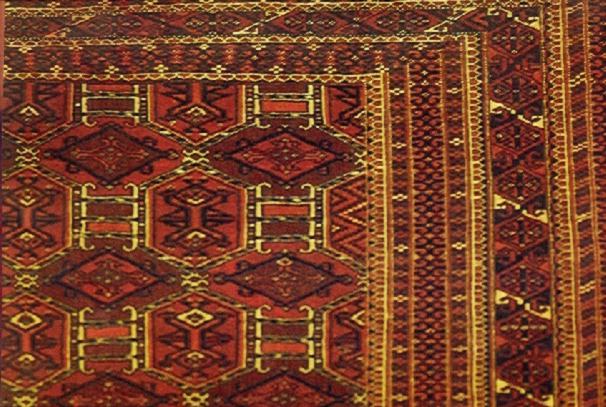
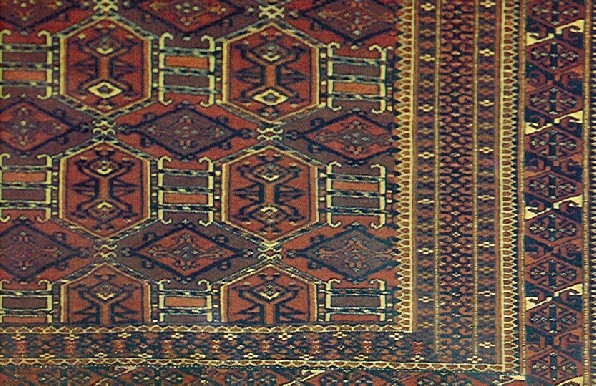
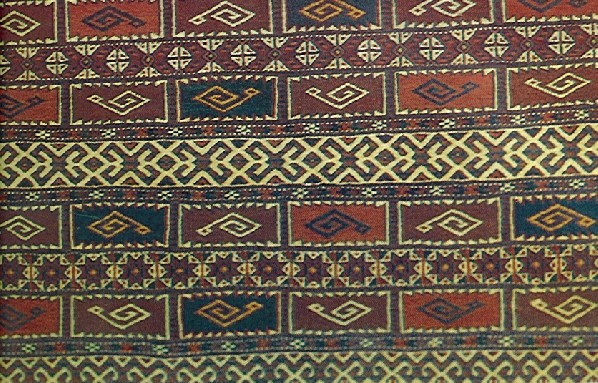
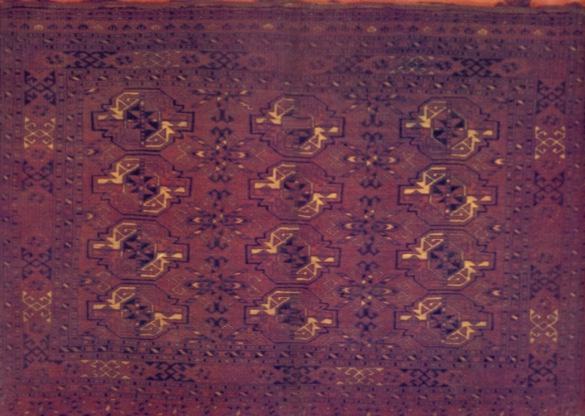
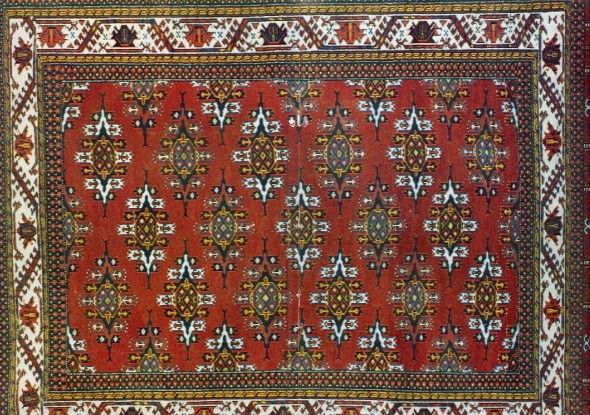
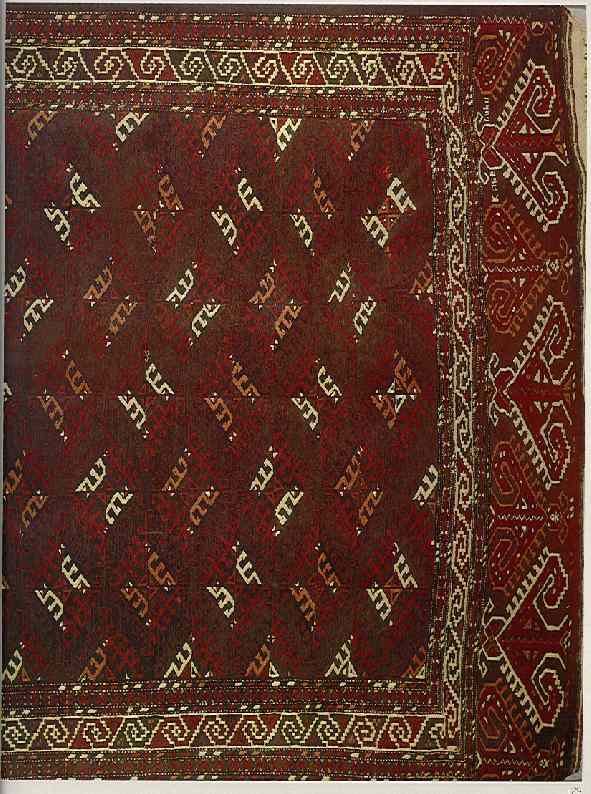
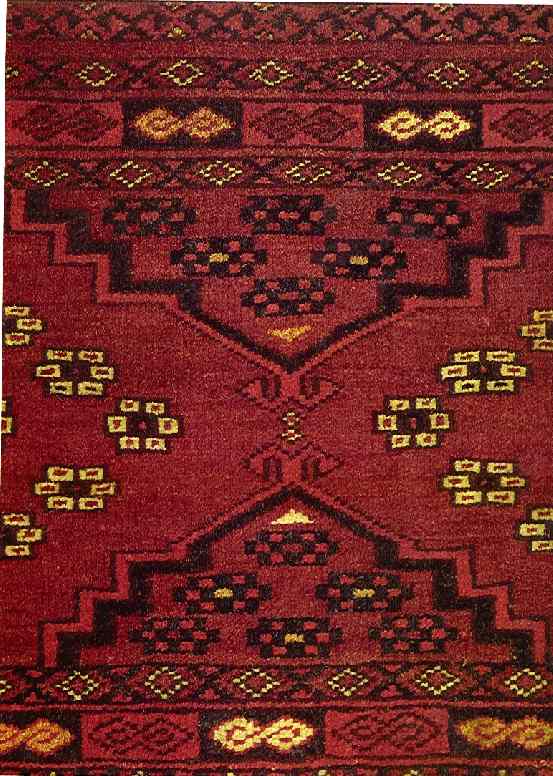
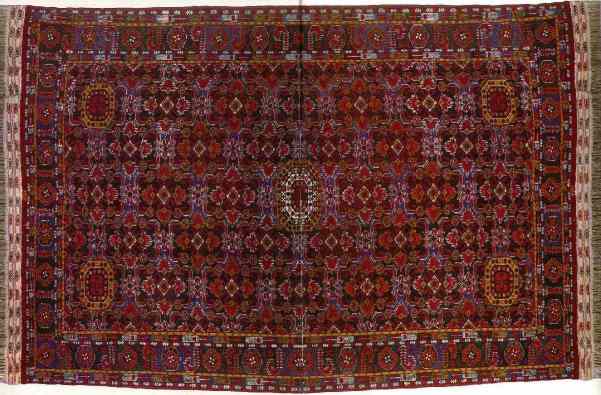
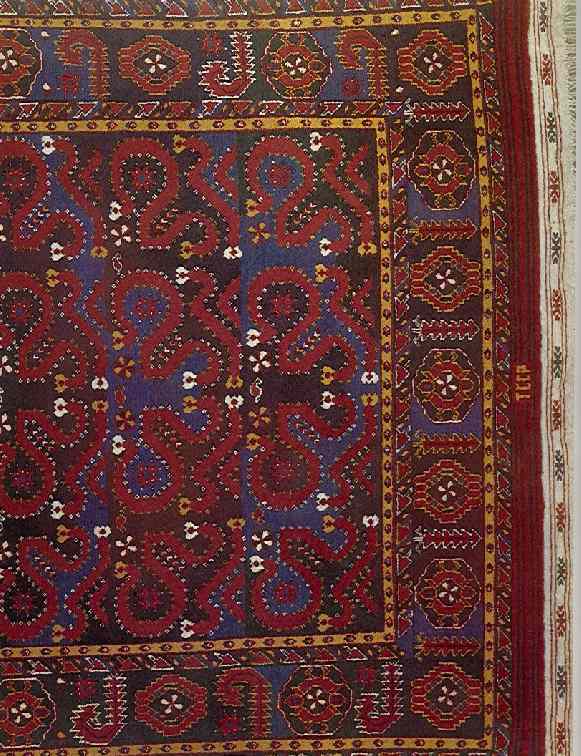
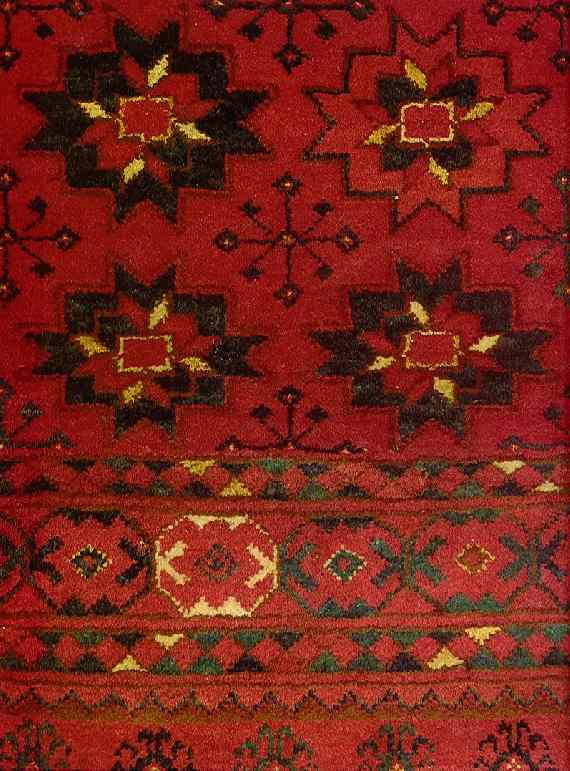
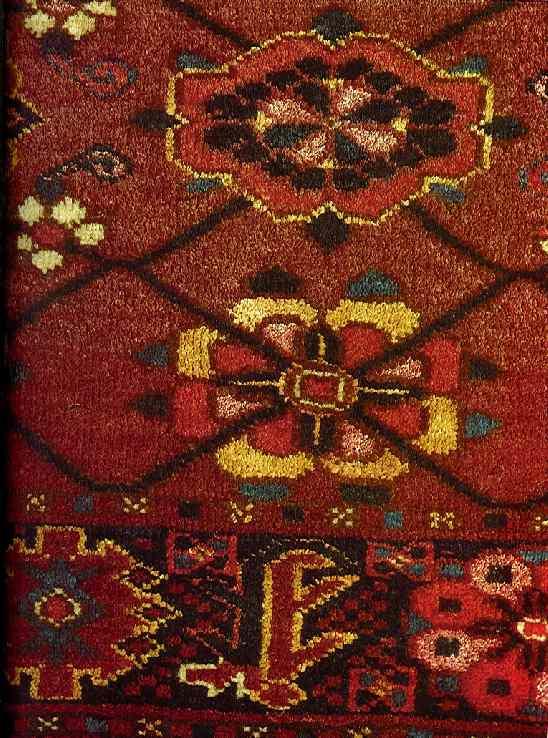
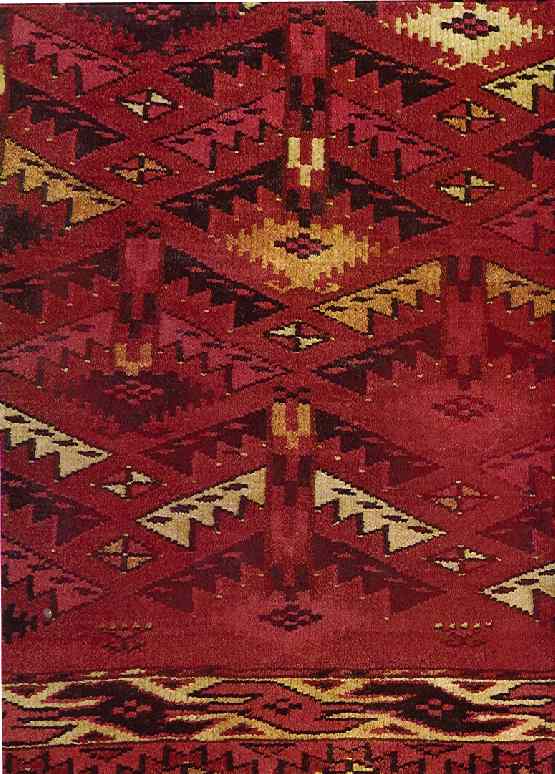
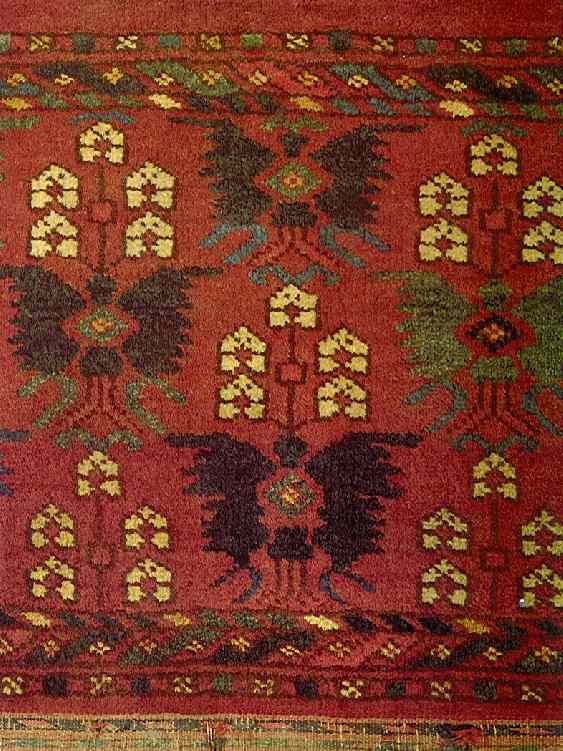
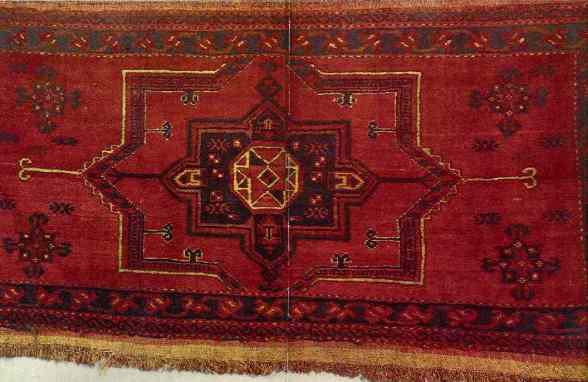
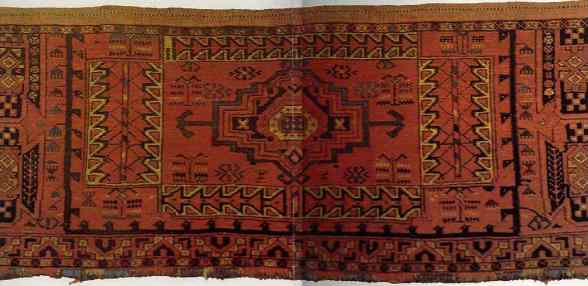
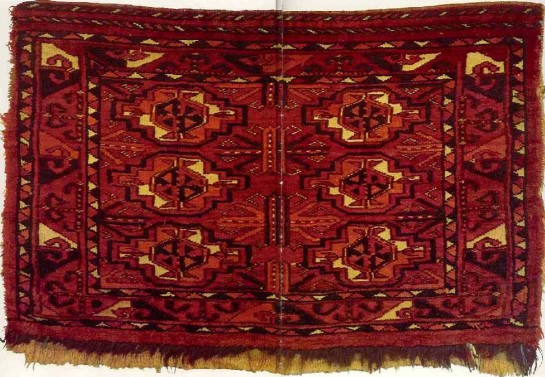
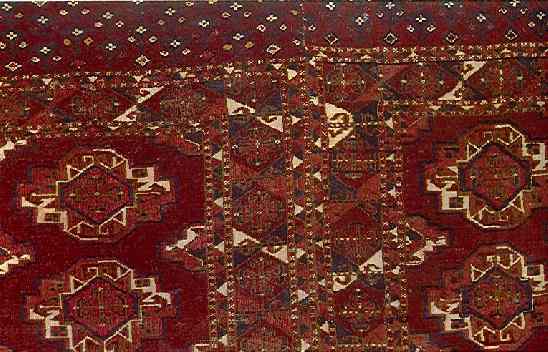
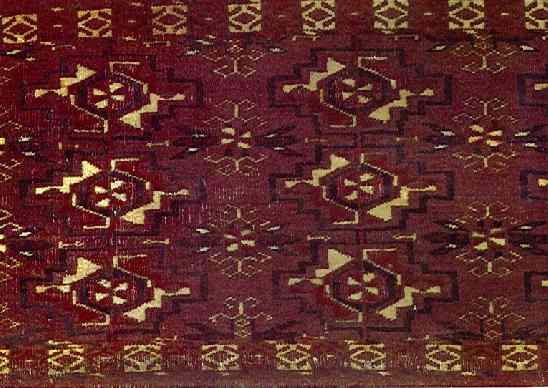
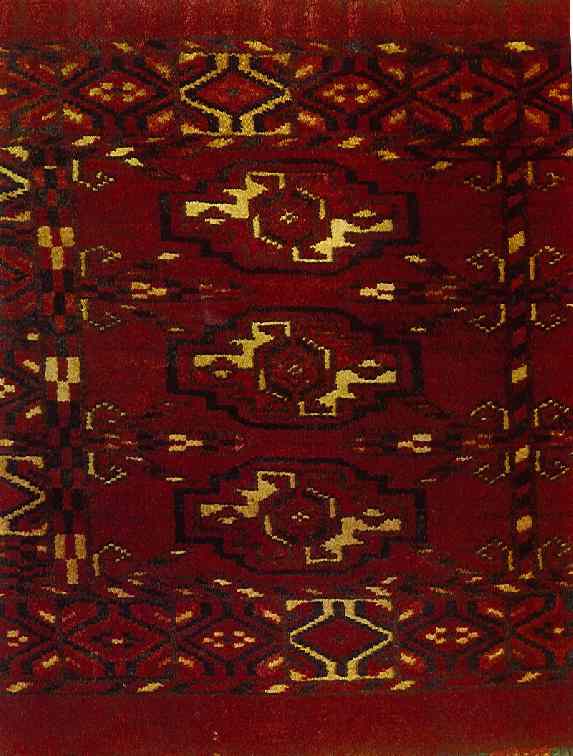
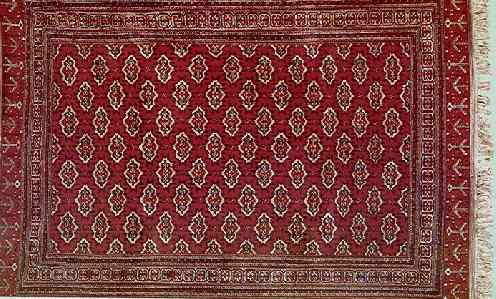
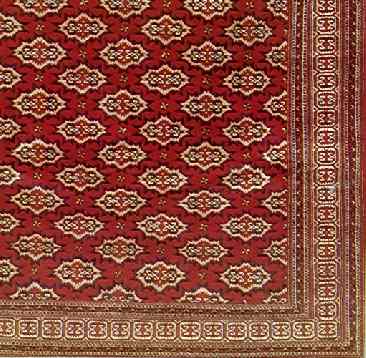
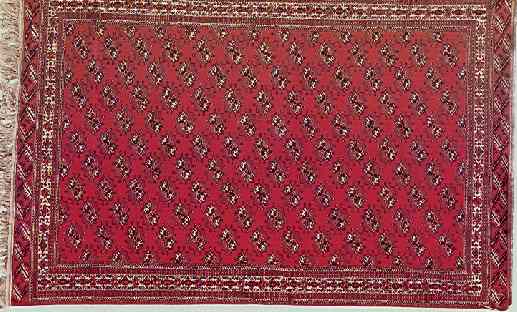
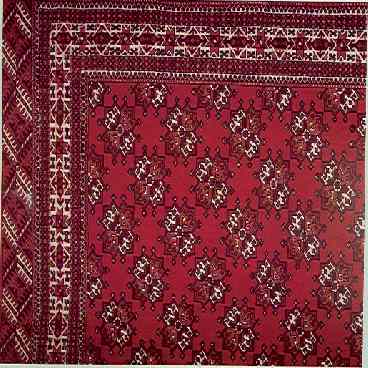
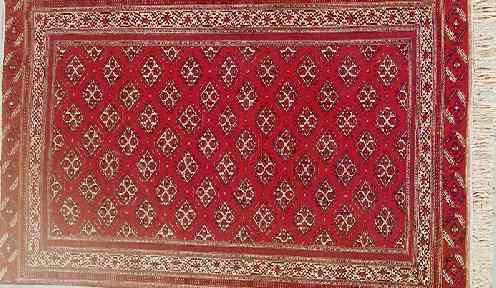
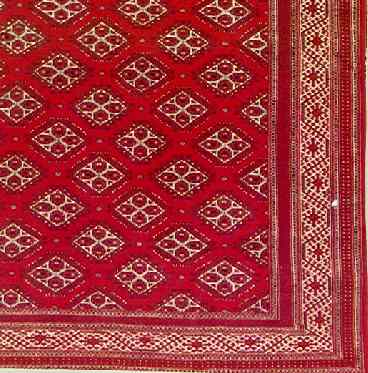
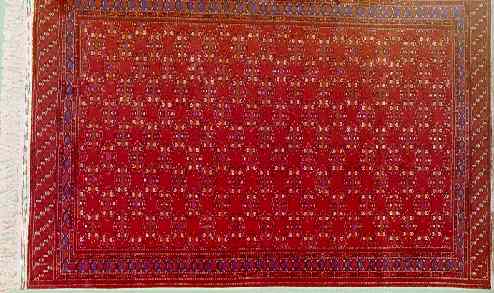
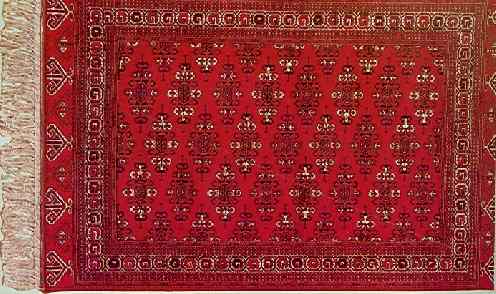
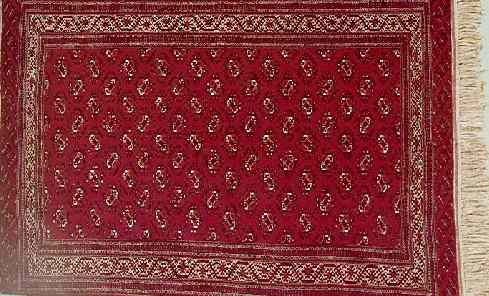
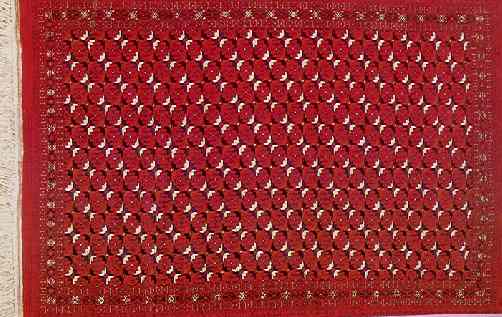
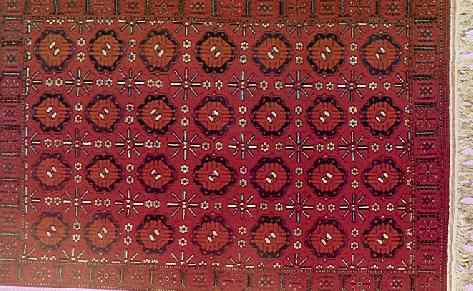
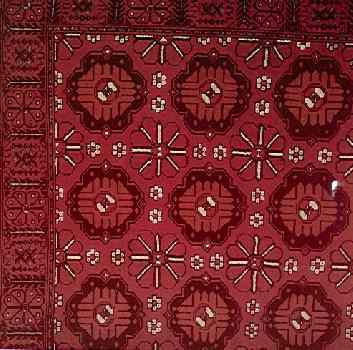
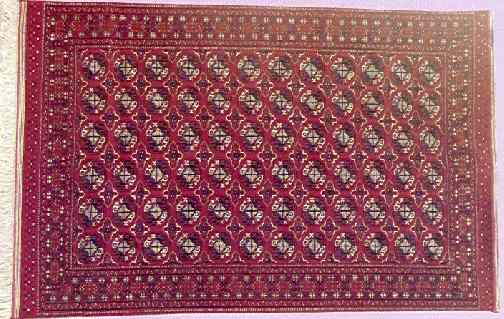
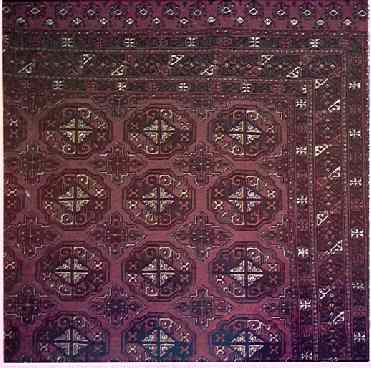
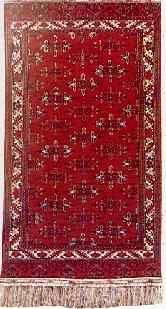
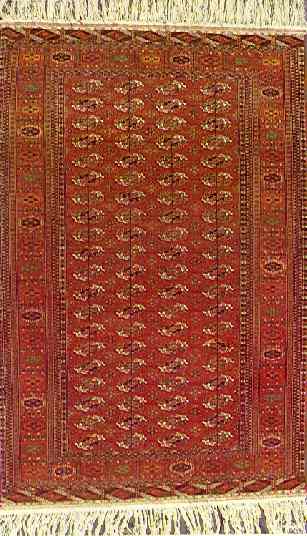
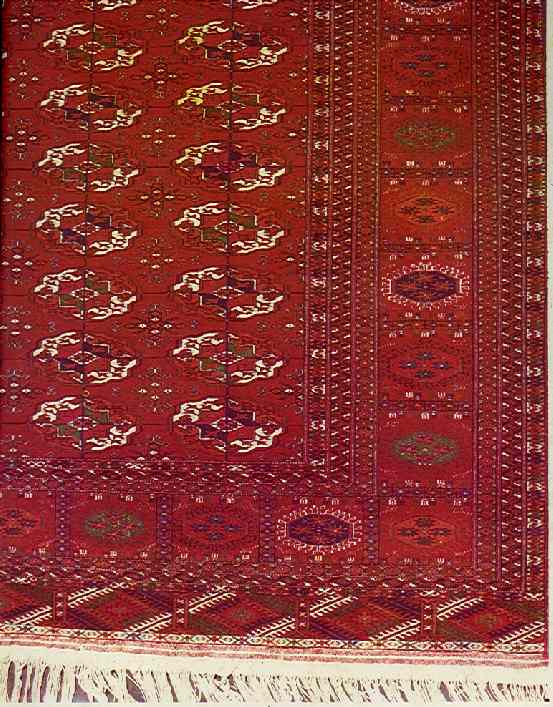
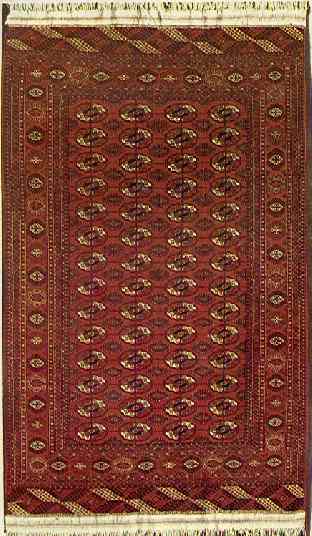
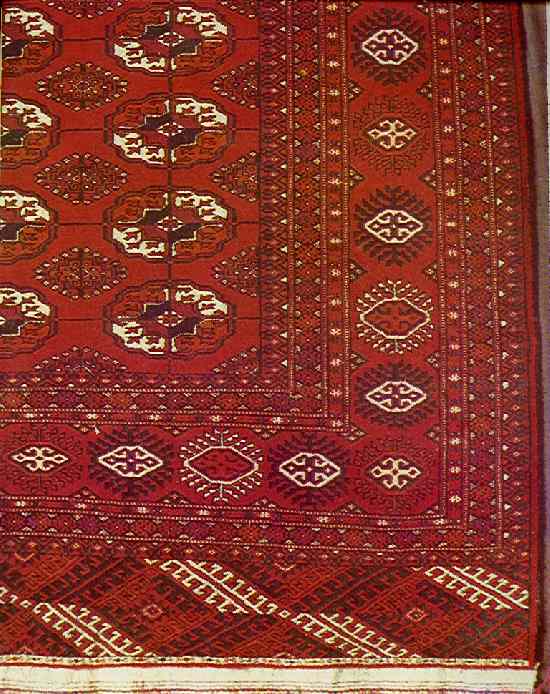
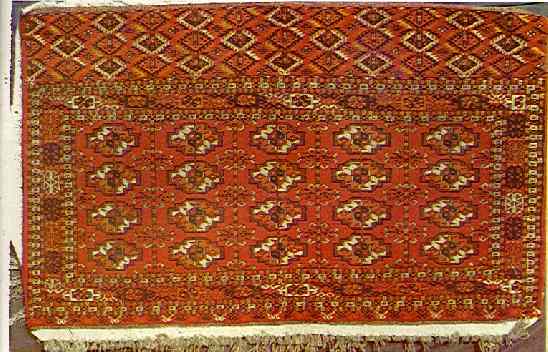
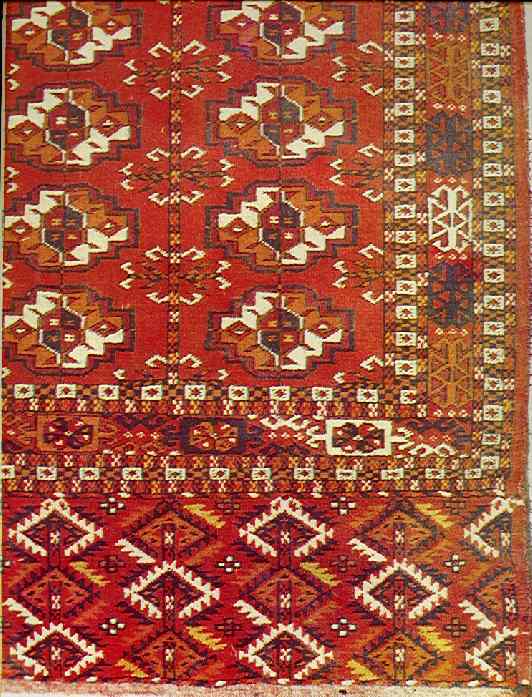
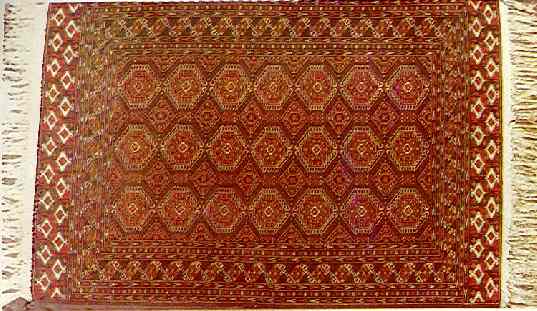
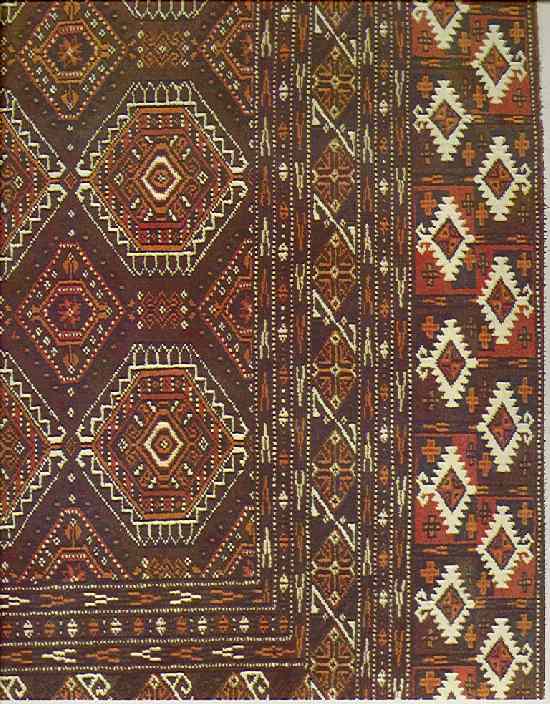
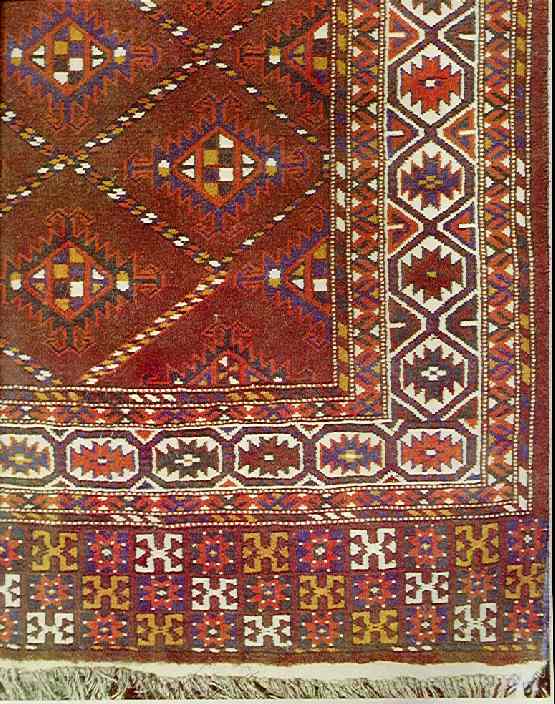
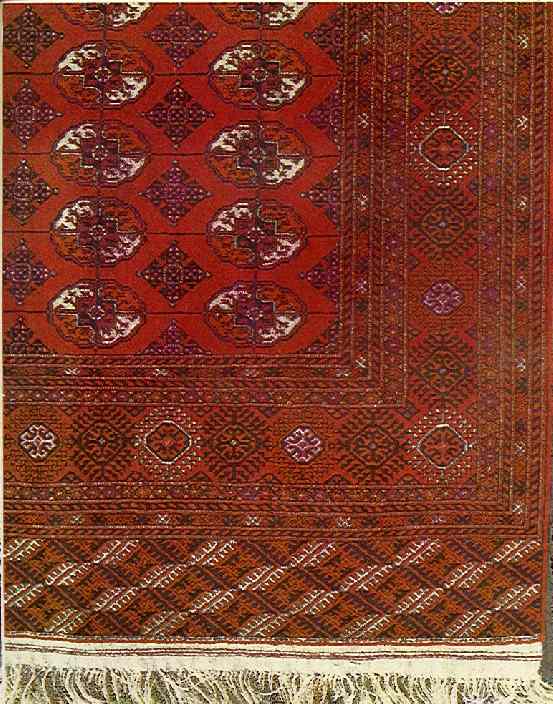
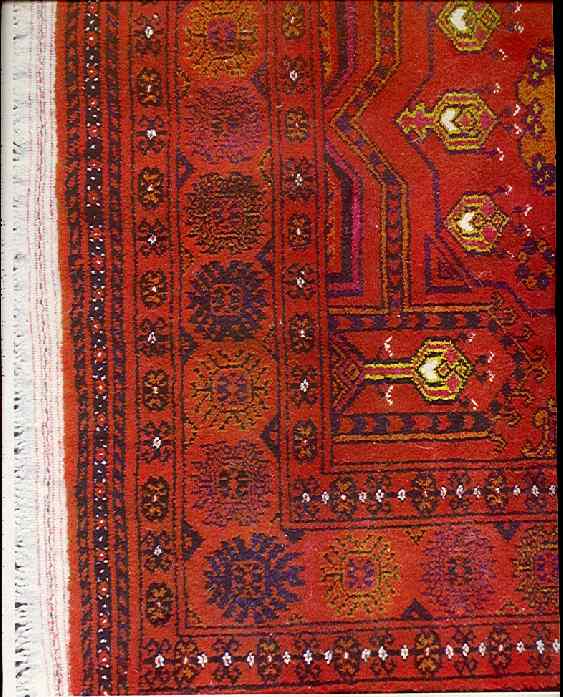
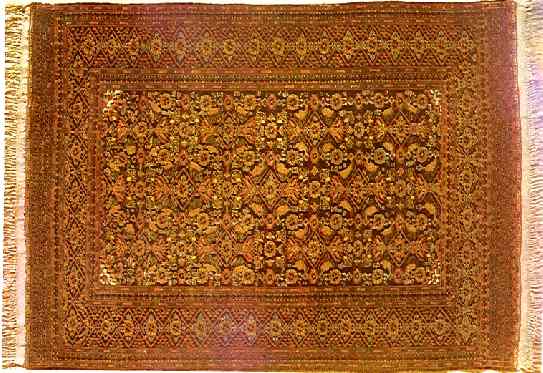
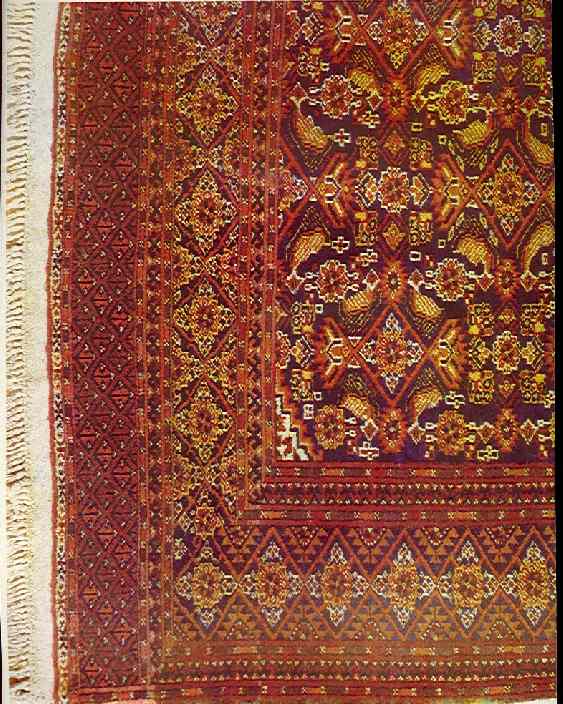
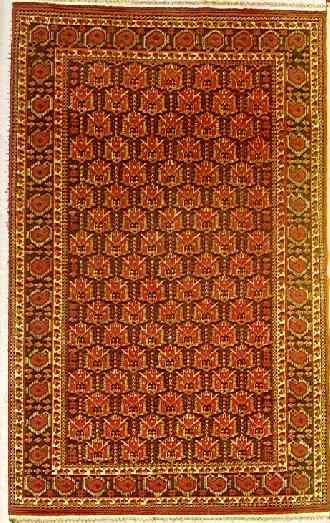
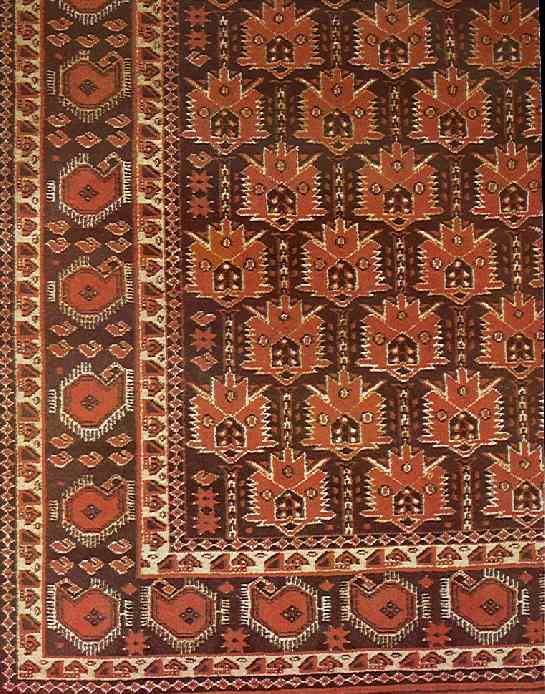
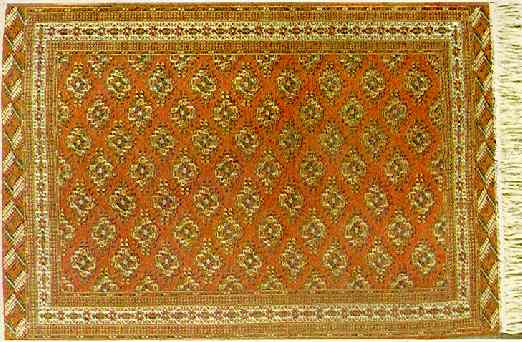
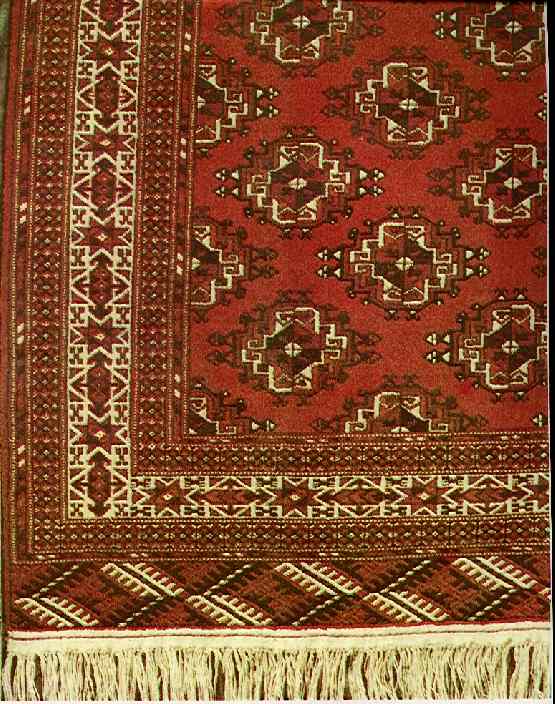
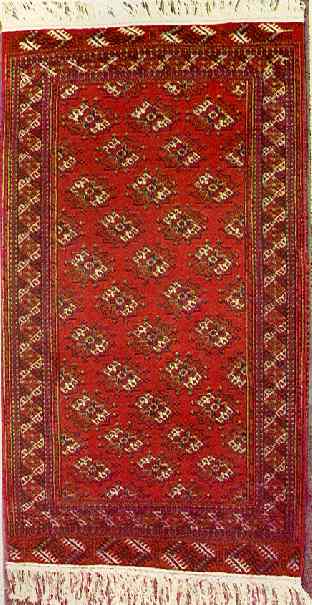
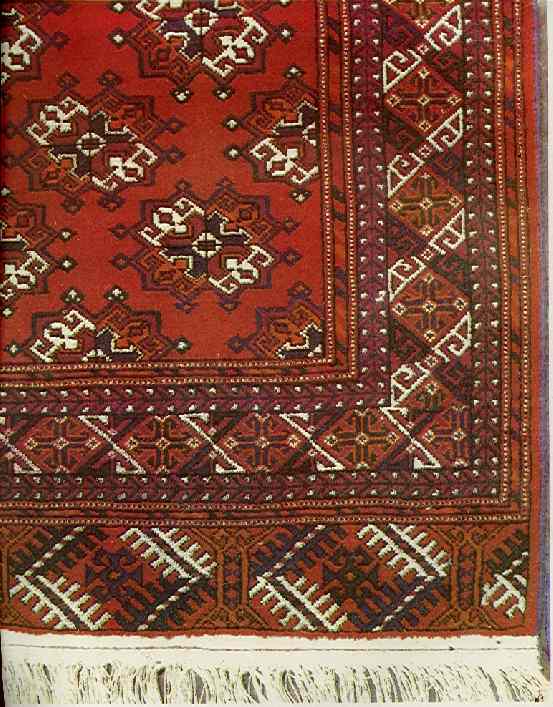
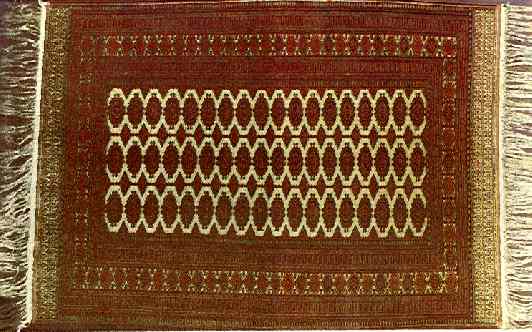
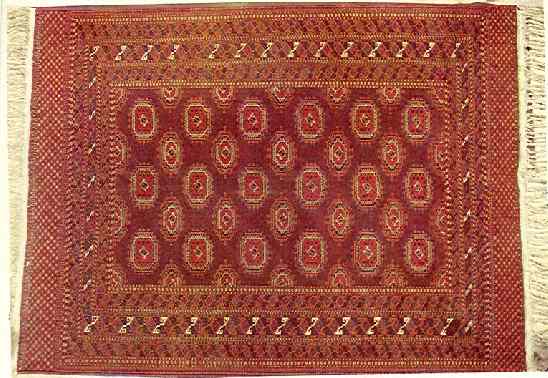
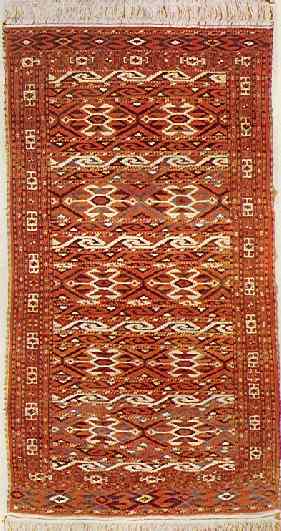
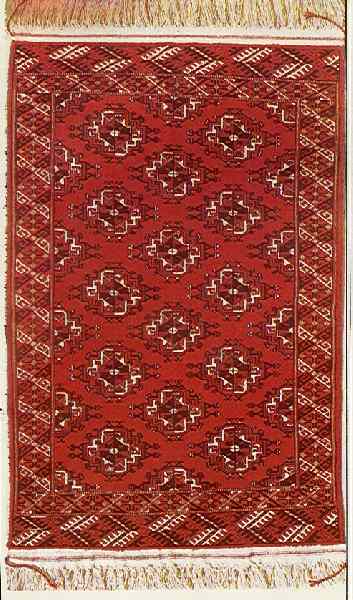
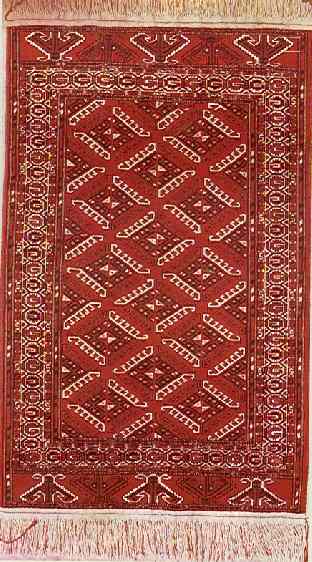
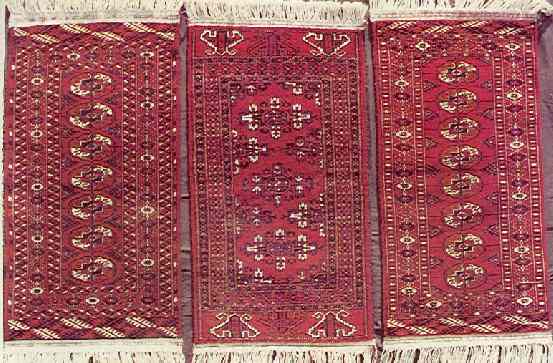
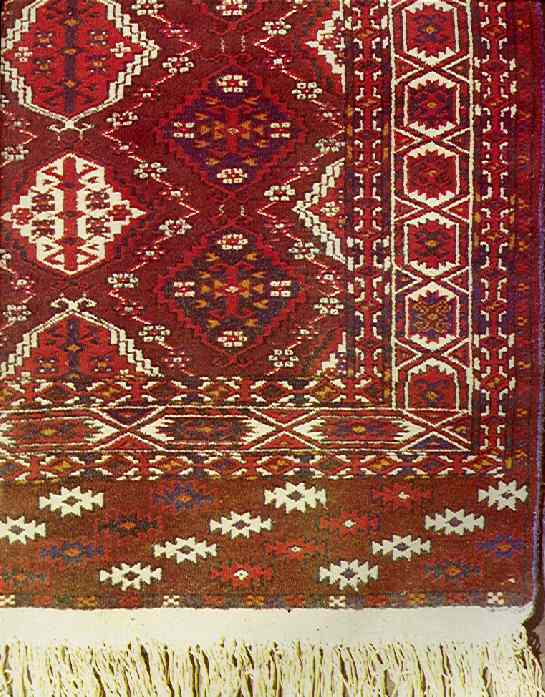
Turkmen rugs is refined and reserved. The main color is red, begining from
the bright holiday color and till the dark cherry and brown colors. IYs
complemented by pieces of yellow, dark green, blue, dark blue and white
colors. The center is framed by dark blue, dark brown and sometimes black
colors. The white details of a gel accord with the whole coloring because
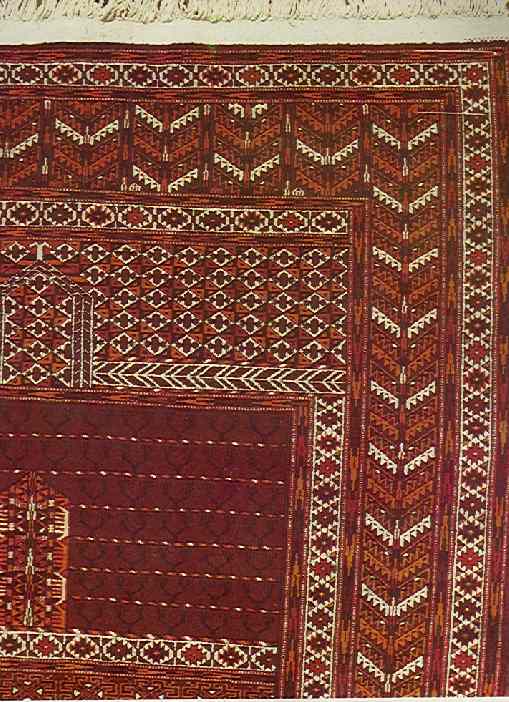
of the natural color of the wool - warm brown color. The surface of rug is
remarkable by the depth of a color, velvety and light twinkling. This
twinkling is intensified of prolong using.
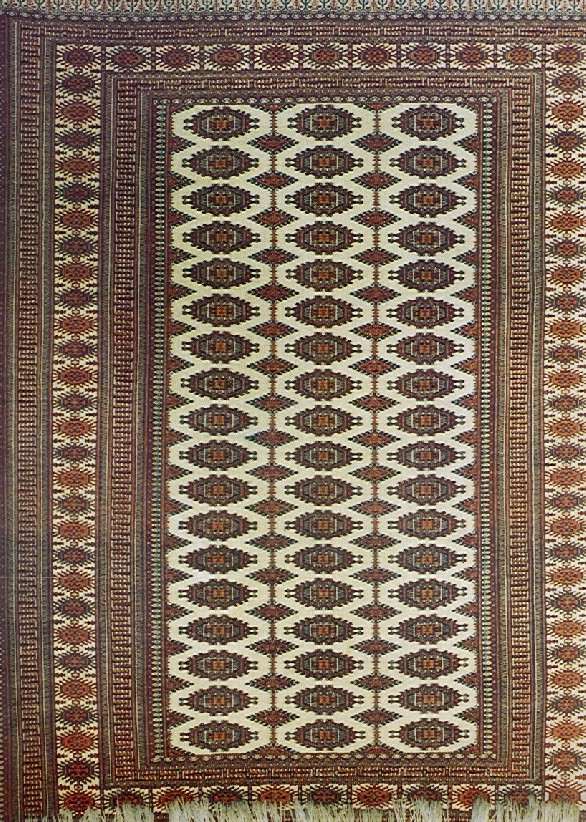
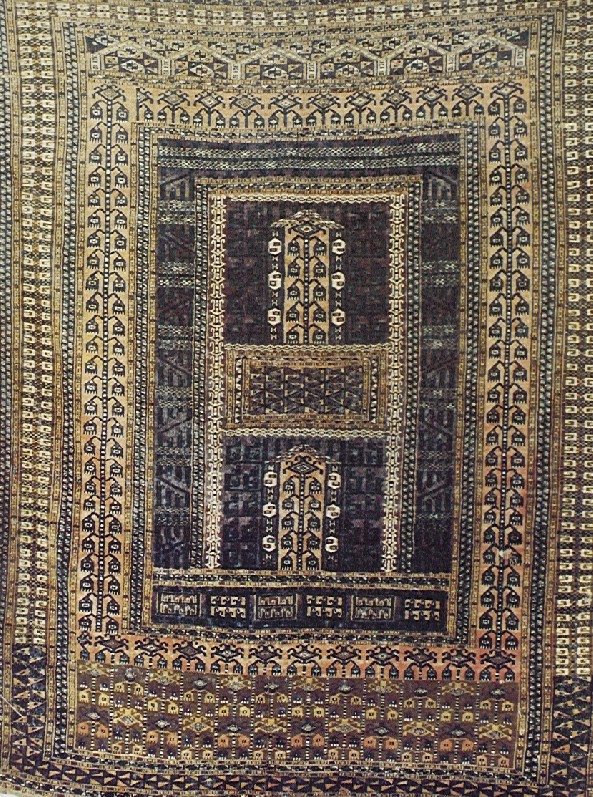
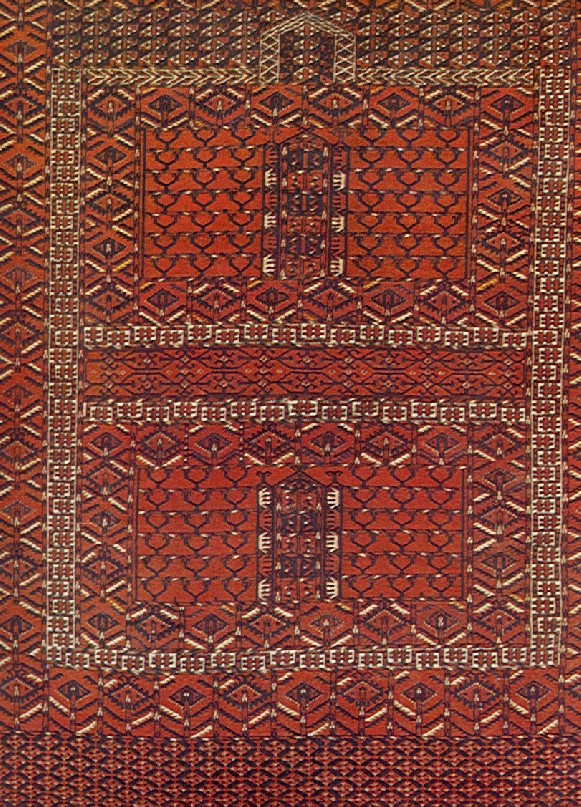
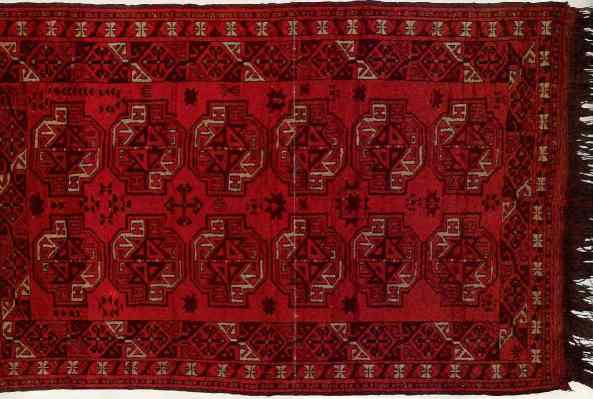
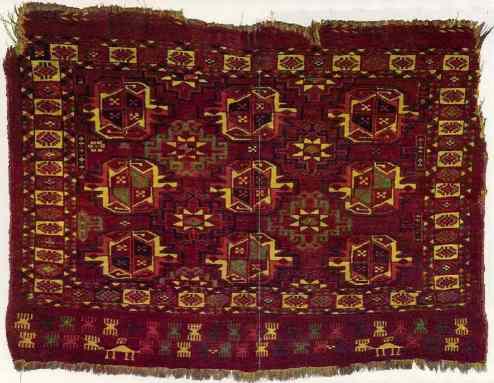
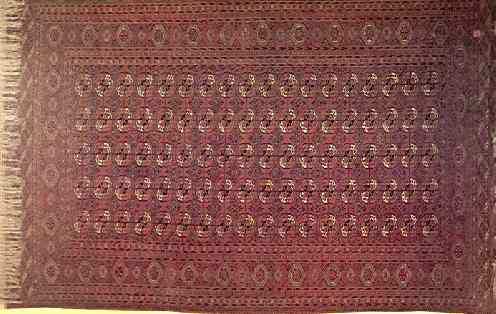
Modern classification divides the Turkmen
rugs into three groups:
These are:
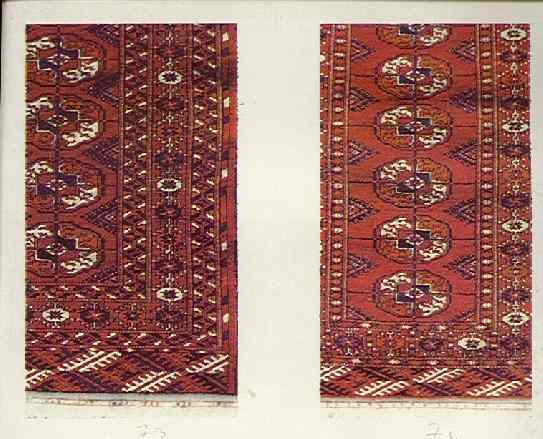
I. Teke rugs, Akhal-Teke
rugs, Pendi rugs.
II. Yomut rugs, Choudour
rugs.
III, Beshir rugţ, Kerki
rugs, Kizylayak rugs.
All these groups are differed from
each other by decorations, patterns, coloring, density and height of a
pile. In turn, each group unites the rugs ot various designs which have
their own beauty.
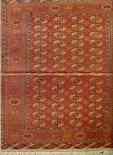 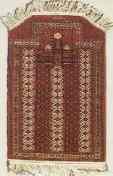 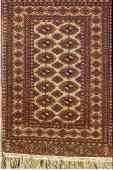 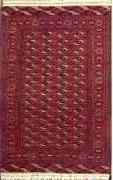
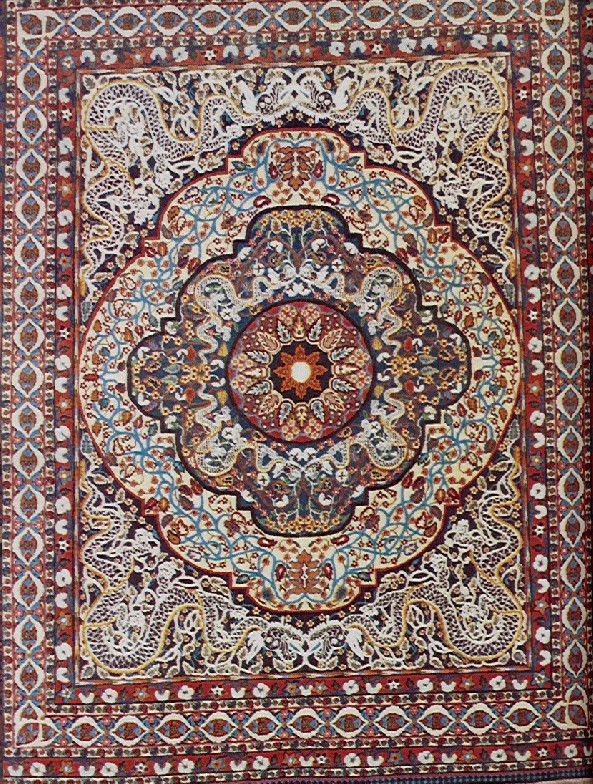
The main merit of
Turkmen rug is density, provided by skills of the carpet-weavers. They could
tie from 180 to 400 knots to a square meter.
There's one merit else: its dyes become
more fine and the rug turns into a real masterpiece of art. By its
technical fulfilment and aesthetic contents, the Turkmen rug may be concern
to antiquariate.
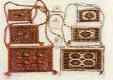 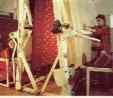 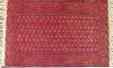
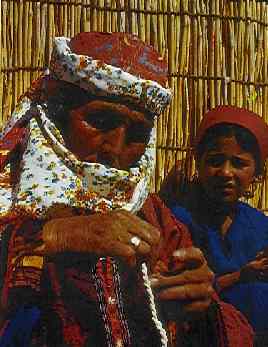
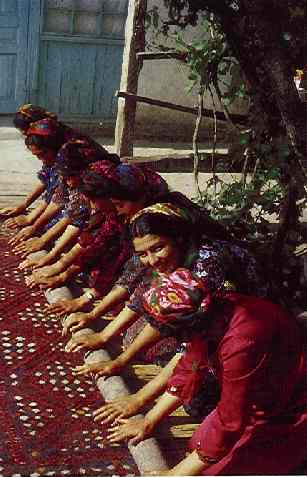
Nevertheless, our main
wealth - the Turkmen : women to whom a big role in revival of the Turkmen
rug's fame belongs. Their hands create ihe real masterpieces of art,
preserving and multiplicating tradititions of the ancient handicraft. They
pass these traditions and secrets of ornamentation and dyes from one
generation to another.
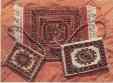 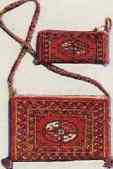 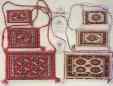
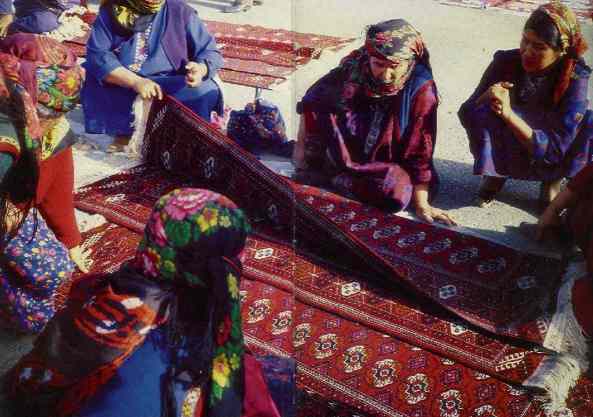
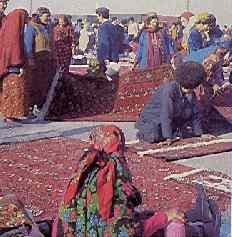
The fame of beauty and
high quality of Turkmen rugs is known in tens of countries of all
continents of our planet. This can be confirmed by numerous international
awards at the International Exhibitions and Fairs in Paris
and Montreal, Leipzig
and Brussels.
Among them - a Grand Prix, eight gold and one bronze medal.
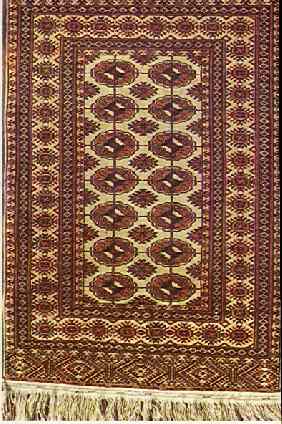
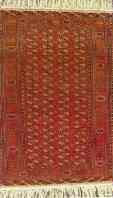
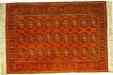
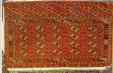
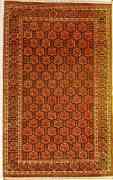
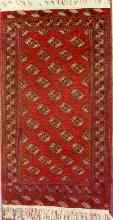
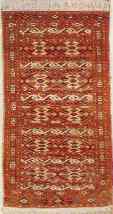
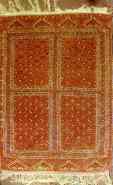
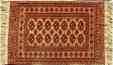
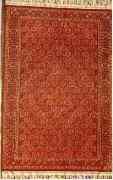
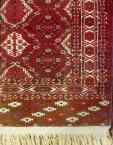
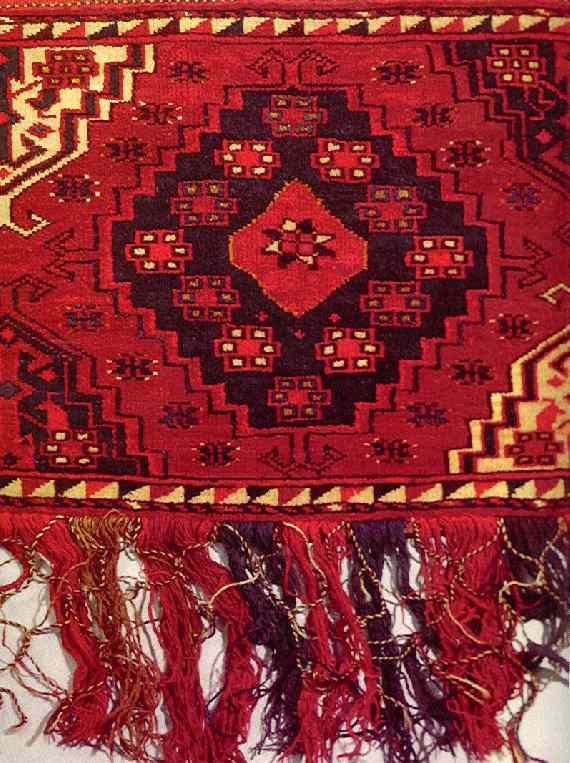
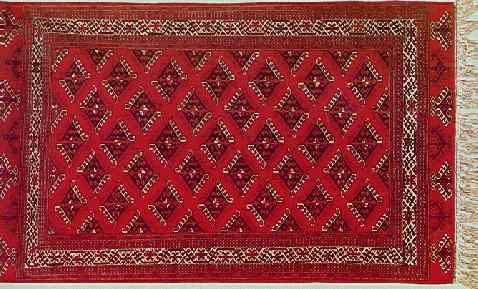
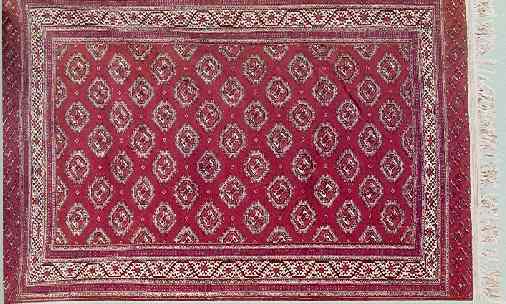
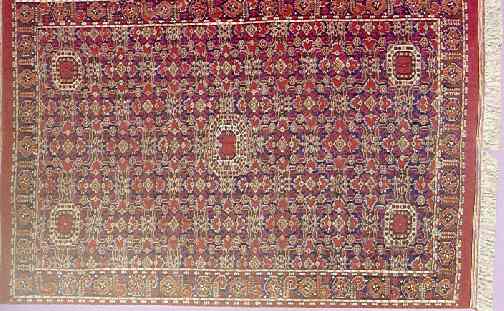
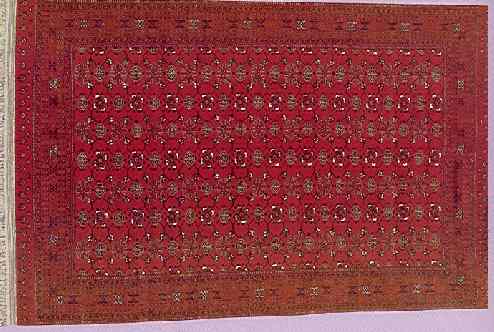
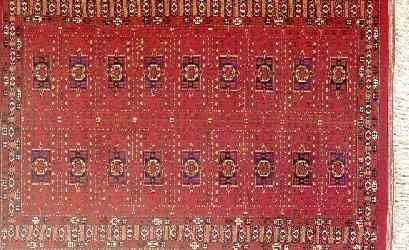
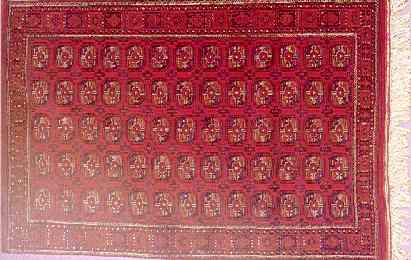
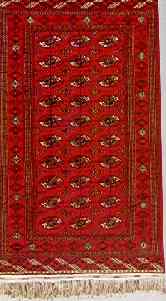
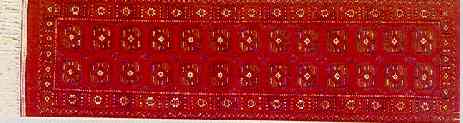
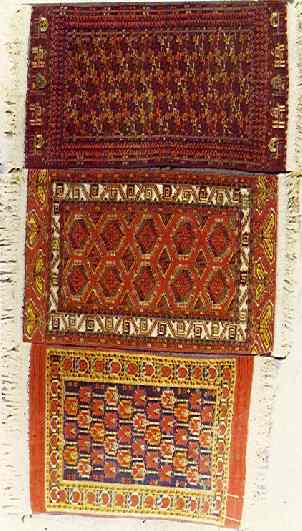
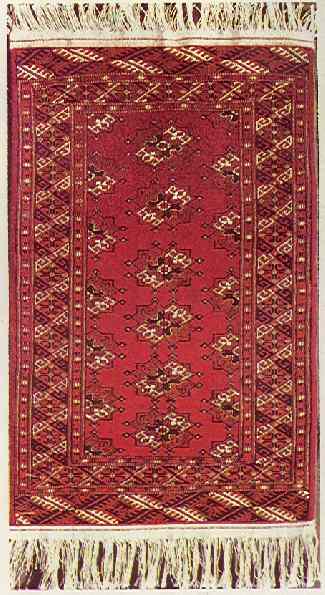
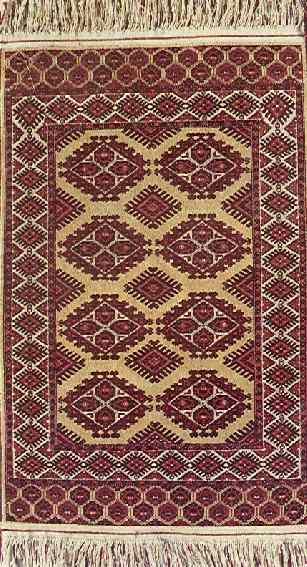
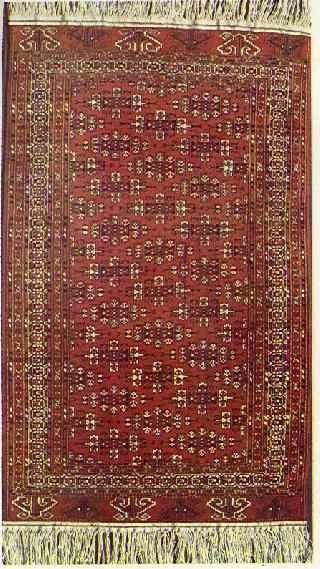
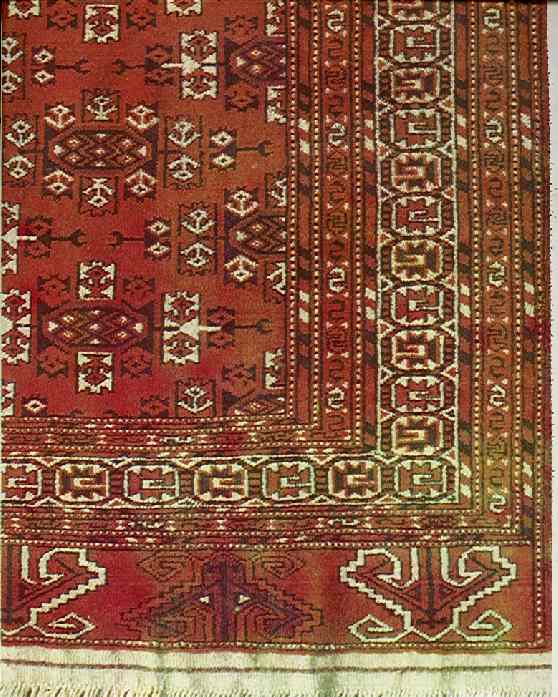
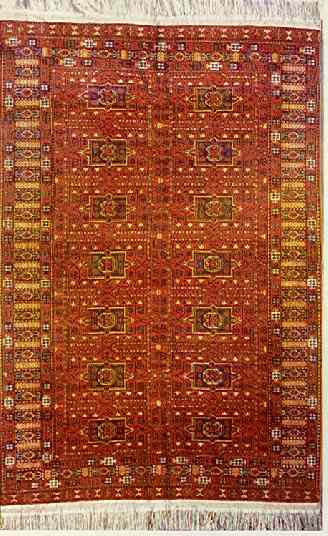
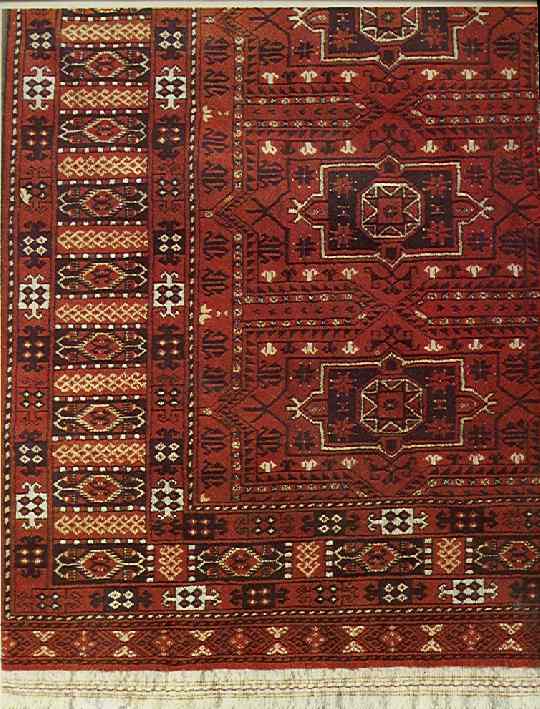
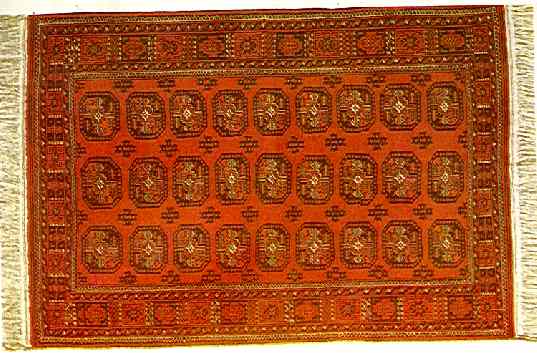
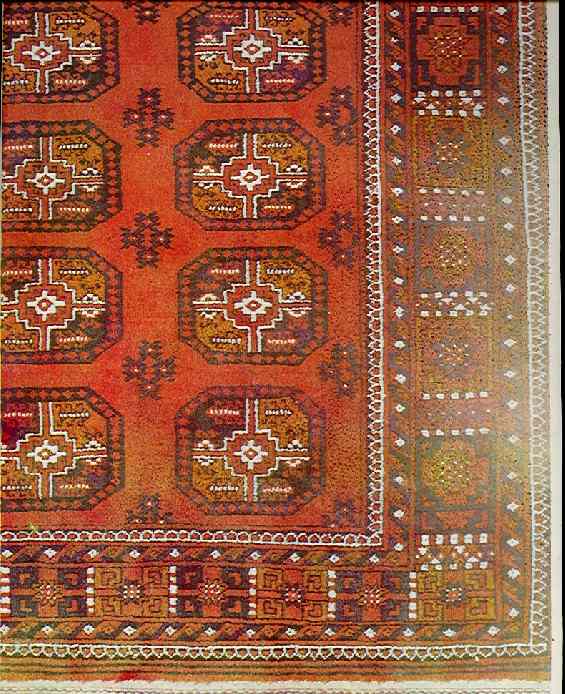
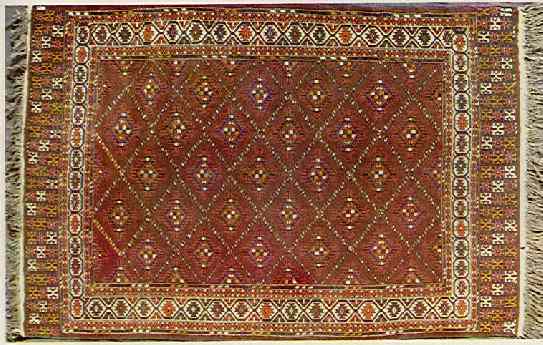
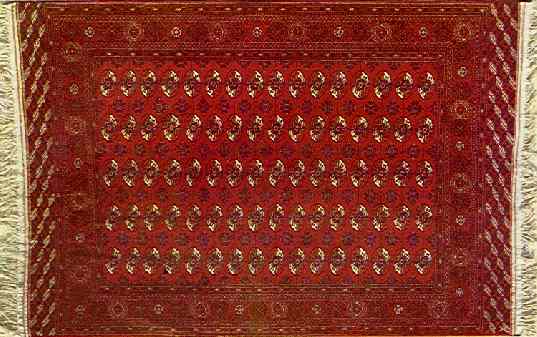
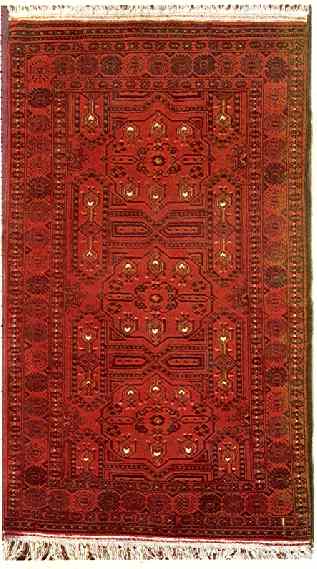
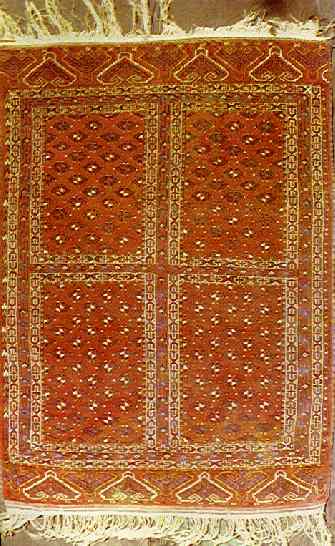
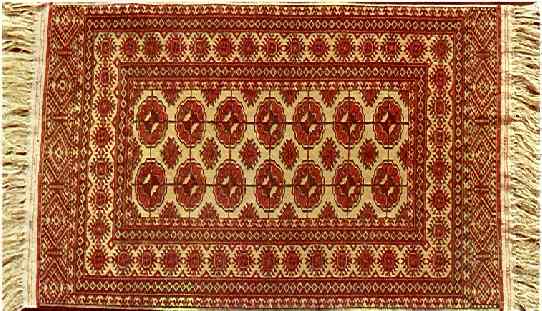
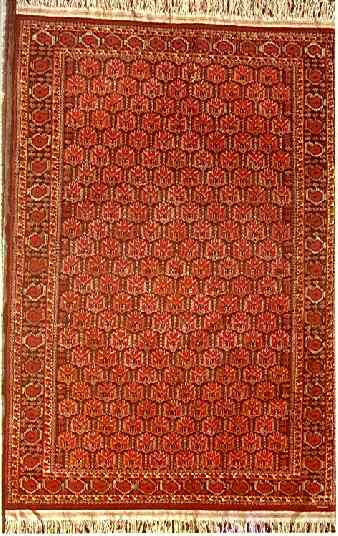
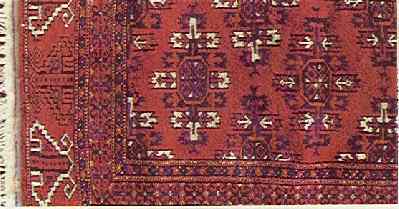
Remarkable Akhal-Teke carpet with
"Gushly-gul" design and with the
density of 1 148 000 knots per sq.meter.
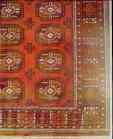
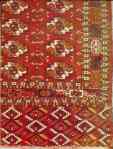
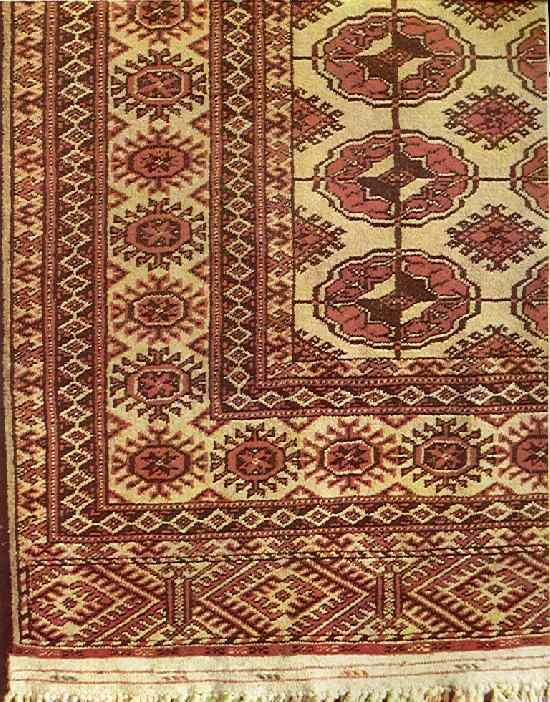
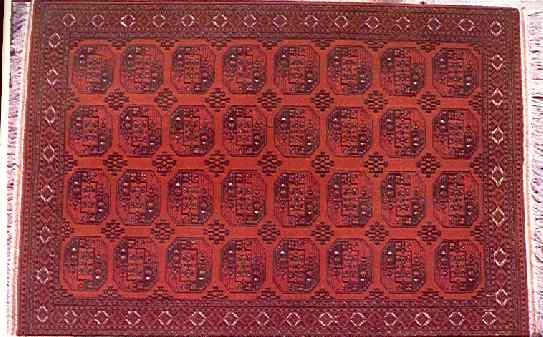
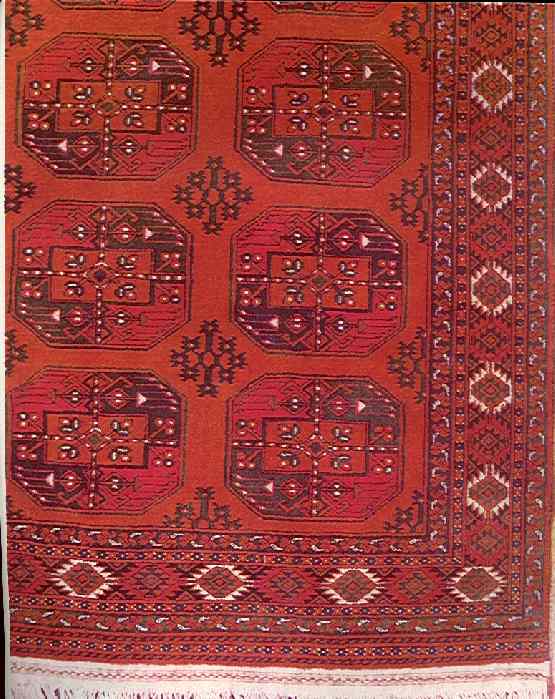
Akhal-Teke carpet with "Gushly-gul"
design.
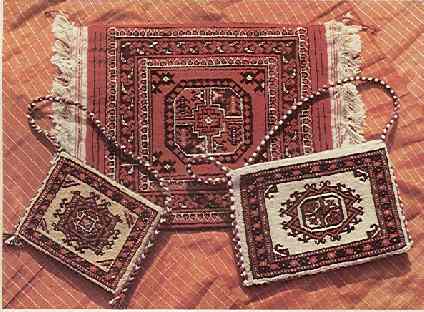
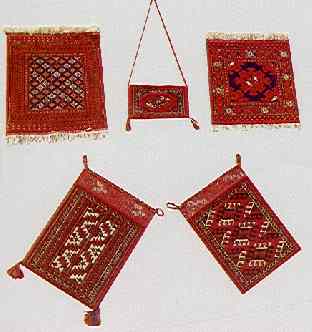
Rug Gifts.
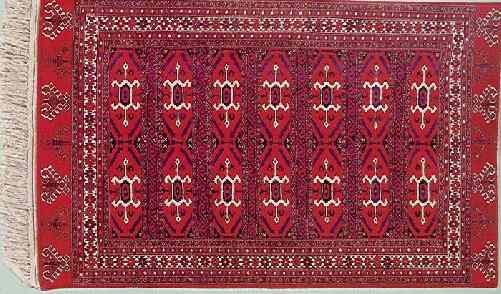
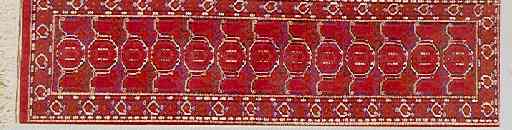
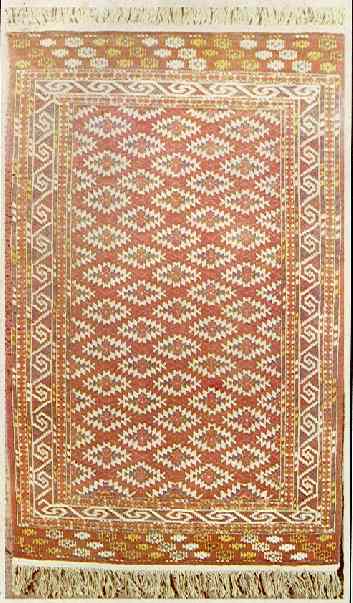
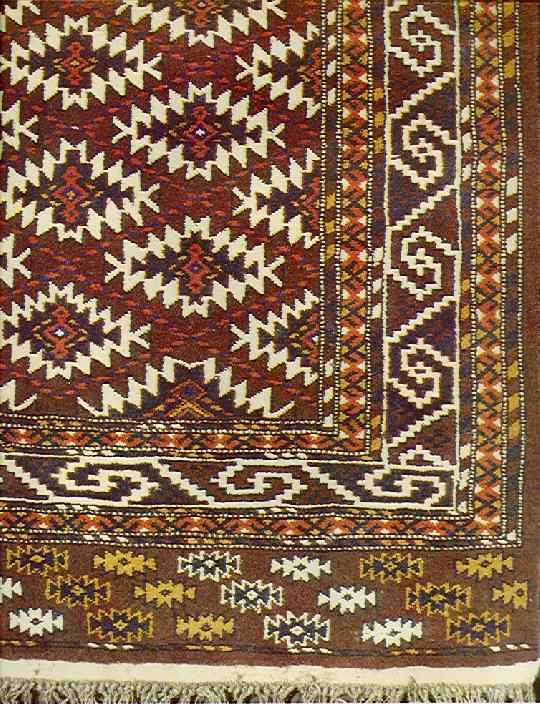
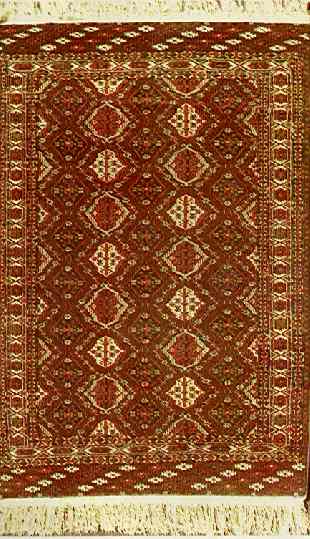
Yomut carpet with "Gunchaly pendi"
design.
Yomut carpet with "Gabsa-gul" design.
Yomut carpet with "Gabsa-gul" design on
a fown background.
Yomut carpet with "Zerbaf" design.
Kerki carpet with "Onurga-gul" design.
Kerki carpet with "Charkhy-pelek"
design.
Kerki carpet with "Onurga-gul" design.
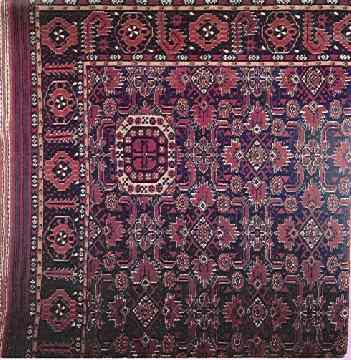
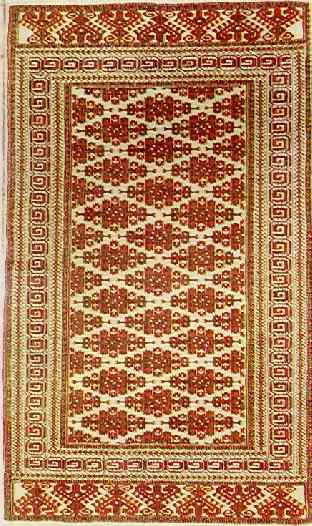
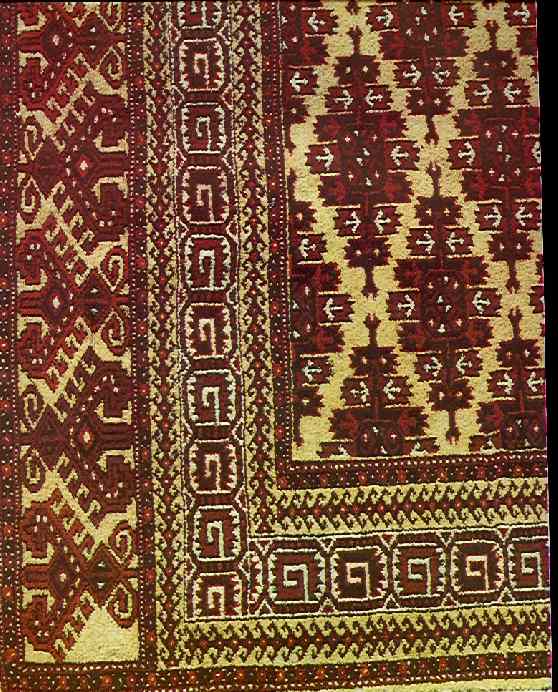
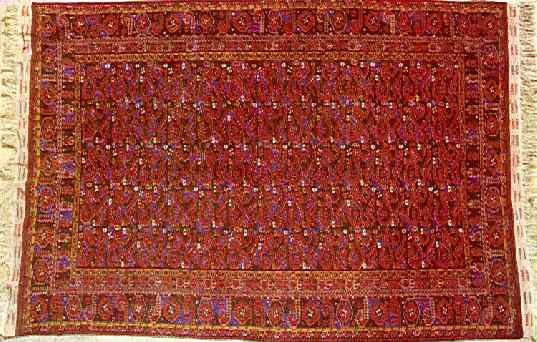
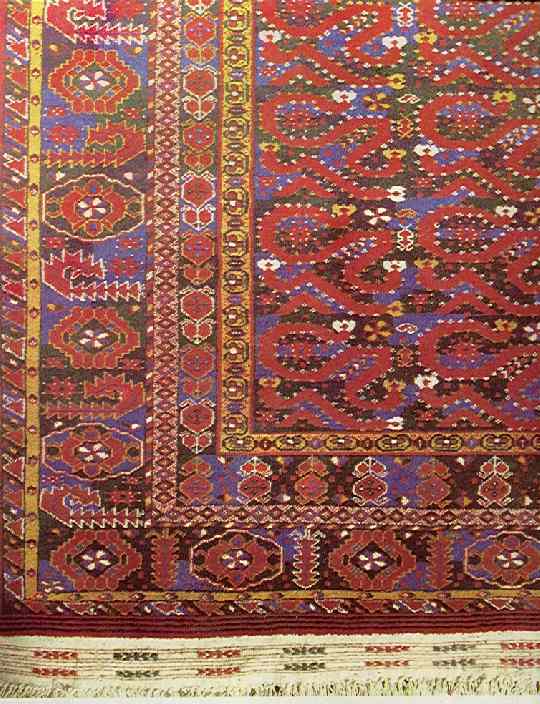
Beshir carpet with "Yilan-beshir"
design.
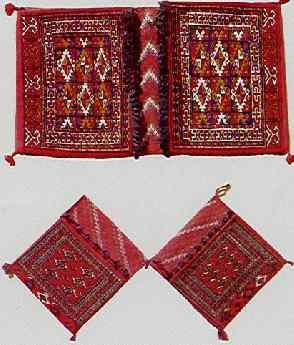
Teke chuval with "Aina gul" design.
Akhal-Teke carpet with "Kejebe-gul"
design.
Chodour carpet with "Kyrk-shakh" design.
Teke carpet with "Gushly-gul" design.
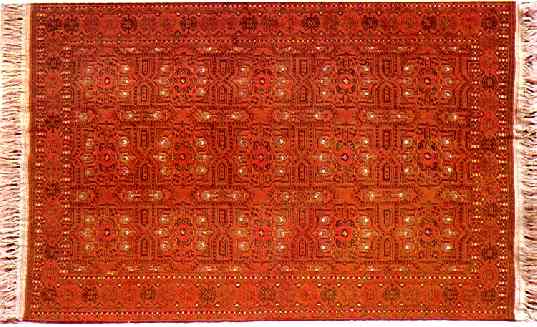
Gizilayak carpet with "Derveze gul"
design.
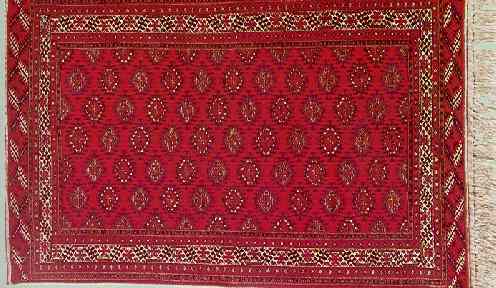
Beshir carpet with "Guneshly" design.
Beshir carpet with "Geraty" design.
Yomut carpet with "Salir gul" design.
Yomut carpet with "Guncha-gul" design.
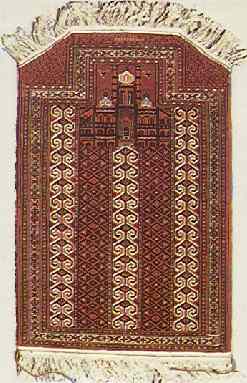
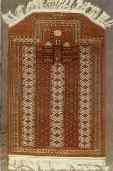
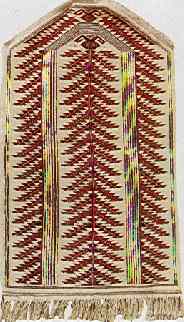
Rug namazlyk with "Ak gochak" design.
Akhal-Teke carpet with "Pendi" design.
Pendi carpet with "Pendi-gul" design.
Yomut carpet with "Pyshbaga" design.
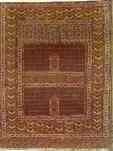
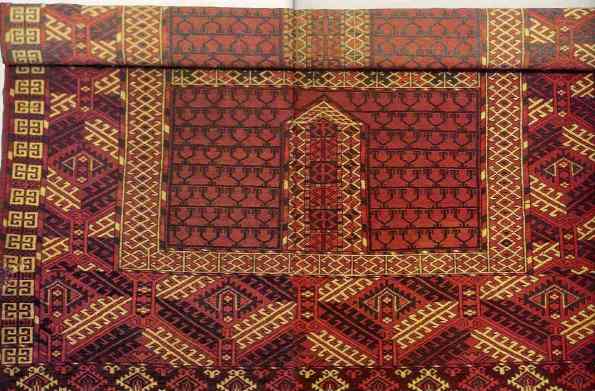
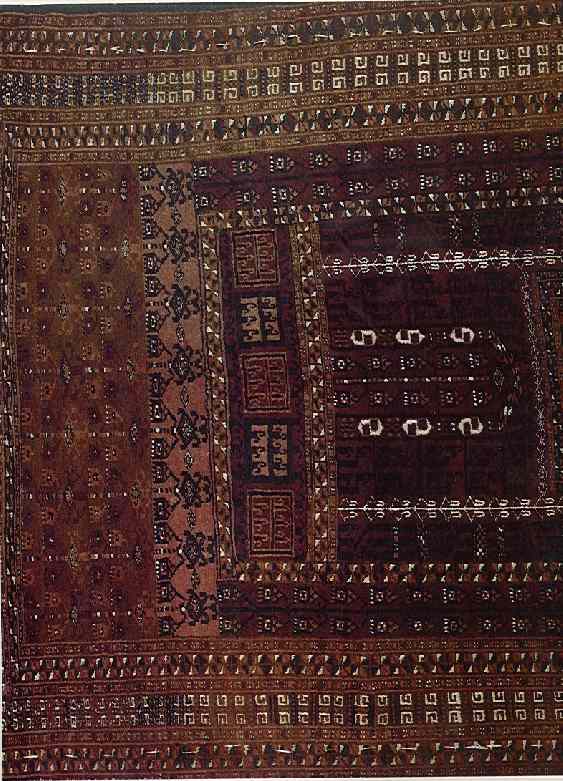
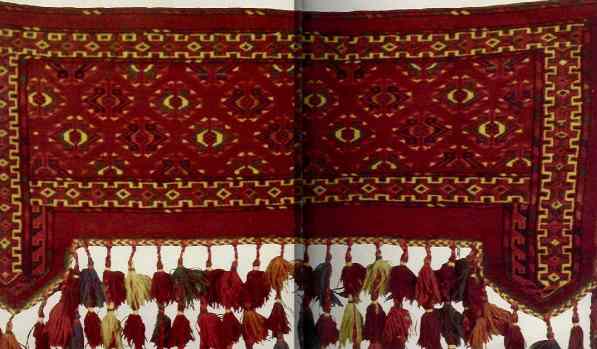
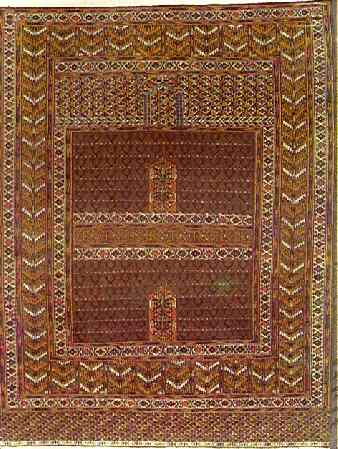
Teke ensi with "Dogadjak" design.
Yomut ensi with "Bovrek" design.
Akhal-Teke white chuval with "Ak gochak"
design.
Akhal-Teke carpet with "Gushly-gul"
design against a fawn background.
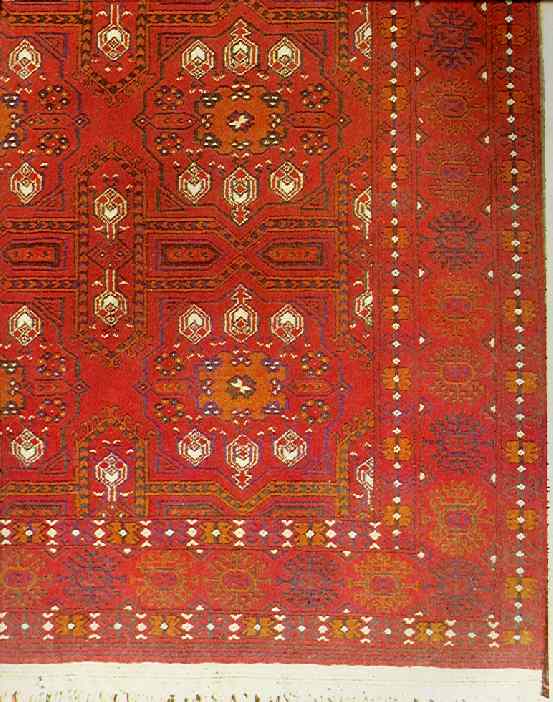
Gizilayak carpet with "Dervaze gul"
design.
Yomut carpet with "Salir gul" design.
Yomut carpet with "Dyrnak-gul" design.
Beshir carpet with "Geraty" (yaprak)
design.
Rug Gifts.
Kerki carpet with "Gully-gul" design.
Choudour carpet with "Ortmen" design.
P H O T O E S
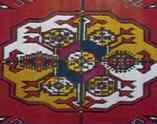
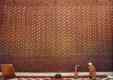
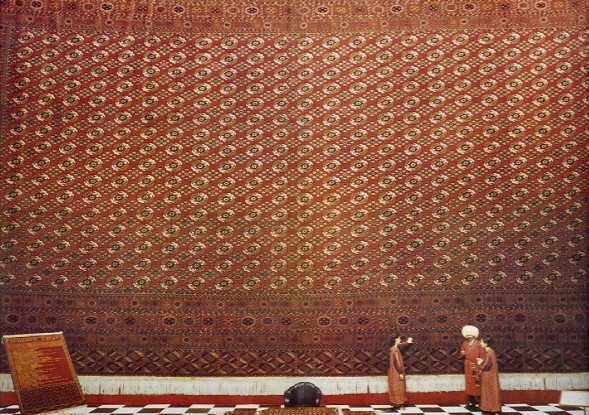
World Largest Carpet
Classifications and Definitions by
Book:
"Turkmen folk art"
1990
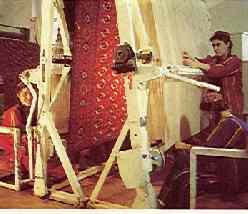
How they made:
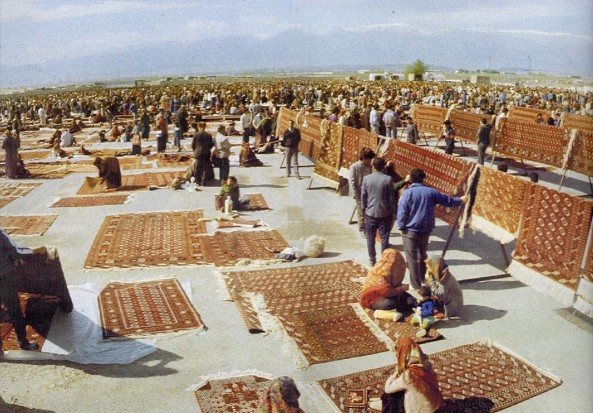
and finally goes to bazaar.
|
|
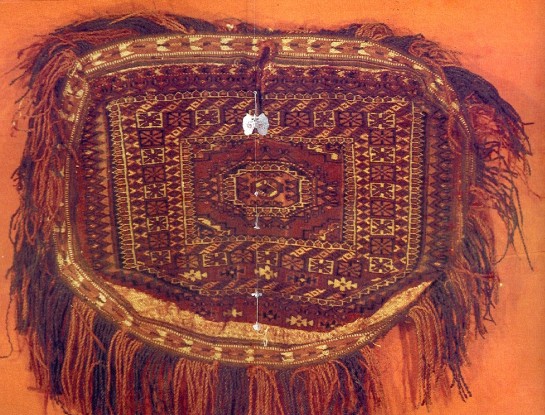
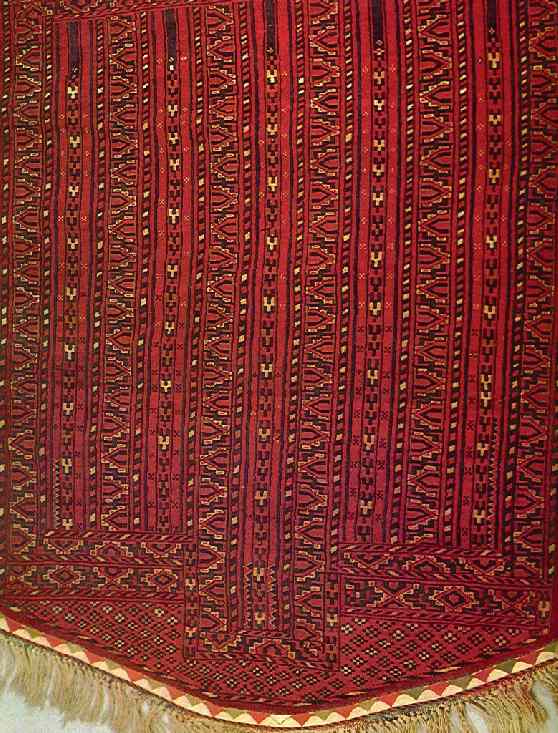
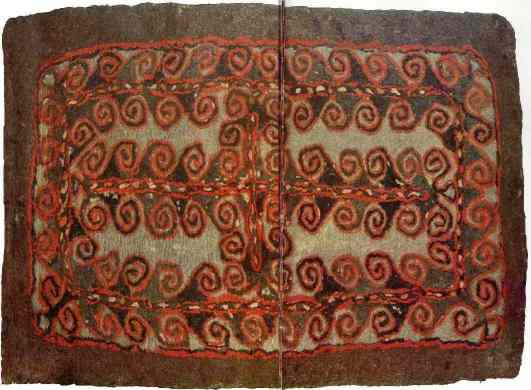
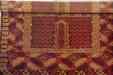
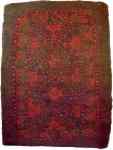
Gara öüün gapysyna
tutmak üçin "Ensi". Ashgabad. Halyçy O. Bayramdurdy˙evaç XXa.
Birinji çär˙egi. źün, natural renkler.
|
|
|
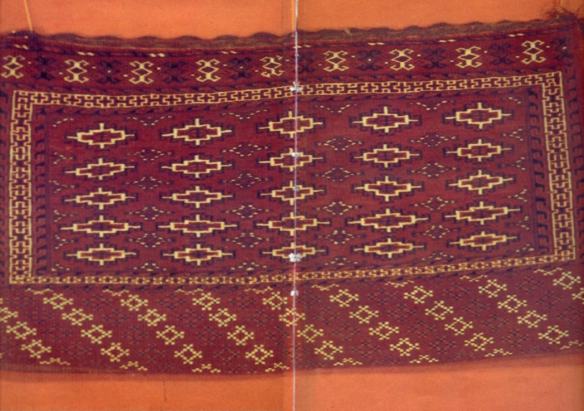
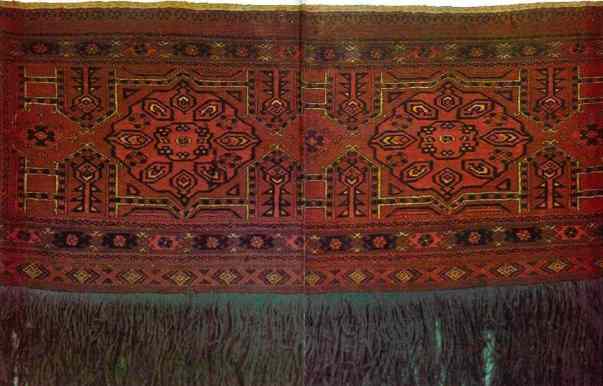
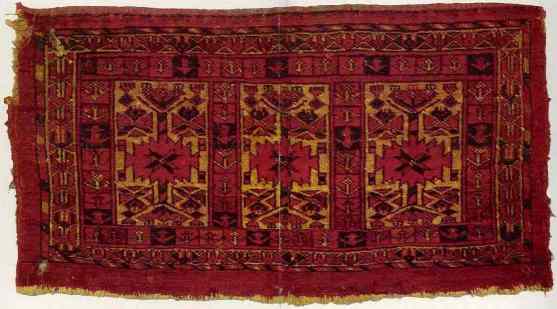
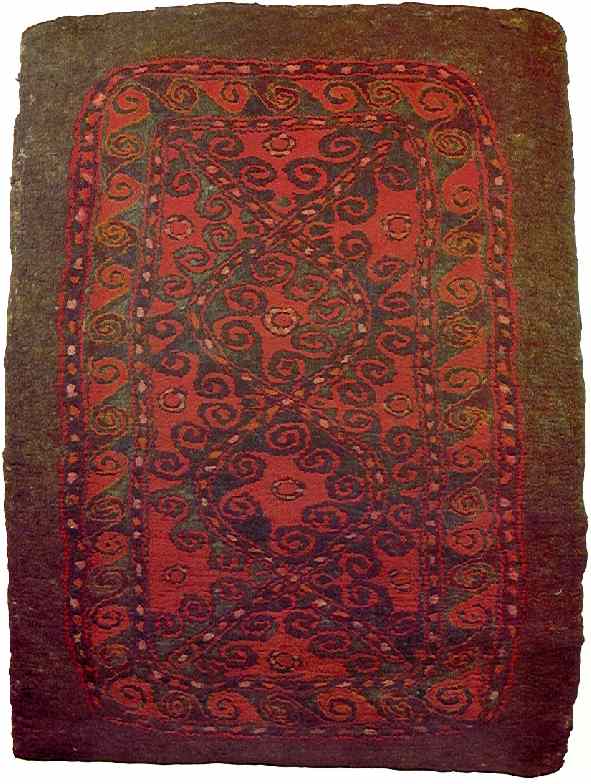
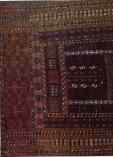
Gara öüüń gapysyna
tutmak üçin dokalan halynyń bölegi."Eńsi".
Pendiler, saryklar, XX a. baţy. źüń,
hakyky renkler.
|
|
|
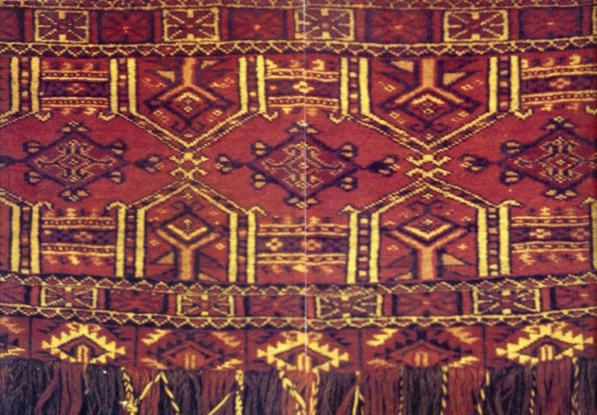
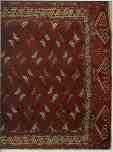
Ö˙e düţemek üçin
dokalan halynyń bölegi.
Krasnovodsk ˙omutlar, 1940 ˙.
źüń, kimiki reńkler.
|
|
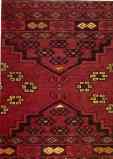
|
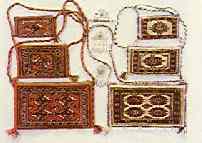
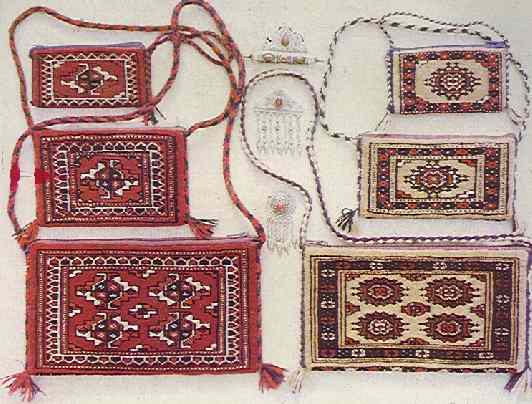
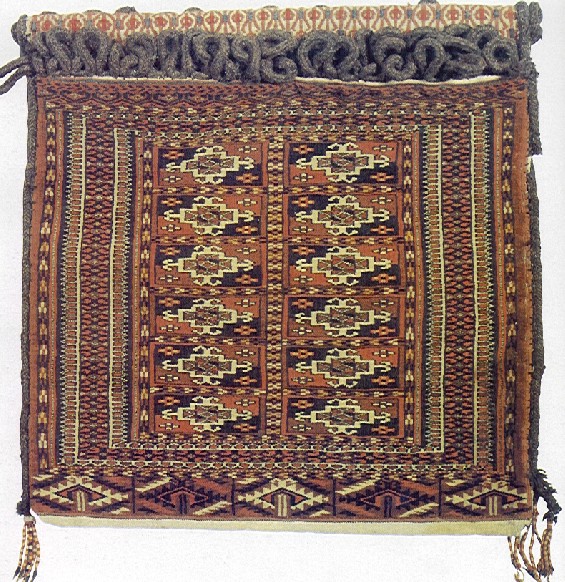
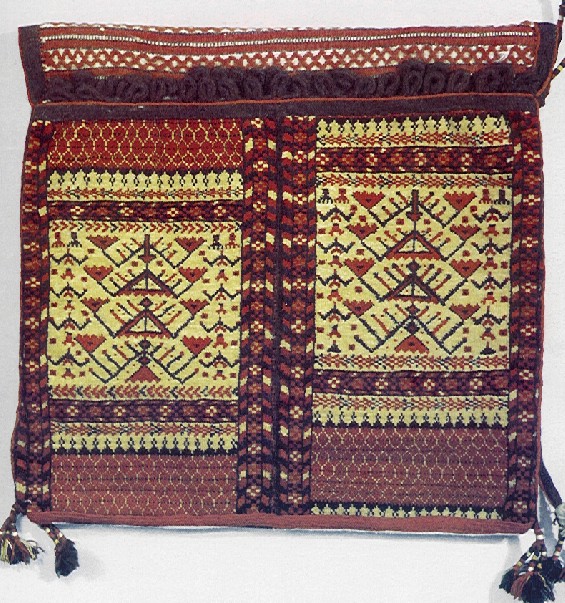
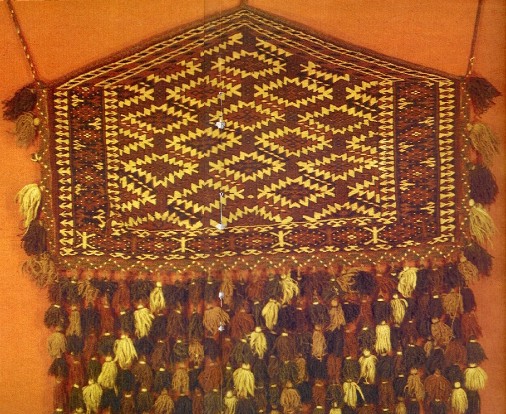
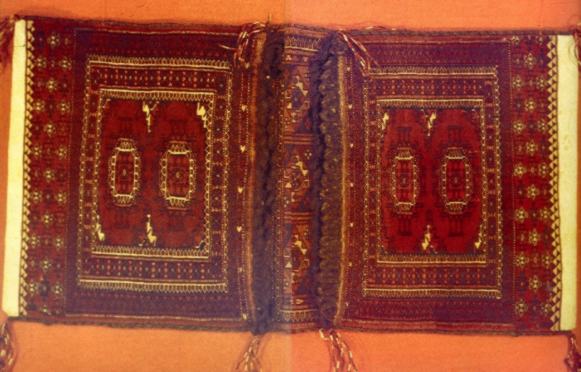
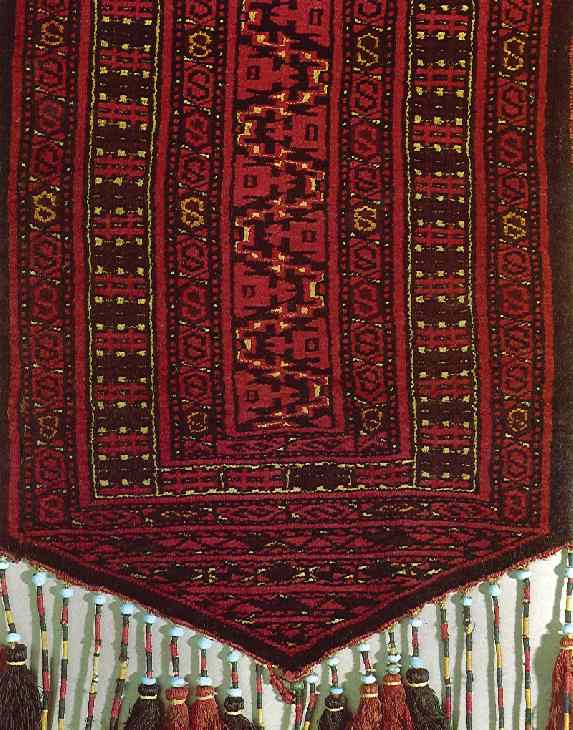
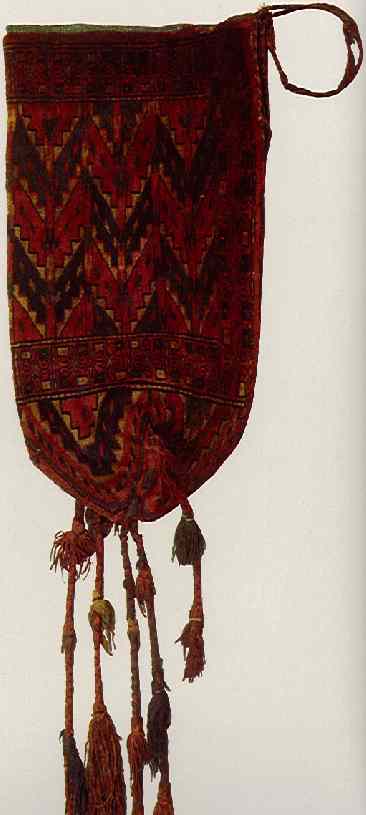
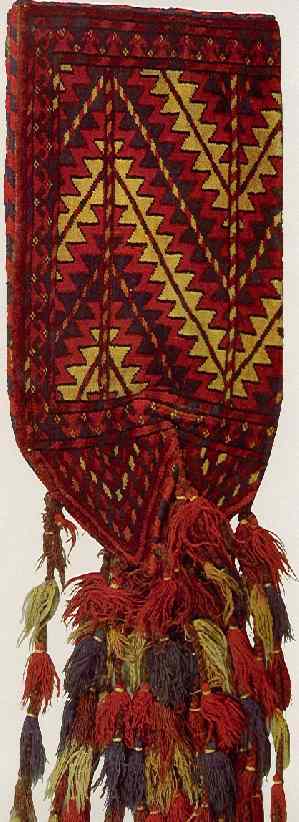
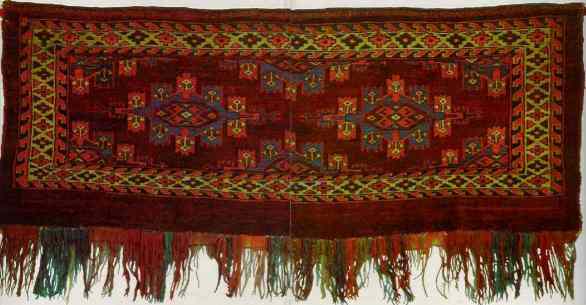
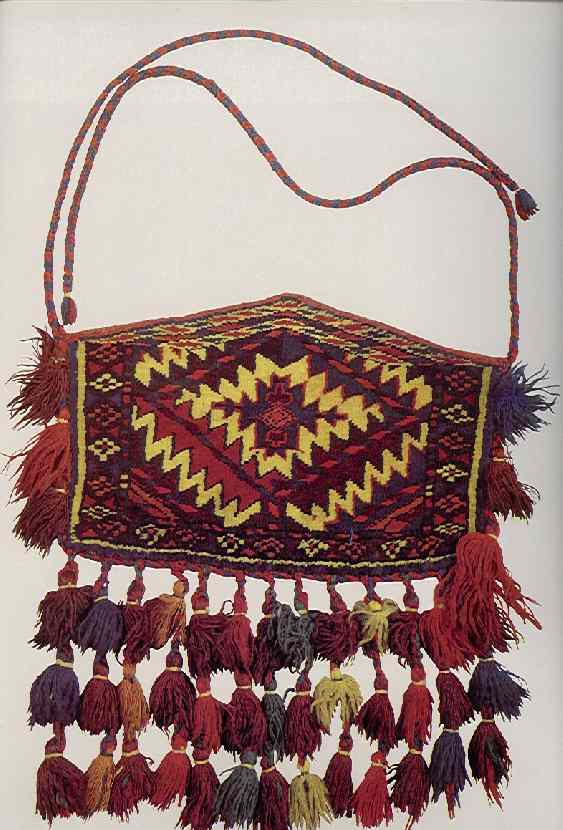
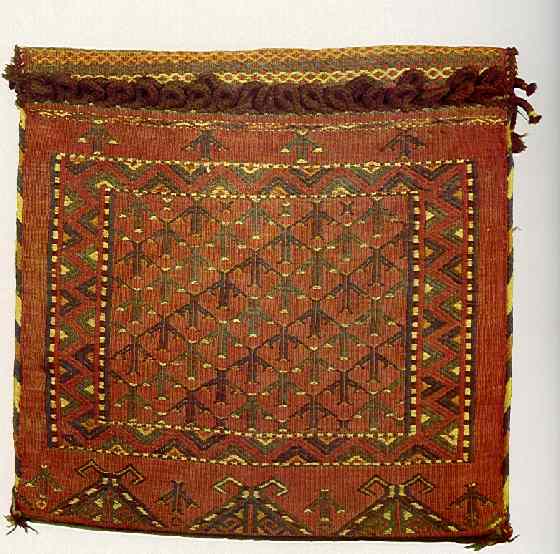
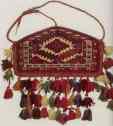
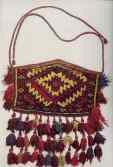
Ovnuk ö˙ esbaplaryny
saklamak üçin "Torba".
Çarţańny, salyrlar. XX a. baţy.
źüń, garyţyk reńkler.
|
|
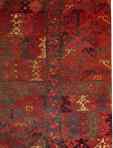
|
Ojak baţyna düţemek
üçin dokalan halyçanyń bölegi "Ojak baţy".
Çarţańny, salyrlar. XIX a. baţy.
źüń, hakyky renkler.
|
|
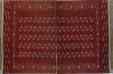
|
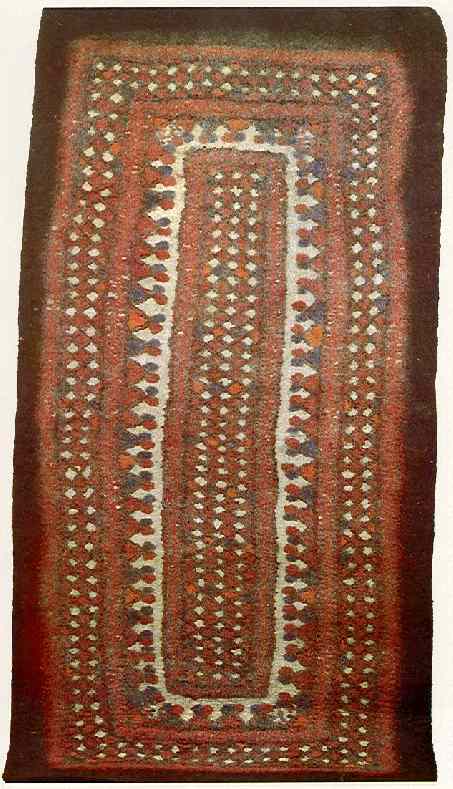
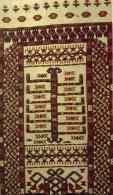
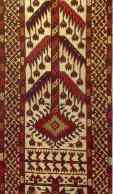
Düţek üçin
"haly"
Aţgabat, tekeler. 1960 ˙.
źüń, kimiki reńkler.
|
|
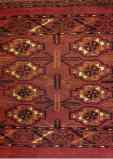
|
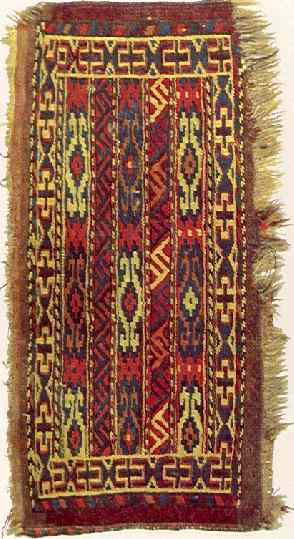
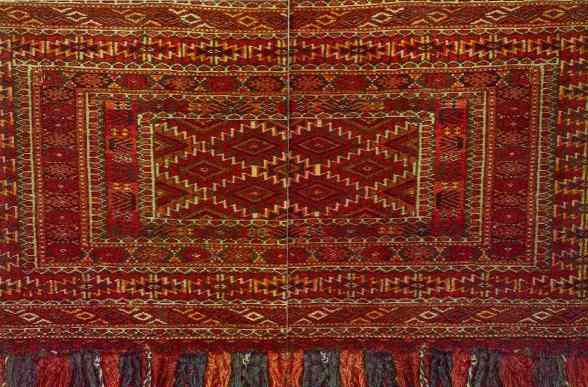
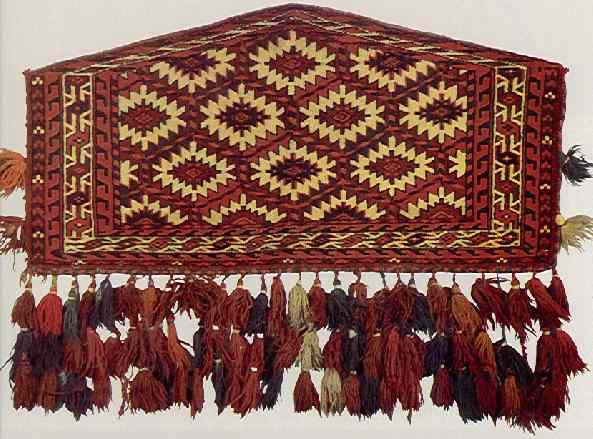
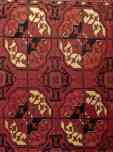
Ovnuk ö˙ esbaplaryny
saklamak üçin "Torba".
Merv. Tekeler. XIX a.
źüń, Pagta ˙üpek, hakyky reńkler.
|
|
|
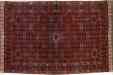
Düţemek üçin dokalan
halydan bölek "haly".
Ahal tekeler. XIX a.
Ortasy ˙üń. hakyky reńkler.
|
|
|
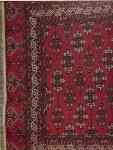
Düţeklik
"haly".
Beţir, ärsarylar. 1960 ˙.
źüń, kimiki reńkler.
|
|
|
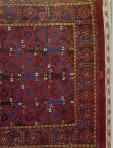
Düţeklik halydan
bölek "haly".
Krasnovodsk yomutlar. 1960 ˙.
źüń, kimiki reńkler.
|
|
|
Düţeklik halydan
bölek "haly".
Beţir, ärsarylar. 1970 ˙.
źüń, kimiki reńkler.
|
|
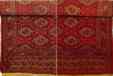
|
Düţeklik
"haly".
Krasnovodsk. Halyçy A. Mahmutova. 1916
˙.
źüń, garyţyk reńkler.
|
|
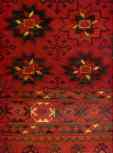
|
Düţeklik halydan
bölek "haly".
Burdalyk, Beţir. XIX a. sońy.
źüń, hakyky reńkler.
|
|
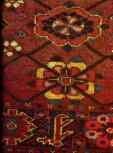
|
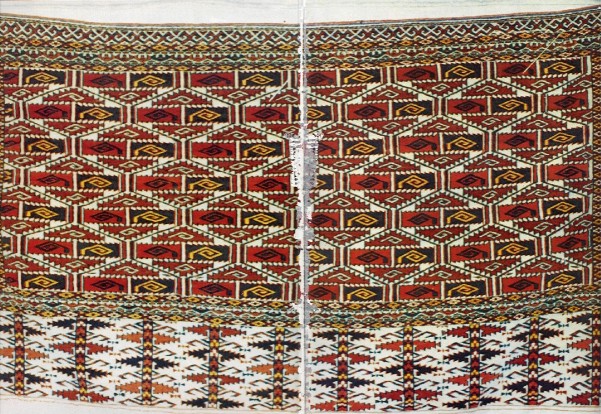
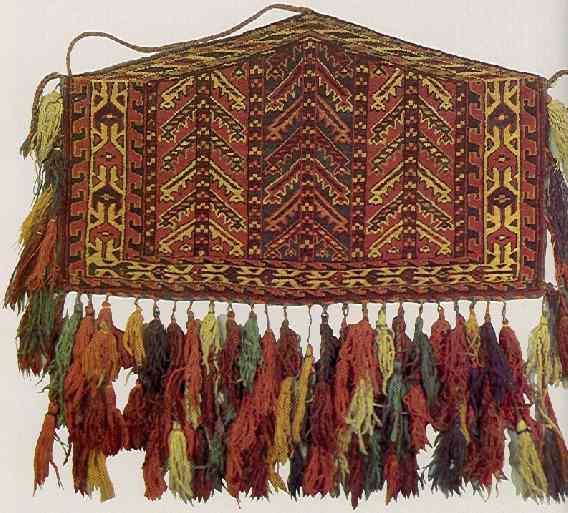
Egin-eţik saklamak
üçin dokalan "çuval".
Kerki-Beţir. ärsarylar. XIX a.
sońy.
źüń, ˙üpek, garyţyk reńkler.
|
|
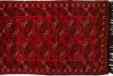
|
Ojak baţy üçin
halyça. "Ojak
baţy"
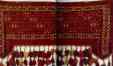
Kerki. Halaç. 1910-1915 ˙˙.
źüń, hakyky renkler.
|
|
|
Gapy bezegi üçin
"Gapylyk".
Krasnovodsk çikiţli, ˙omutlar.
XX a. birinji ˙arymy. źüń, garyţyk
reńkler.
|
|
|
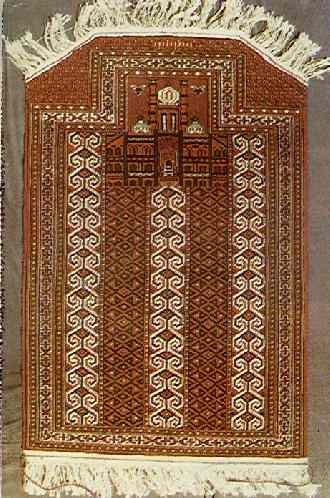
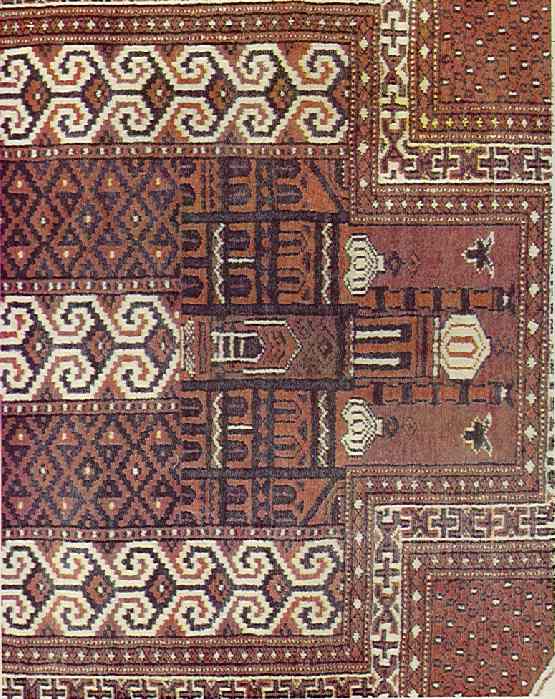
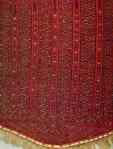
"Namazlyk"
Krasnovodsk ˙omutlar.
XX a. baţy.
źüń, garyţyk reńkler.
|
|
|
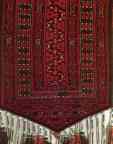
Gapy bezegi üçin
"Gapylyk".
Pendi, tekeler XX a. baţy.
źüń, Pagta, garyţyk reńkler.
|
|
|
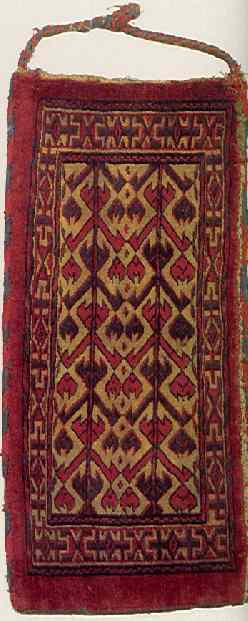
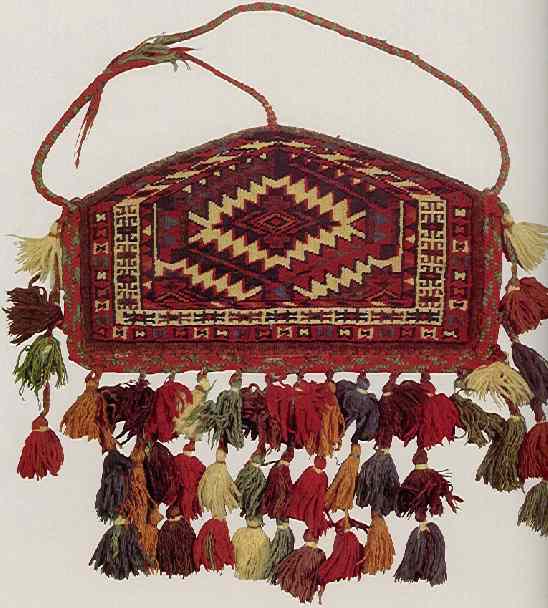
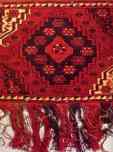
Ovnuk esbaplary
saklamak üçin "Torba".
Çarţańńy, saragt, salyrlar. XIX a.
źüń, ˙üpek, hakyky reńkler.
|
|
|
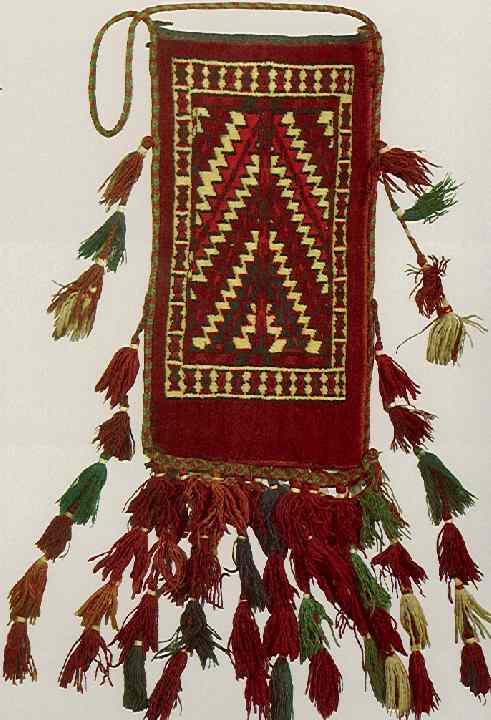
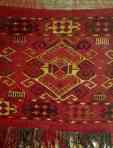
Ovnuk esbaplary
saklamak üçin "Torba".
Farab, Çovdurlar. XIX a. baţy.
źüń, hakyky reńkler.
|
|
|
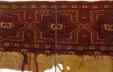
Ovnuk esbaplary
saklamak üçin "Torba".
Çarţańńy, salyrlar. XIX a. sońy.
źüń, hakyky reńkler.
|
|
|
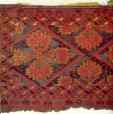
Ovnuk esbaplary
saklamak üçin "Torba".
Demirgasyk, Türkmenistan, arabsrlar.
XIX a. ikinji yarymy.
źüń, hakyky reńkler.
|
|
|
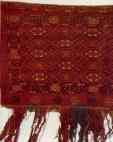
"Torba"
Burdalyk-Beţir, ärsarylar. XIX a. baţy.
źüń, hakyky reńkler.
|
|
|
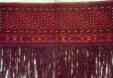
Ö˙ esbaplaryny
saklamak üçin "Torba".
Demirgazlyk. Türkmenistan, igdirler.
XX a. baţy.
źüń, Pagta , garyţyk reńkler.
|
|
|
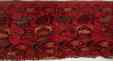
"Torba"
Kerki, ärsarylar. XIX a. sońy. XX a.
baţy.
źüń, garyţyk reńkler.
|
|
|
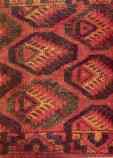
"Torba"
Kerki, ärsarylar. XIX a. ikinci ˙arymy.
źüń, hakyky reńkler.
|
|
|
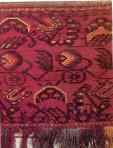
"Torba"
Burdalyk-Beţir. XIX a. sońy.
źüń, garyţyk reńkler.
|
|
|
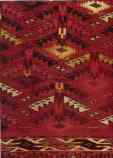
"Torba"
Burdalyk-Beţir, ärsarylar. XX a. baţy.
źüń, garyţyk reńkler.
|
|
|
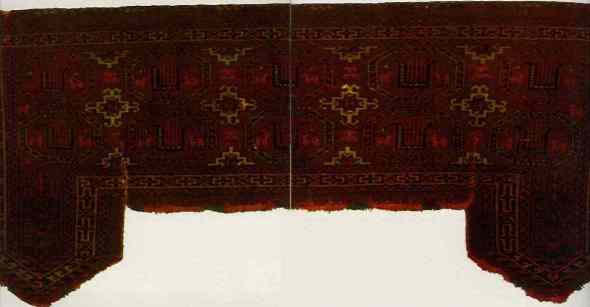
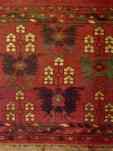
Gapa asmak üçin
dokalan "eńsi"
Krasnovodsk ,˙omutlar.
XIX a. sońy.XX a. baţy.
źüń, hakyky reńkler.
|
|
|
Ö˙ esbaplary üçin
"Torba".
Beţir. ärsarylar.
XX a. baţy.
źüń, hakyky reńkler.
|
|
|
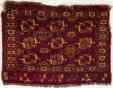
Gapa asmak üçin
"Gapylyk".
Günbatar Türkmenistan, ˙omutlar. XIX
a.
źüń, hakyky reńkler.
|
|
|
Egin-eţikleri
saklamak üçin "Çuval"
Demirgazyk, Türkmenistan igdirler.
XXa. baţy.
źüń, Pagta , garyţyk reńkler.
|
|

|
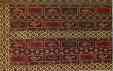
Egin-eţikleri
saklamak üçin "Çuval"
Büzme˙in, Tekeler.
XXa. baţy.
źüń, garyţyk reńkler.
|
|
|
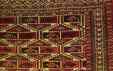
Gara ö˙üń, tüsse
çykar ˙erine dokalan
"Umur guman"
Aţgabad, Tekeler. XX a. birinci
çär˙egi.
źüń, Pagta , garyţyk reńkler.
|
|
|
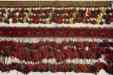
Egin-eţikleri
saklamak üçin "Çuval"
Aţgabad, Tekeler.
XIX a. sońy. XXa. baţy.
źüń, Pagta , garyţyk reńkler.
|
|
|
Dü˙e bagy
"Burunlyk".
Krasnovodsk, ˙omutlar.
we, Pendi, saryklar.
XIX a. sońy. XXa. baţy.
źüń, garyţyk reńkler.
|
|

|
Ovnuk esbaplary üçin
"Torba".
Farap, çovdurlar. XIX a. sońy
źüń, hakyky reńkler.
|
|

|
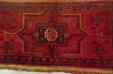
"Torba"
Farap, çovdurlar. XX a. baţy.
źüń, garyţyk reńkler.
|
|
|
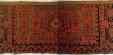
"Torba"
Farap, çovdurlar. XIX a. sońy
źüń, hakyky reńkler.
|
|
|
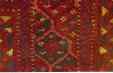
"Torba"
Gyzyl A˙ak-Kerki, , çovdurlar. XIX a.
sońy
źüń, hakyky reńkler.
|
|
|
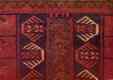
Gapa tutmak üçin
"Gapylyk".
Çarţańńy, salyrlar. XIX a. sońy.
źüń, hakyky reńkler.
|
|
|
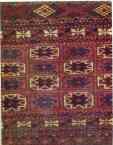
Gapa tutmak üçin
"Eńsi".
Beţir. ärsarylar.
XIX a. sońy.
źüń, hakyky reńkler.
|
|
|
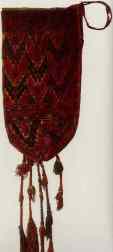
Ovnuk esbaplary
saklanmak üçin "Torba".
Gyzyl A˙ak, ärsarylar.
XIX a. sońy.
źüń, hakyky reńkler.
|
|
|
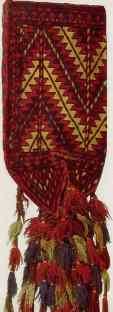
Gara öüüń göç
vagtynda uk uçlaryny
daţamak üçin "Uk
ujy".
Könürgenç ˙omutlar.
XIX a. sońy.
źüń, garyţyk reńkler.
|
|
|
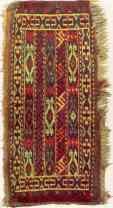
"Uk ujy"
Krasnovodsk, ˙omutlar.
XX a. baţy.
źüń, garyţyk reńkler.
|
|
|
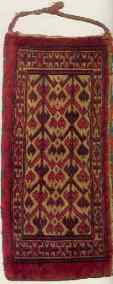
Ö˙de ikleri saklamak
üçin "Ikselik".
Krasnovodsk çikiţli, ˙omutlar.
XX a. birinji ˙arymy.
źüń, garyţyk reńkler.
|
|
|
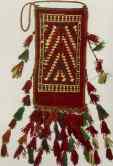
Ö˙de ikleri saklamak
üçin "Ikselik".
Krasnovodsk çikiţli, ˙omutlar.
XX a. birinji ˙arymy.
źüń, garyţyk reńkler.
|
|
|
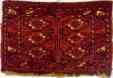
Ö˙de ikleri saklamak
üçin "Ikselik".
Krasnovodsk çikiţli, ˙omutlar.
XX a. birinji ˙arymy.
źüń, garyţyk reńkler.
|
|
|
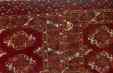
Ovnut esbaplary
saklamak üçin "Torba".
Pendi saryklar.
XIX a. sońy, XX a. baţy.
|
|
|
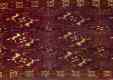
Egin-eţikleri
saklamak üçin "Çuval"
Aţaky murgap, saryklar.
XIX a. birinji ˙arymy.
źüń, Pagta , ˙üpek, hakyky reńkler.
|
|
|
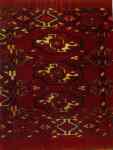
Ovnut esbaplary
saklamak üçin "Torba".
Gök-depe, tekeler.
XX a. baţy.
źüń, hakyky reńkler.
|
|
|
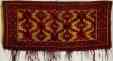
Ovnut esbaplary
saklamak üçin "Torba".
Ashabad, tekeler.
XIX a. sońy.
źüń, hakyky reńkler.
|
|
|
X X
|
|
|
X X
|
|
|
X X
|
|
|
X X
|
|
|
X X
|
|
|
X X
|
|
|
X X
|
|
|
X X
|
|
|
X X
|
|
|
X X
|
|
|
X X
|
|
|
X X
|
|
|
X X
|
|
|
X X
|
|
|
X X
|
|
|
X X
|
|
|
X X
|
|
|
X X
|
|
|
X X
|
|
|
X X
|
|
|
X X
|
|
|
X X
|
|
|
X X
|
|
|
X X
|
|
|
X X
|
|
|
X X
|
|
|
X X
|
|
|
X X
|
|
|
X X
|
|
|
X X
|
|
|
X X
|
Classifications and Definitions by
Book:
"TÜRKMEN HALYLARI"
01-
During many centures
Turkmen people carefully having kept the technology of carpetmaking and its
artistic style have brought it in perfect till our days. Talanted
carpet-weavers reflecting their feelings and dreams, best wishes and hopes
in the rugs have gotten high art of its design. That's why carpet-making is
not a handicraft but emboded in itself unusual miracle of fine art.
Turkmen hand-knotted carpets are
well-known all over the world and are exhibited in many famous museums of
the world; Turkmen carpets have borrowed theirs coloures from nature. White
colour is adopted from the moon's light, black colour- from dark night,
yellow colour- from sunny rays (beams), green colour- from spring meadows
and red colour is looked like blossoming poppied field. May be that's why
from it is its fascinating beauty.
Turkmen carpets are made from pure
national wool and according to theirs decorations, patterns, density and
height of a pile they are devided into the follawing grups: akhalteke,
teke, pendi, youmud, choudour, gyzylayak, beshir, kerki. At the same time
all these carpets are united by stability and harmony of coloures, durable
and beneficial for health yarn.
Depending on groups of carpets the
density of hand-knotted carpets is from 200.000 to 400.000 knots per 1
sg.m. and its size is from 0,5 sg.m to 20 sg.m.. The paints of these
carpets become more bright and fine after many years. The reason of it is
that the fluffy ends oi knots split and smooth out and surface of the
carpet begins to gleam.
The Turkmen carpets are testified by numerous
international awards at the international exhibitions and fairs in Paris, Montreal, Leipzig and Brussels.
Among them- a Grand Prix, eight gold and silver medals.
** Türkmen
Köp asyrlaryń dowamynda Türkmen halky
haly dokamaklygyń usullaryny, onuń çeperçilik bezegirzi a˙awly saklap we
has kämilleţdirip ţu günlere ˙etiripdir. Ussat zenanlar halynyń nagyţlaryna
öZ mähirlerini we isleg-arzuwlaryny sińdirip, onun göllerini
ţekillendiriţiń yokary derejesine yetirmegi baţarypdyrlar. Ţonuń üçin hem
halyçylyk senet däl-de, özünde gudrat jemleykn aja˙yp sungatdyr.
Dünyäde meţhurlyk gazanan, belli
muze˙leriń we sergi zallaryń görnükli eksponatlary bolup öz ornuny tapan
Türrkmen el halylarynyń öwüţginli reńkleri tebigatdan alnypdyr. Olaryń agy
a˙yń ˙agtysyndan, garasy gijäniń tümlüginden, sarysy günüń ,ţöhlesinden,
˙aţyly yazyń ˙a˙lasyndan göçürilip, gyzyly gülälekli meydana çalymdaţdyr.
Megerem, onuń jadyla˙jy owadanlygy hem ţondandyr. Hazirki zaman Türkmen
halylary sap yüńden dokalyp, göllerine we nagyţlaryna, çitimleriniń
syklygyna we uzynlygyna görä ahalteke, teke, ˙omut, çowdur, pendi,
gyzyla˙ak, beţir, kerki di˙en toparlardan ybaratdyr. Ţol bir wagtda, bu
halylary reńkleriń sazlaţygy we durnuklylygy, bezegleriniń göze
˙akymlylygy, ˙üpleriniń berkligi we saglyk üçin ˙ramlylygy birlefdir˙är.
Görnüţlerine görä Türkmen el halylarynyń syklygy her bir kwadrat metrde 200
müńden 400 müńe çenli çitime barabar bolup, ululygy 0,5 kwadrat metrden 20
kwadrat metre çenli dokal˙ar. Bu halylar ˙yllaryń geçmegi bilen reńk açyp
has gözelleţ˙ärler. Munuń sebäbi, ulananda onuń tü˙jümek çitimleriniń
uçlary bölün˙är we ˙ylman˙ar, netijede, halynyń yüzi öwsüp baţla˙ar.
Türkmen gelin-gyzlarynyń doka˙an halylary
Parisde we Monrealda, Le˙psigde we Brüselde geçirilen bütindünyä sergilerinde
we ˙armarkalarynda Gran-Pri ba˙ragy, 8 altyn we 1 kümüţ. madallary bilen
sylaglandy.
|
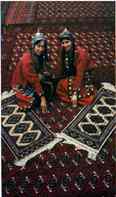
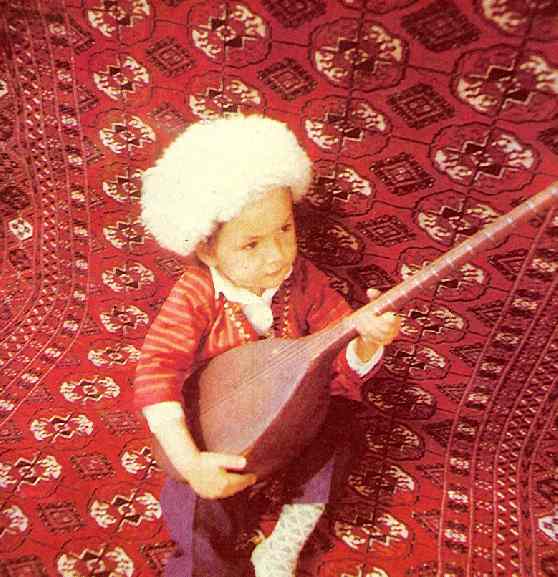
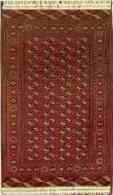
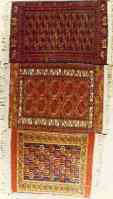
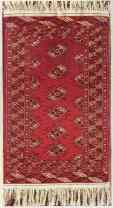
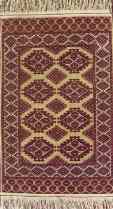
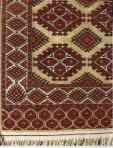
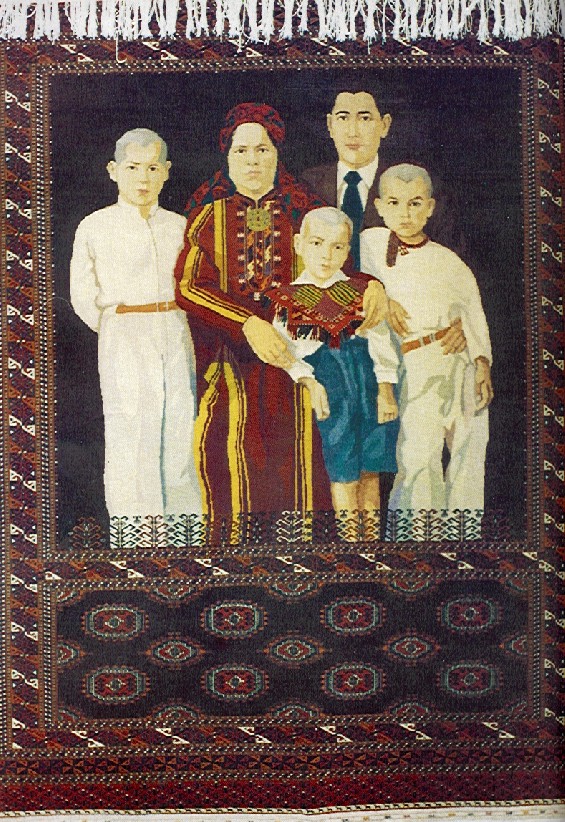
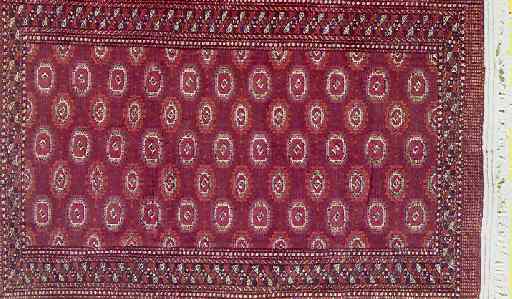
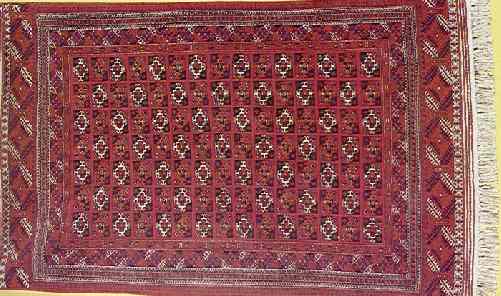
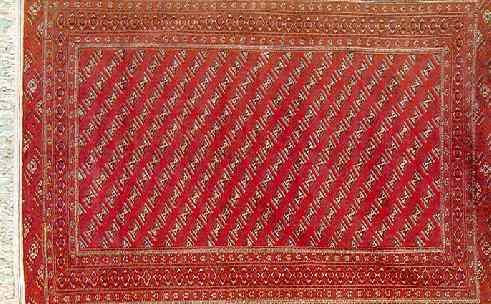
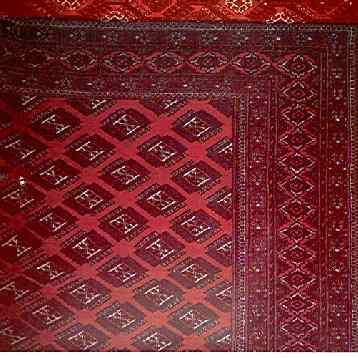
Turkmen carpets --
made from pure wool and well-known worldwide.
|
|
|
|
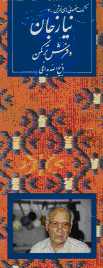
Niyazjan
ve Farshe Torkaman
Suggested Links
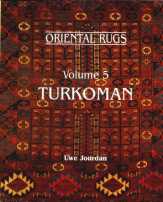
TURKOMAN

TURKMAN
RUGS & CARPETS
"خوانش
سمبل های گزیده
فرش ترکمن"
نوشته:احمد
خاتمی نیا/دانشکده
میراث فرهنگی
Links and sellers:
- http://www.tibetancarpets.co.uk - "Tibetan
Carpets - Hand made carpets supporting Tibetan refugees in India"
linking to
- RugNotes - A world
of information for the rug enthusiast.
- http://www.oldcarpet.com -
Oldcarpet.com, Everything about Persian Rugs from pieces to cleaning.
Persian Rugs Visibility, Quality, Texture, Size, Color, Foundation,
Knots, Price.
- Designer House & Crafts -
Manufacturer / Exporter of handmade Tibetan woolen rugs.
- Turkotech - A noncommercial site devoted to collectible
weavings, where rug enthusiasts can connect.
- RugNews articles from the pages of
Rug News magazine, as well as content exclusive to the web.
- rugsonline.netfirms.com
- http://www.rugs-direct.com
"Information on Oriental Rugs from
RugRag.com: Including a forum, blog and interactive tools for Buyers
and Sellers"
To see more;
Visit Dr. Farzad Marjani's private
collection.
|
Dr. Farzad MARJANI, Civil Engineer, Ph.D.
Ankara
- TURKEY
|
|
|
|